On WaltAbout I have seen many different species of birds but no where near the over 500 species that roam the state at one time or another. I have however been able to find some of the smallest (hummingbirds) and the largest (raptors). The volume and variety of birds that are in Colorado punctuates the importance of the many open space areas we have here. These areas provide both recreational space for humans and habitats for wildlife including birds to exist. Birds are vertebrate animals designed for flight, some don’t fly like penguins even though they have wings. Their wings are intended to generate lift and speed while they maneuver with the tail and feathers.
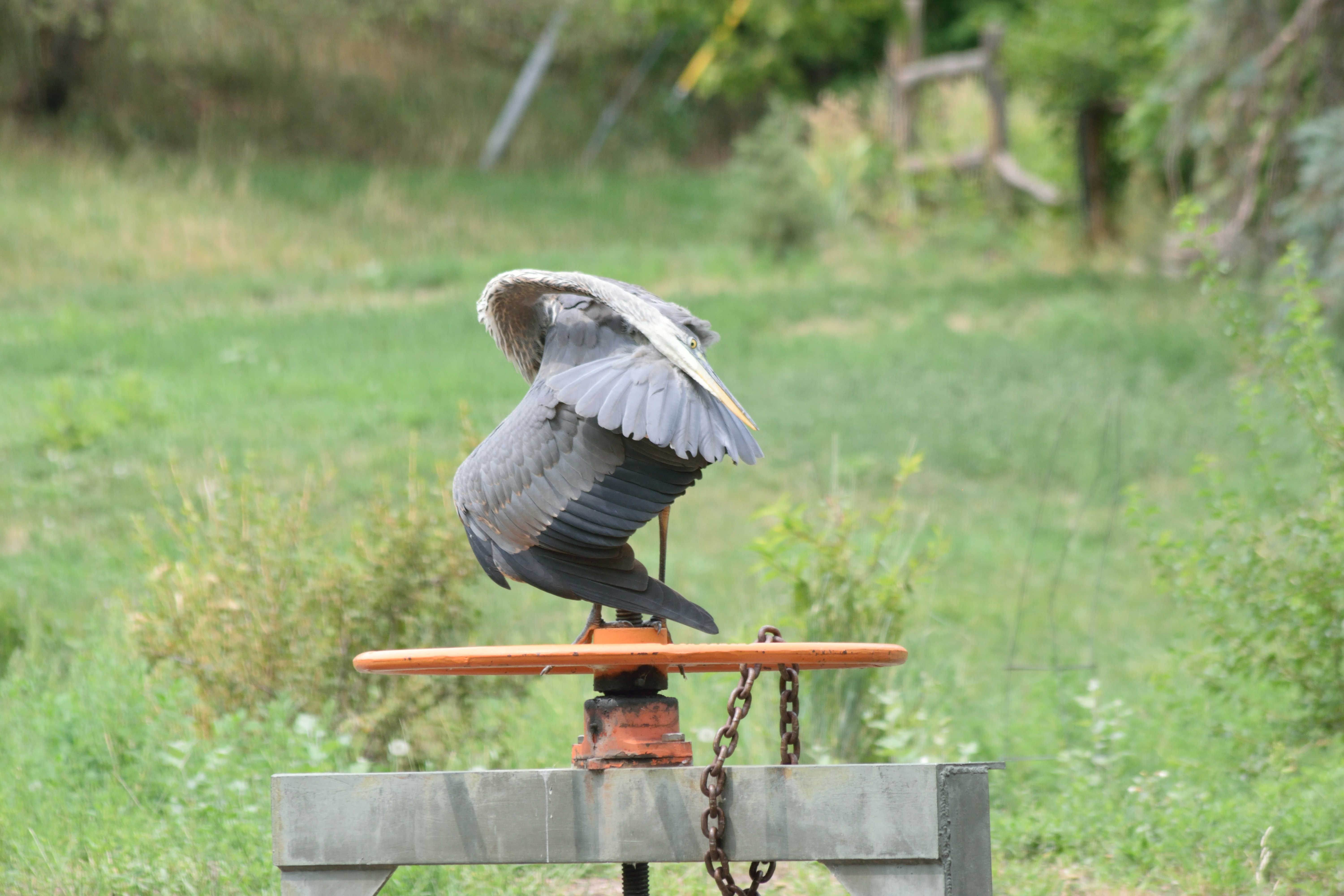
Mother Nature gave birds like some mammals the ability to restrict when they will digest their food. While on WaltAbout I have seen many animals catch or find their food. It is not always the quietest moment in the great outdoors and will attract competitors for the food and predators that will eat the bird! So birds have the ability to eat while on the move and digest in another place. Thermoregulation is a key to birds and all animals for that matter, the ability of an organism to maintain tolerable body temperature when air temperature changes. The great blue heron you see to the right is a great example as they are here year round.
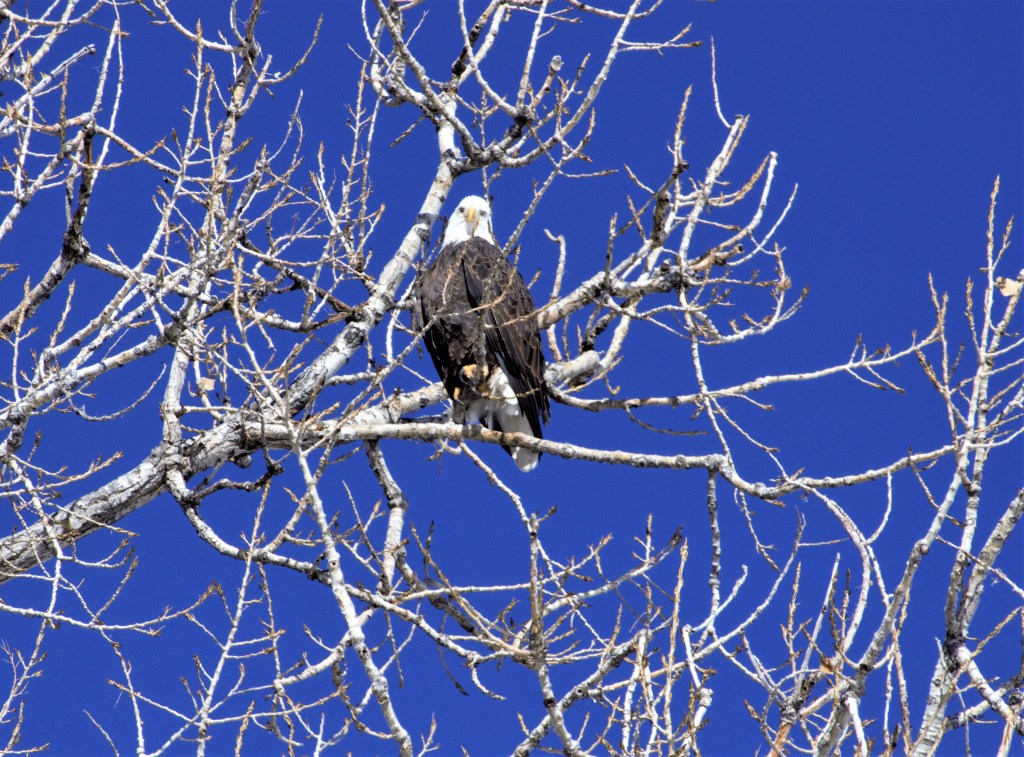
Bald Eagle 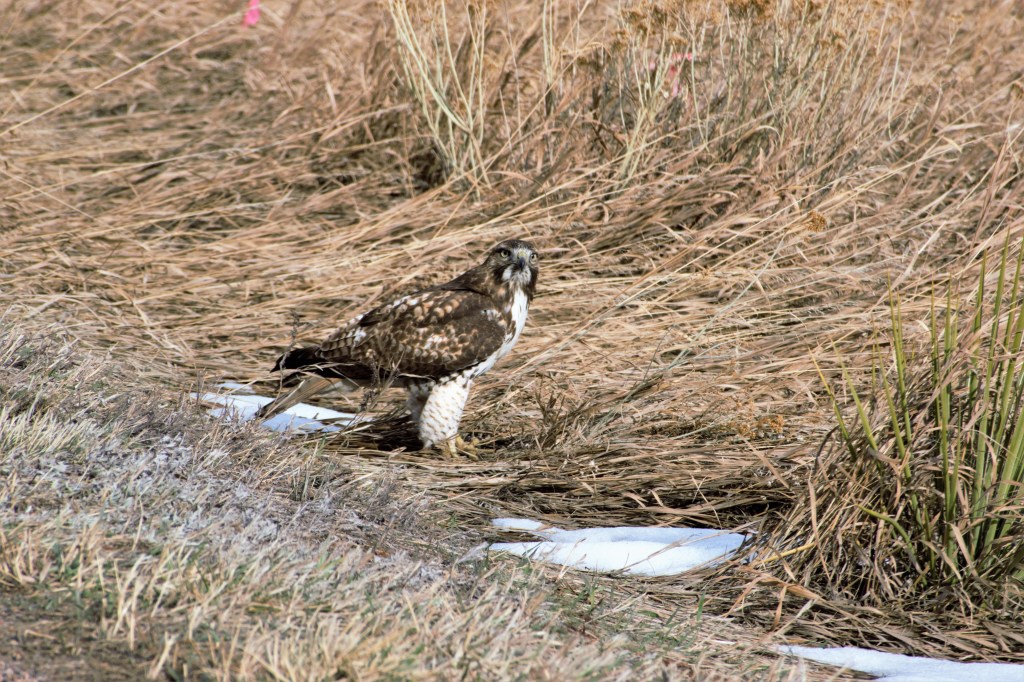
Red-tailed Hawk With Winter Leggings 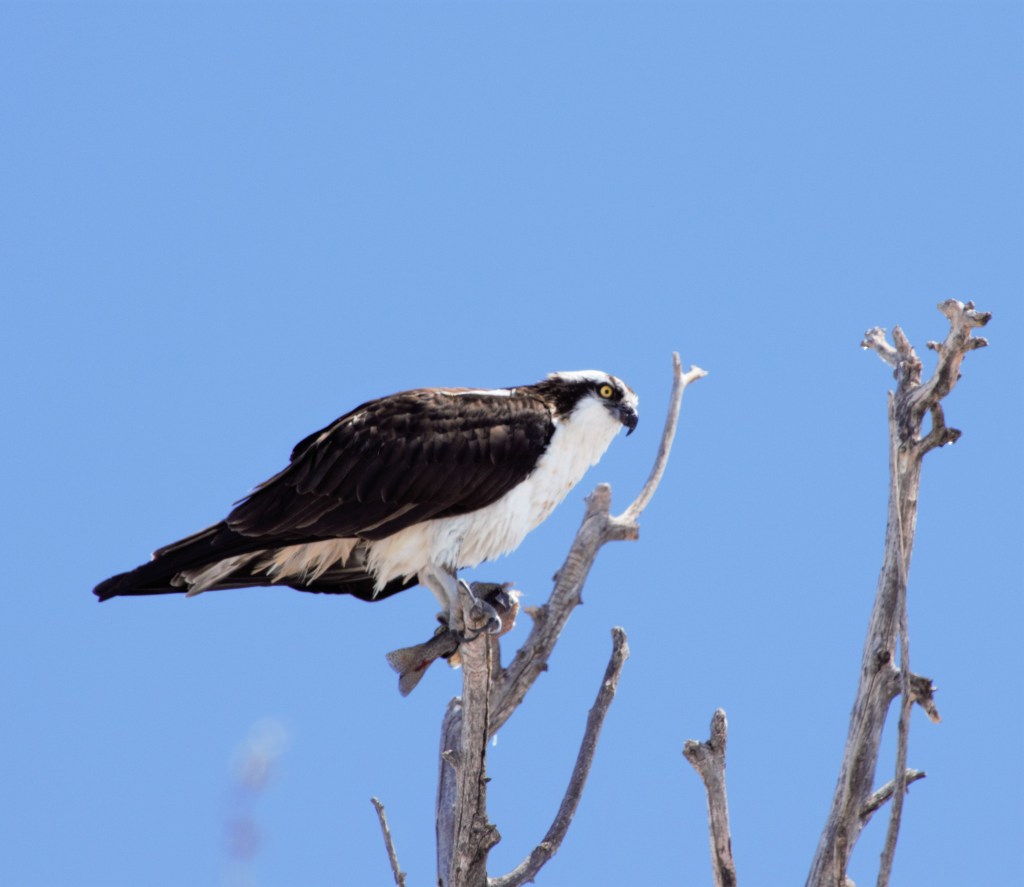
Osprey With Fish In Tree 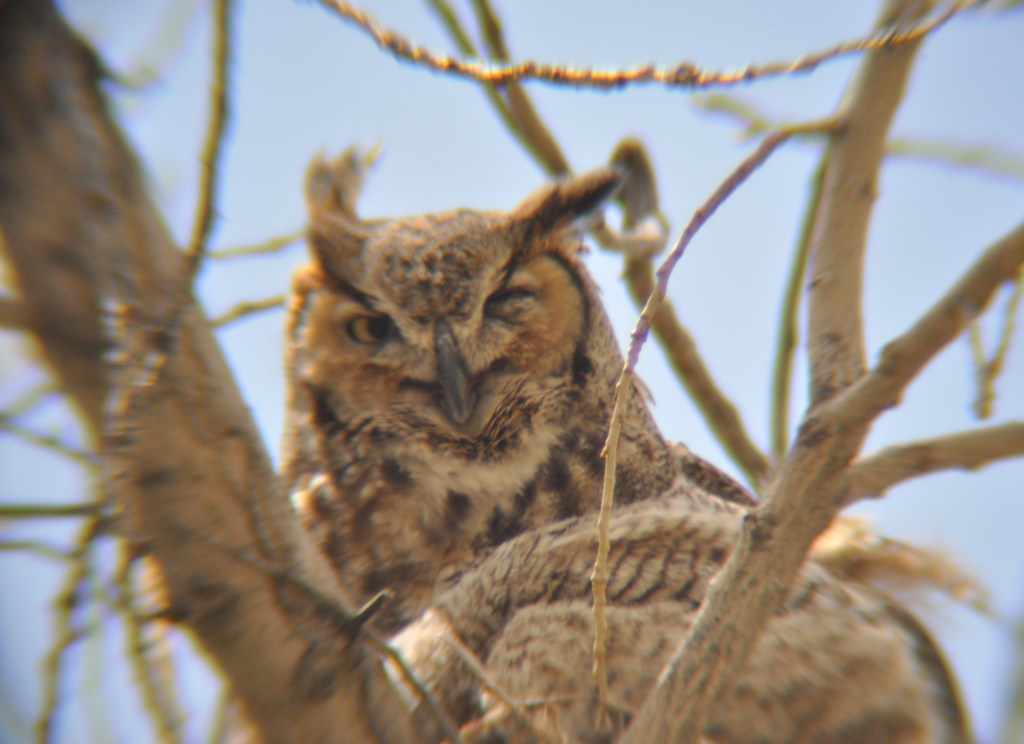
Wind Blown Owl
Raptors are birds of prey that eat meat or fish, they prefer to consume what they have just hunted rather than carrion but will do so if their food supply is constrained. While on WaltAbout year round I have been able to see owls, hawks, falcons and Americas national symbol the Bald Eagle. Some of the birds are permanent residents here while others are part of the great flocks that traverse the Central Flyway, which is larger than half the size of the mainland of the US. The raptors are at the top of their food chain and are a bell weather indicator of the health of the avian population in the region. Raptors like most predator’s follow their food supply. The Osprey you see to the left feeds mainly on fish. Knowing that I wait for fish and game to start stocking the local reservoirs and then go on WaltAbout there to get some photos, this system works out pretty good. One of the favorite prey of red-tailed hawks are Voles which are a mouse like rodent that they hunt in the open fields. Once that source is depleted the hawks will hunt for their prey near fast food restaurants. They are not dumpster diving but on the lookout for voles that are dumpster diving. Nature adapts to coexist with man!
Birds they are everywhere and they have been around for a very long time. Fossils prove that birds evolved at the same time as the dinosaurs during the Jurassic period 160 million years ago. A German paleontologist around 1860 found a fossil known as archaeopteryx, about the size of a crow showing the link between birds and the dinosaurs. Their have been very few times when I have been on WaltAbout when I have not seen birds. The three birds you see to the right I have observed multiple years as I moved about my roaming territory and became very familiar with the wildlife and their habitat. I also have spotted Black-capped Chickadee, Wrens, Mountain Bluebird, Nuthatch, and the very pretty Western Bluebird. Birding whether intentionally or on the fly is a very pleasant part of WaltAbout.
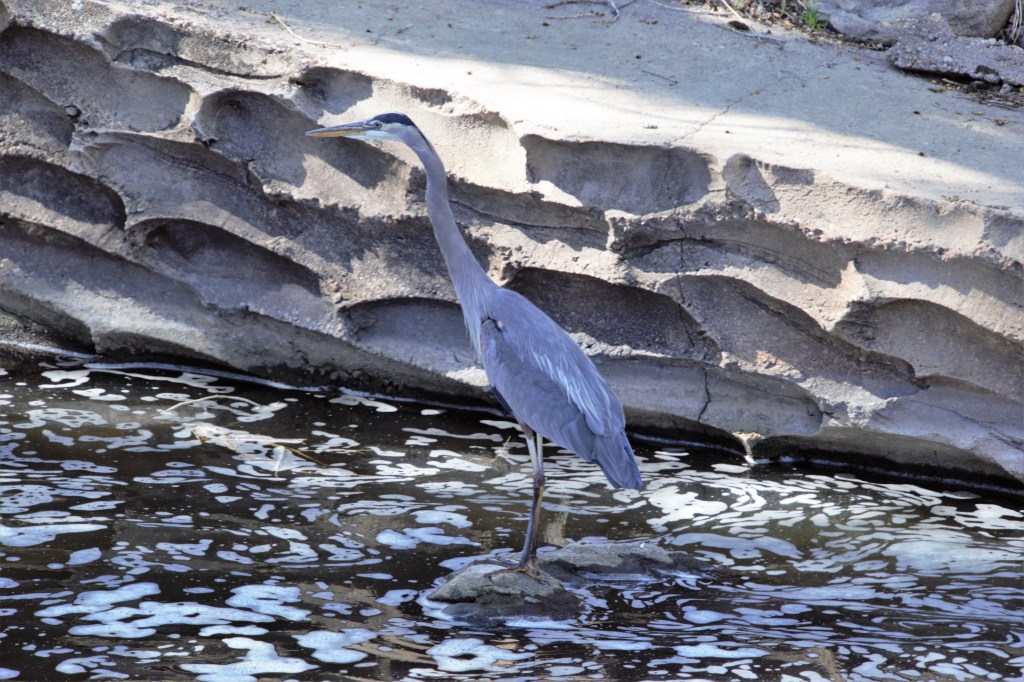
Great Blue Heron Spring Hunting 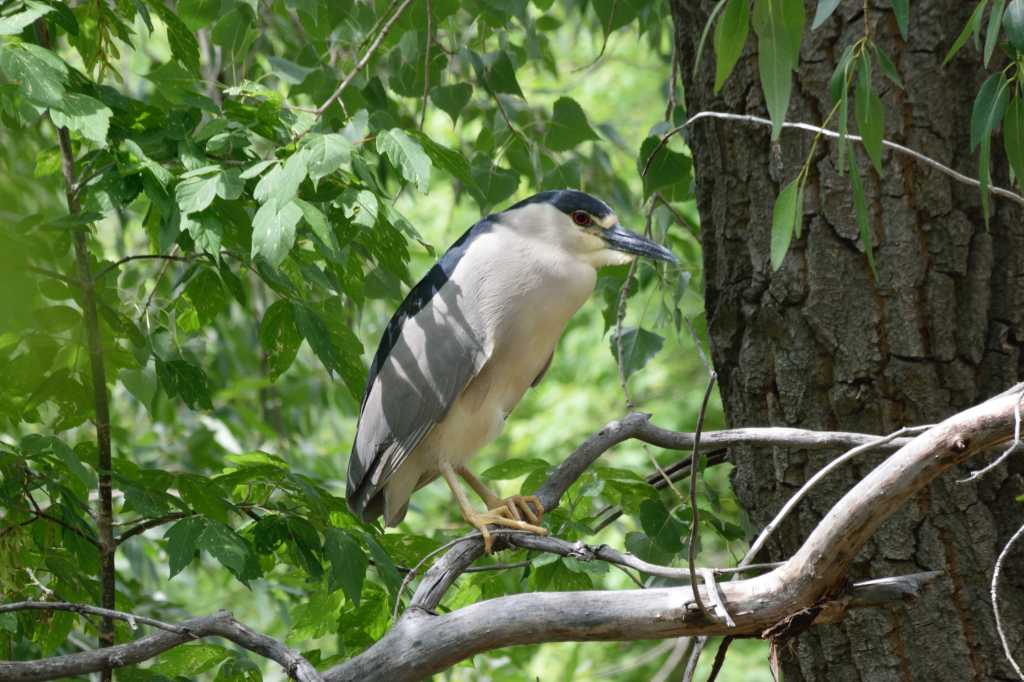
Night Heron 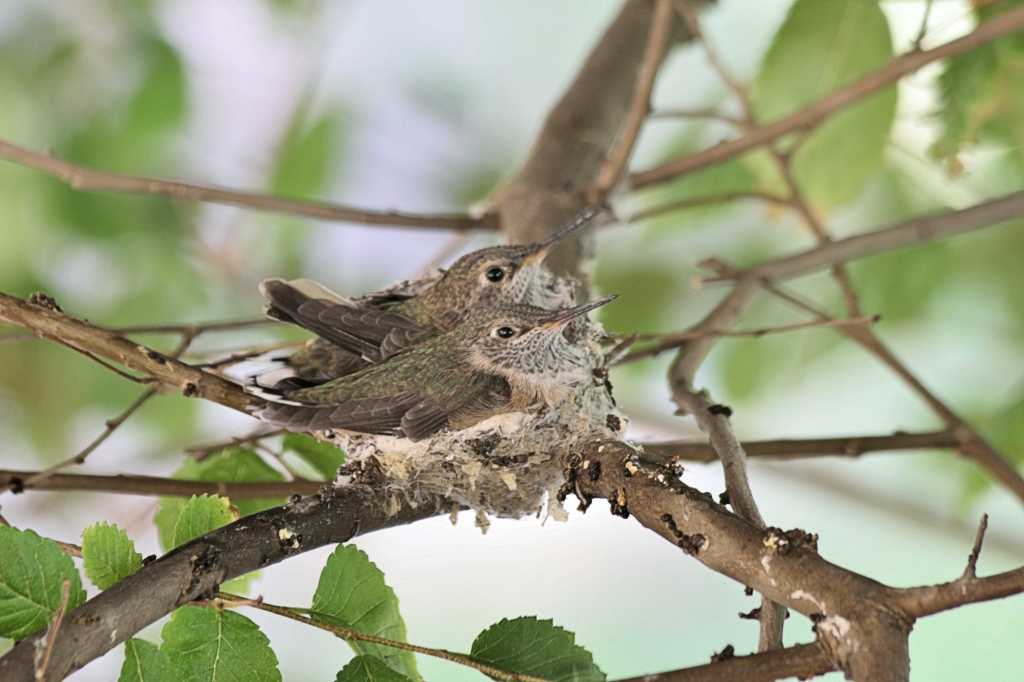
Twins
