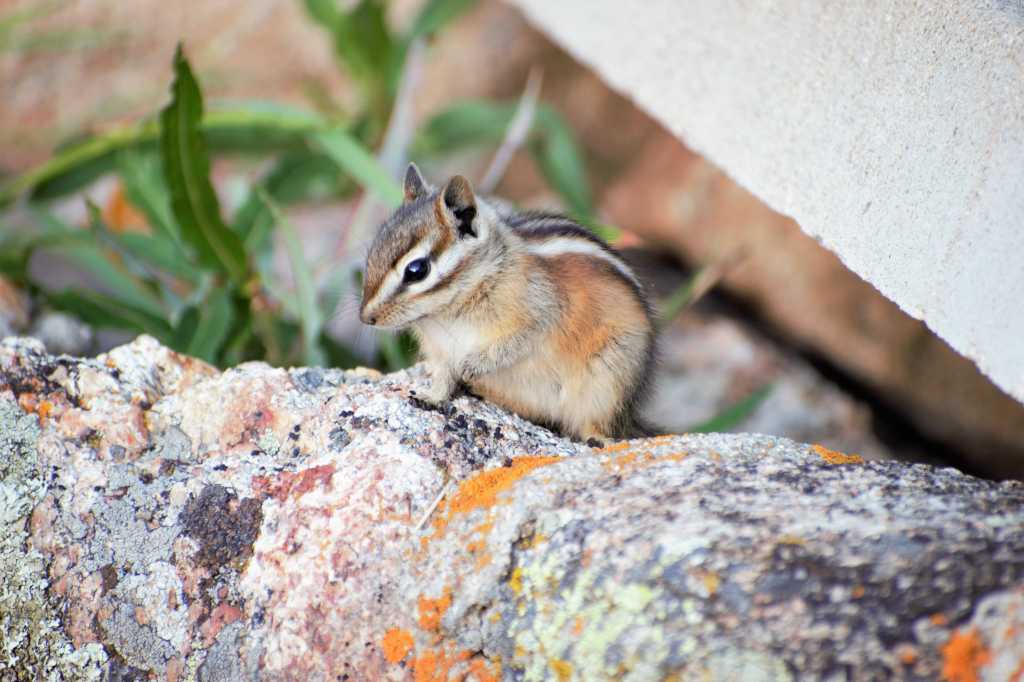
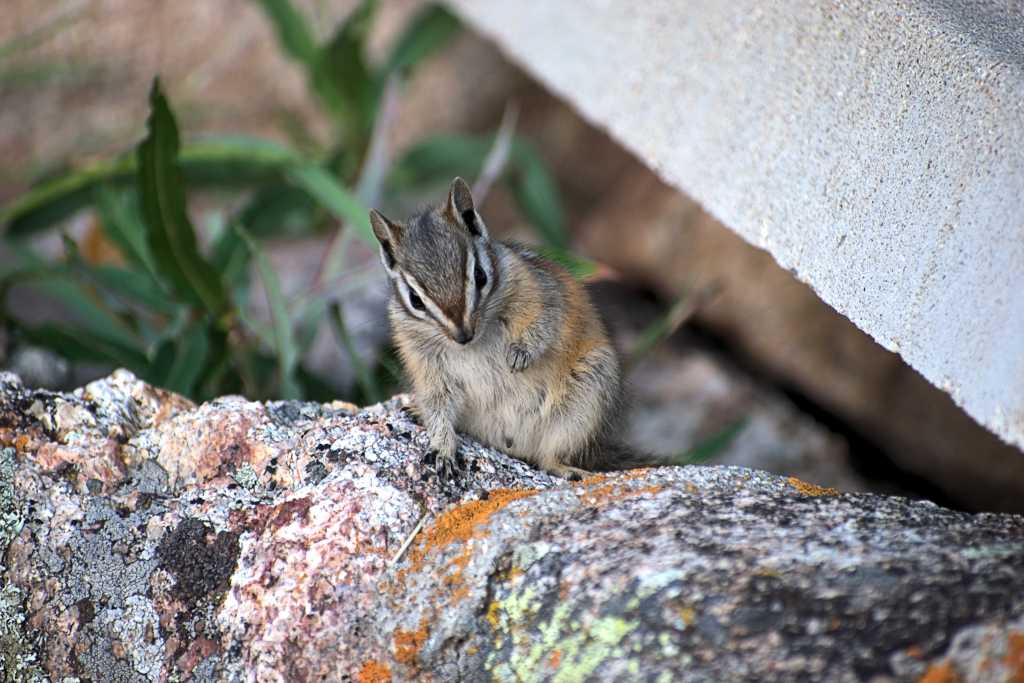
While working as the Rocky Mountain Dishwasher my WaltAbouts took on whole new heights. The Echo Lake Lodge were I worked and lived at for five months is at an elevation of 10,600 feet. Some of the first wildlife I saw were the least chipmunk running around the lodge. These chipmunks do not hibernate so they hoard food to last through the winter. They are called larder hoarders because they store their food in one central place near their den. Members of the the Sciuridae Family they gnaw for life as they keep their incisors sharp and healthy. Chipmunks have an average lifespan of about three to five years.
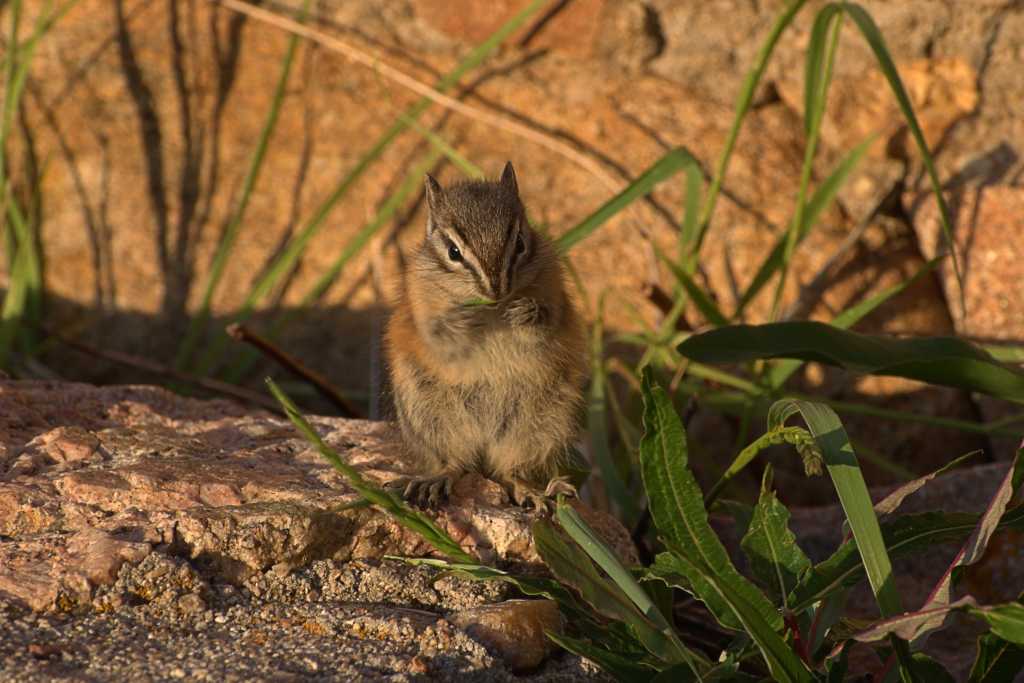
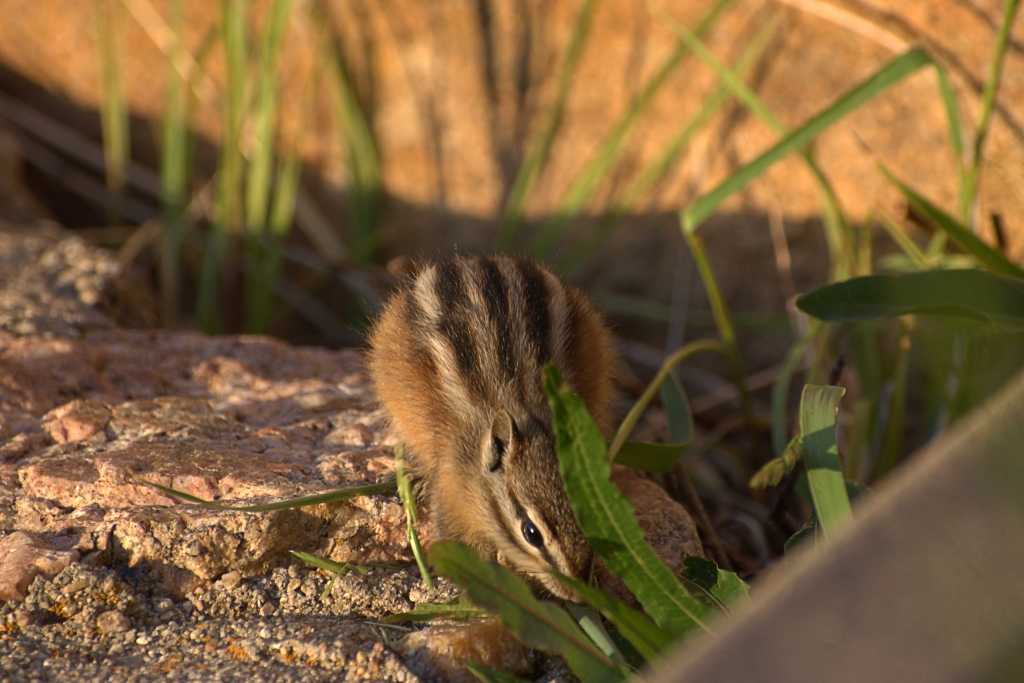
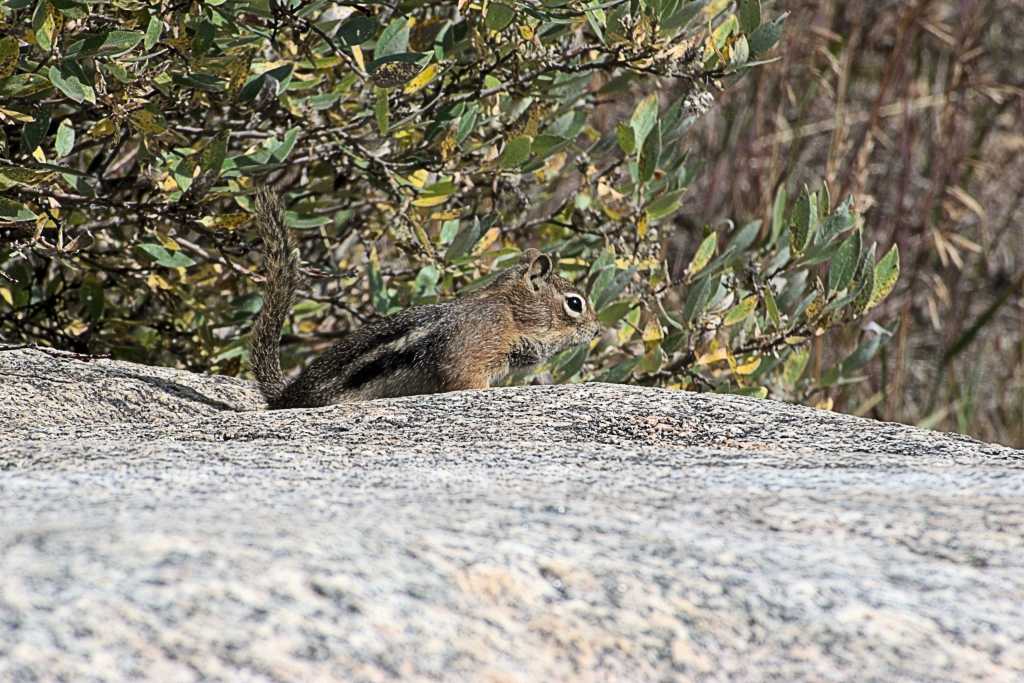

The Least chipmunk has 4 toes on its front feet, 5 toes on its hind feet and runs with its tail in a vertical position. This enables them to move rapidly while maintaining their balance. On a number of occasions I saw how quick and shifty they could be as they would scoot in and out of the front doorway of the lodge. The Least chipmunk is one of the smallest of its species and their coats are a much darker brown with black and white stripes in the summer that turn to gray in the winter. Like their cousins the marmots they communicate warning one another with chirps and squeaks.
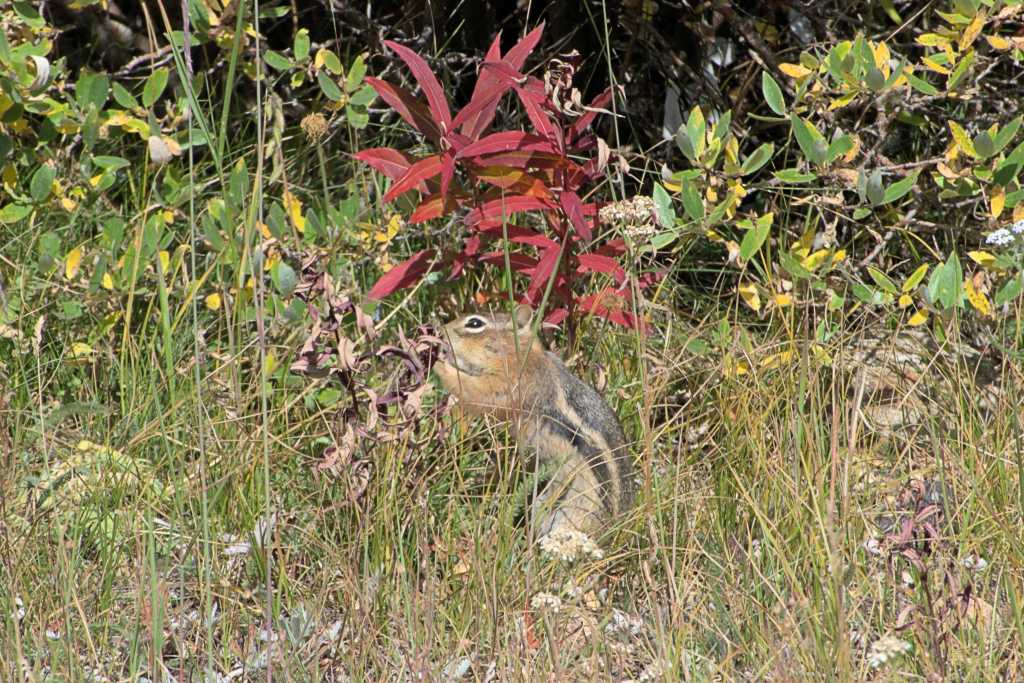
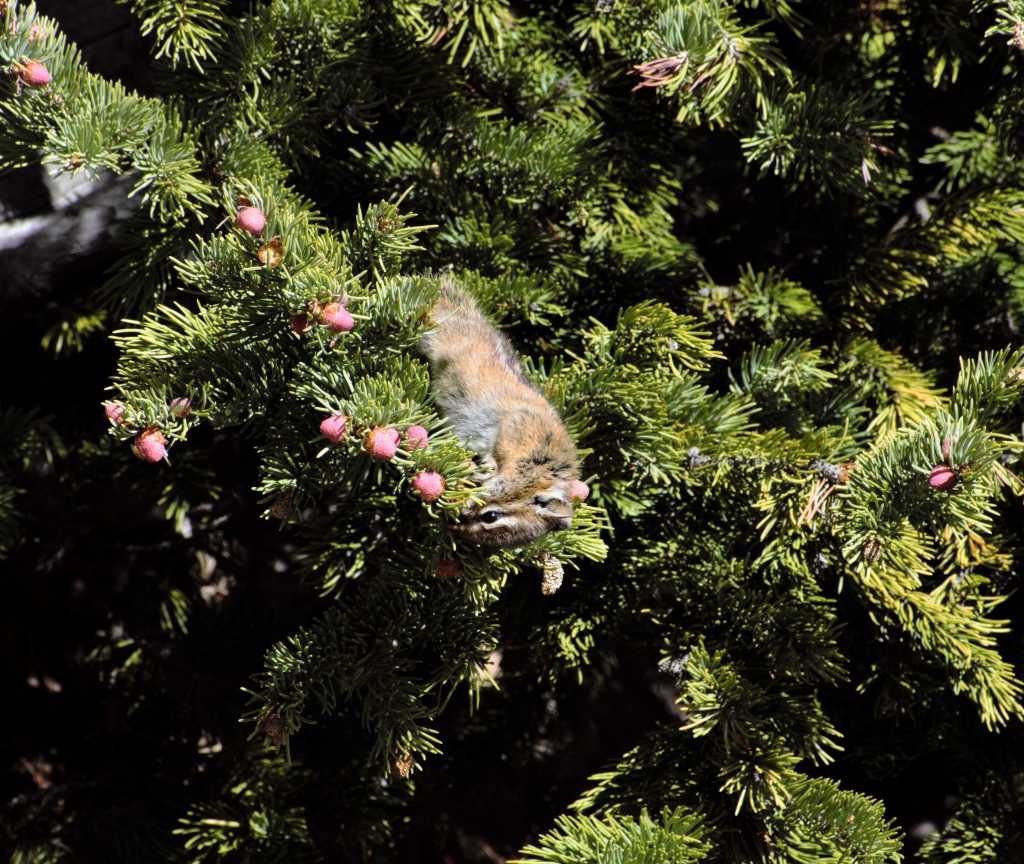
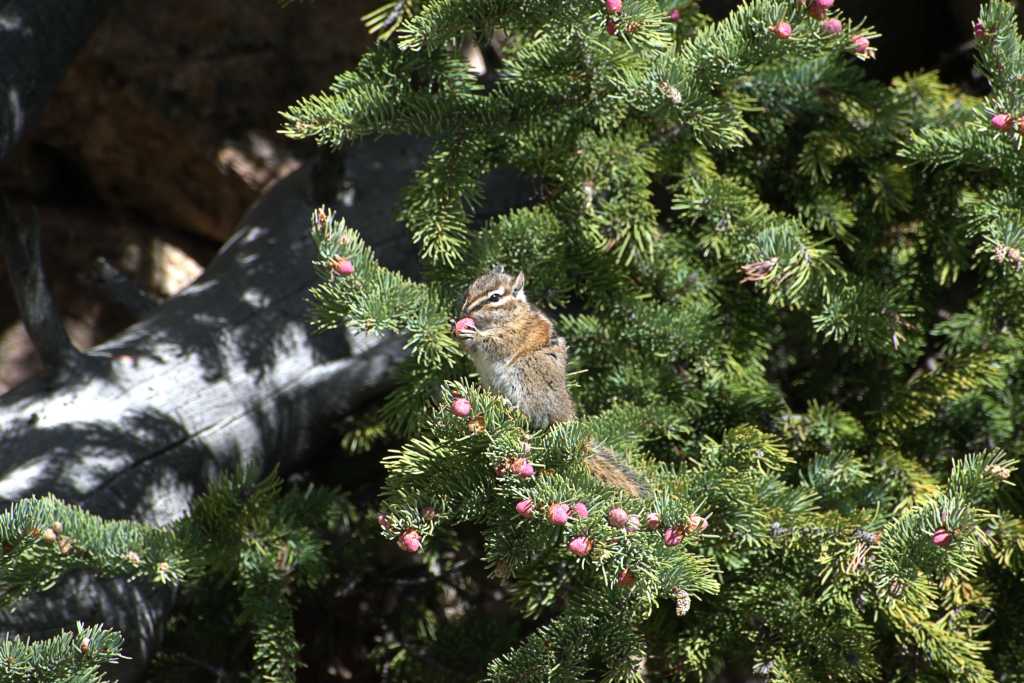
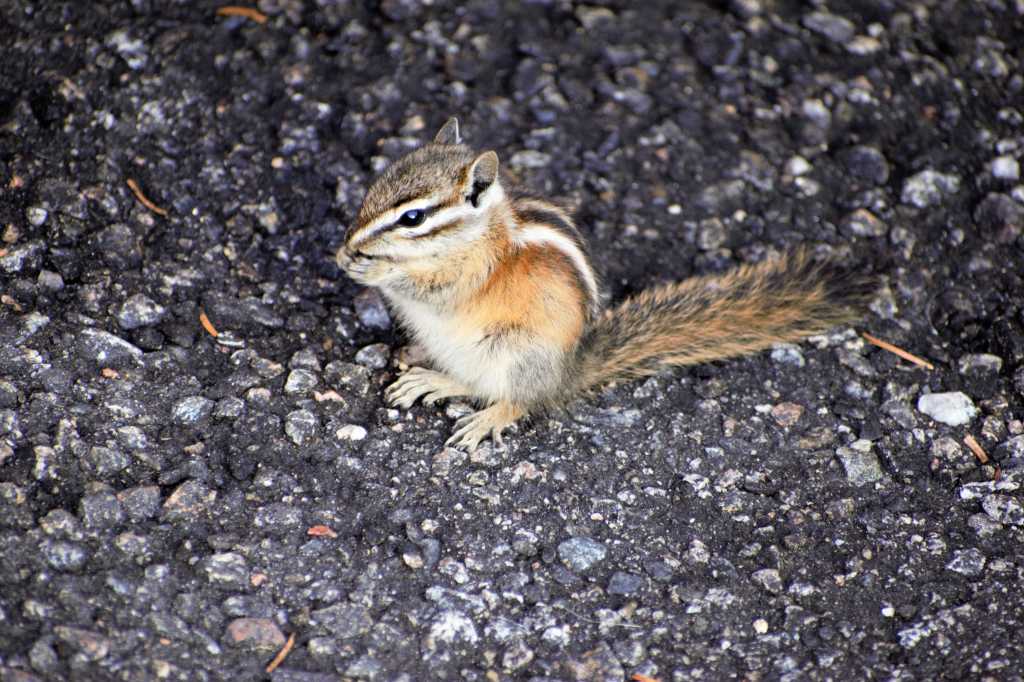
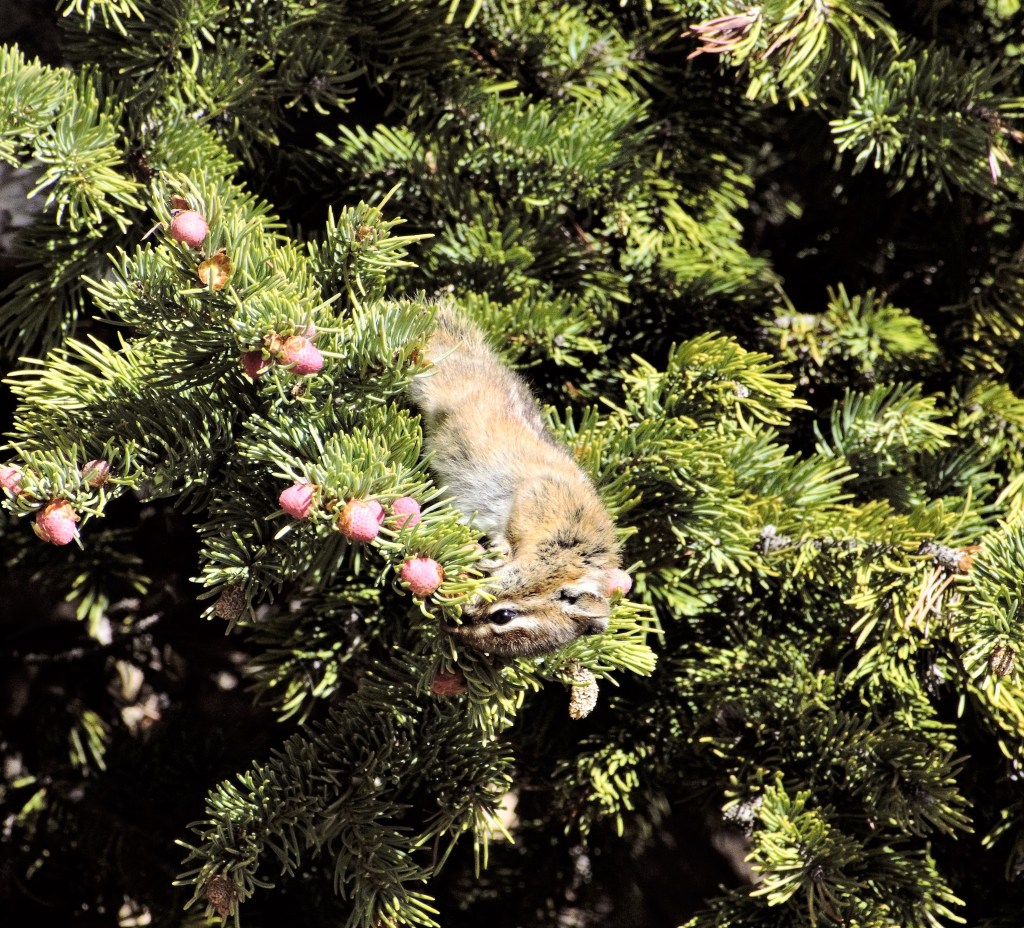
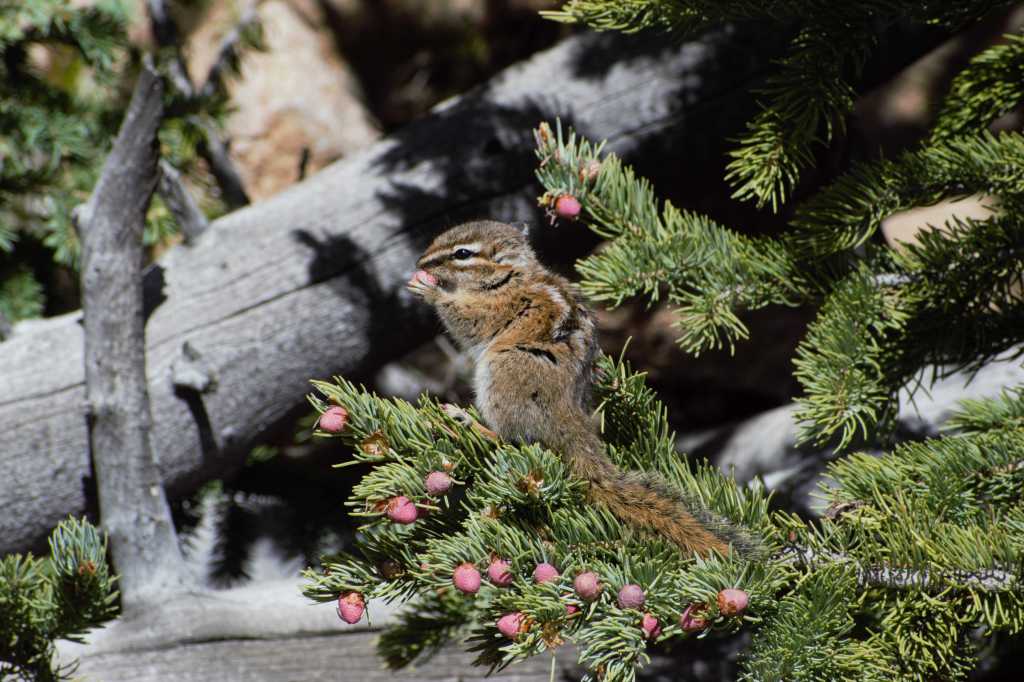
The Least chipmunk has jowls on its cheeks, these pouches are used to put as much food as possible in them to take to their den. They mostly eat nuts, seeds, fruits and berries that are readily available in the forest. The chipmunks when the occasion presents itself will also eat insects, eggs, small reptiles and rodents making them omnivores. Pine Cones are a staple of the chipmunks who love the seeds. Female chipmunks are a little bit larger than males and can reproduce two times a year in early spring and then again in early summer with two to four pups per litter. The chipmunk family unit is fairly strong as both the male and females will care for their offspring in the den. The pups will begin foraging about two weeks after birth and leave the nest for good after about six weeks.

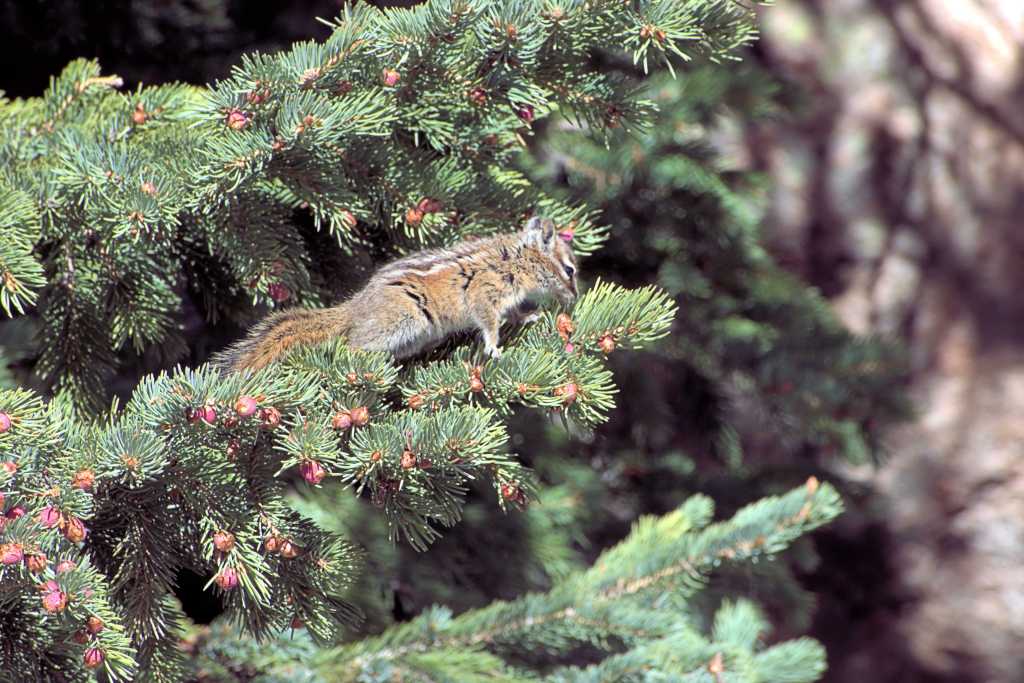
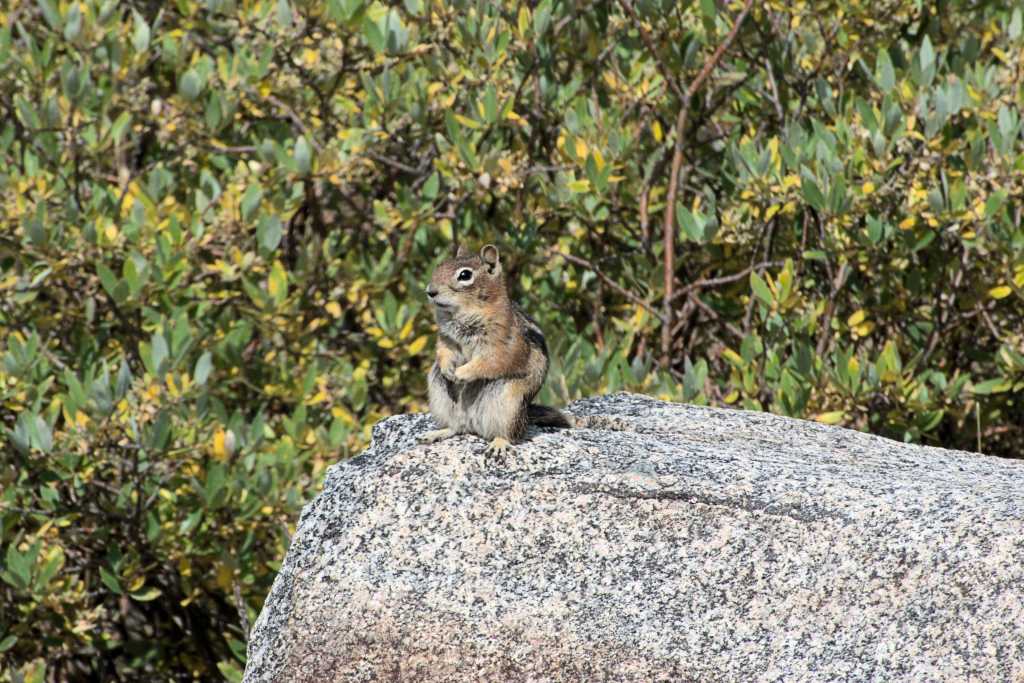
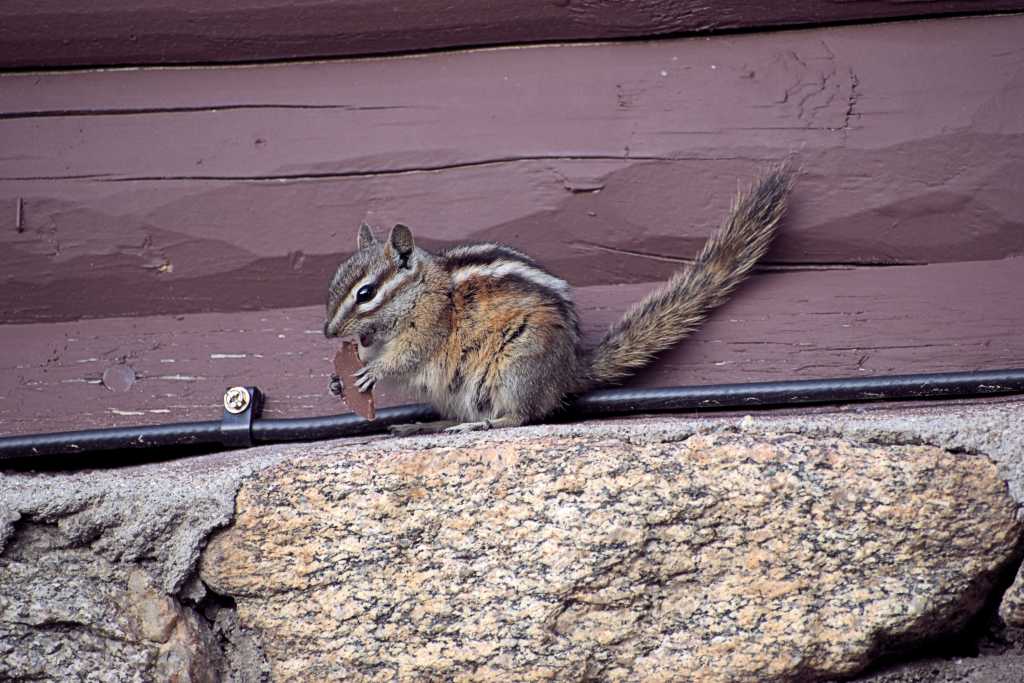
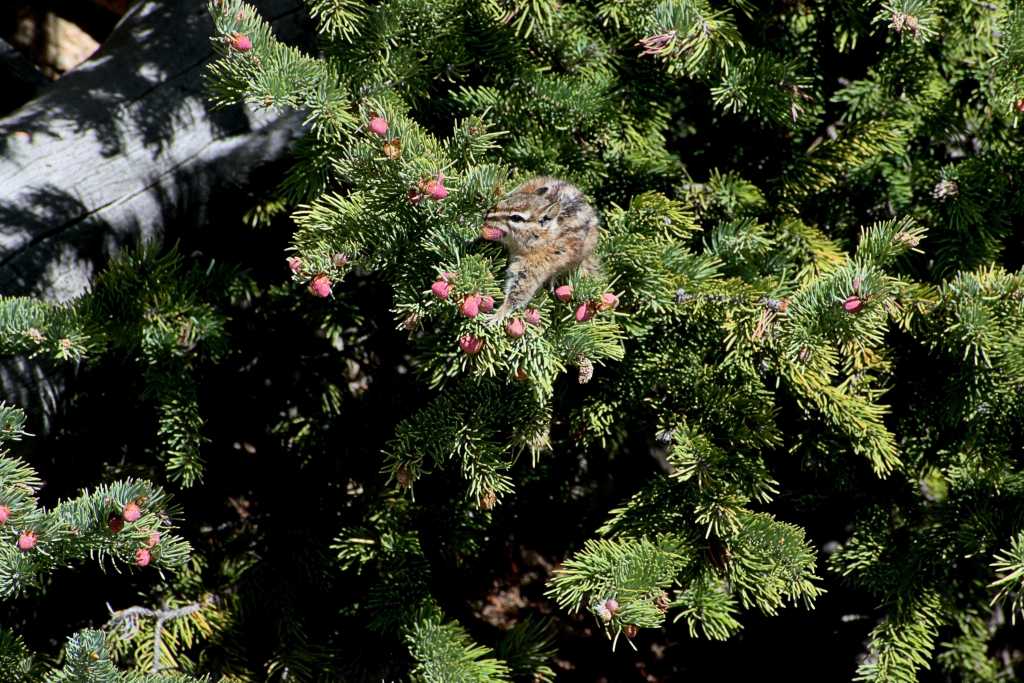
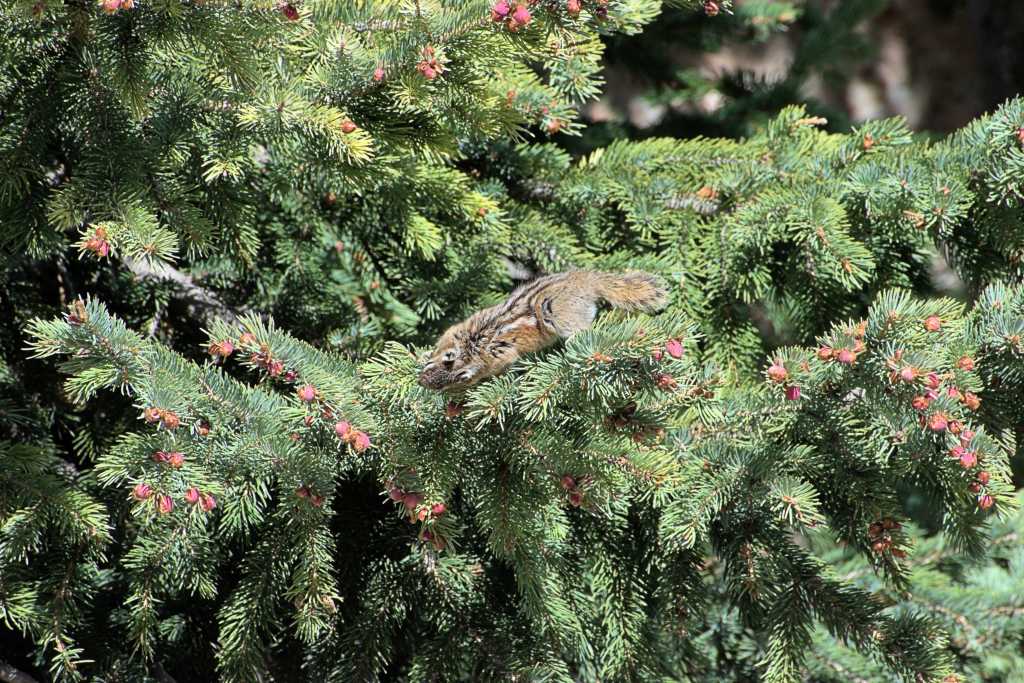
My sightings of the Least chipmunks were at two locations while I was at Echo Lake and Mount Evans. I would see them daily around the Lodge and occasionally in the pine trees at the one mile marker on route five. The chipmunks at the one mile marker were highly animated when I saw them either eating or just sunning on a pine tree branch. I would often stop at this location to catch a second breath, check my gear and most importantly take the time to appreciate the wilderness. Just shy of the three mile marker is the Mount Goliath Nature Center at an elevation of 11,500 feet and an end to the tree line. You will not find chipmunks beyond this point as there is simply no food supply for them. The marmots are the rodent potentate at this point and higher elevations, they are much bigger than the chipmunks who would not fare well in competition for food and territory. I have been fortunate while on my many WaltAbouts to see one of the smallest mammals in the state the Least chipmunk which comes in at about 2 ounces to the mighty buffalo which comes in at about 2,000 pounds.
