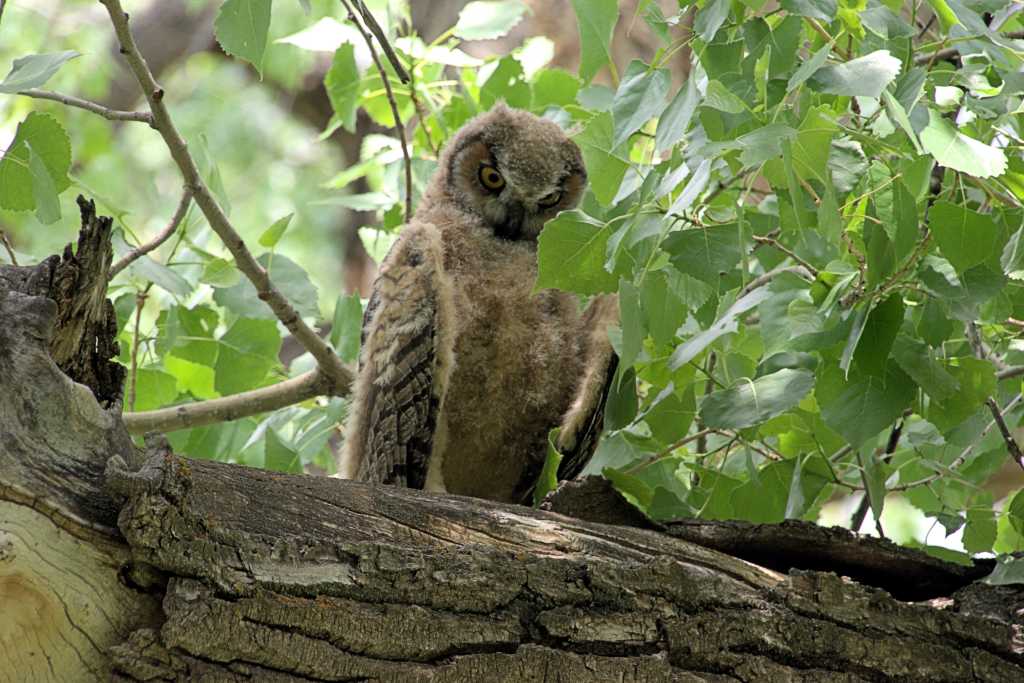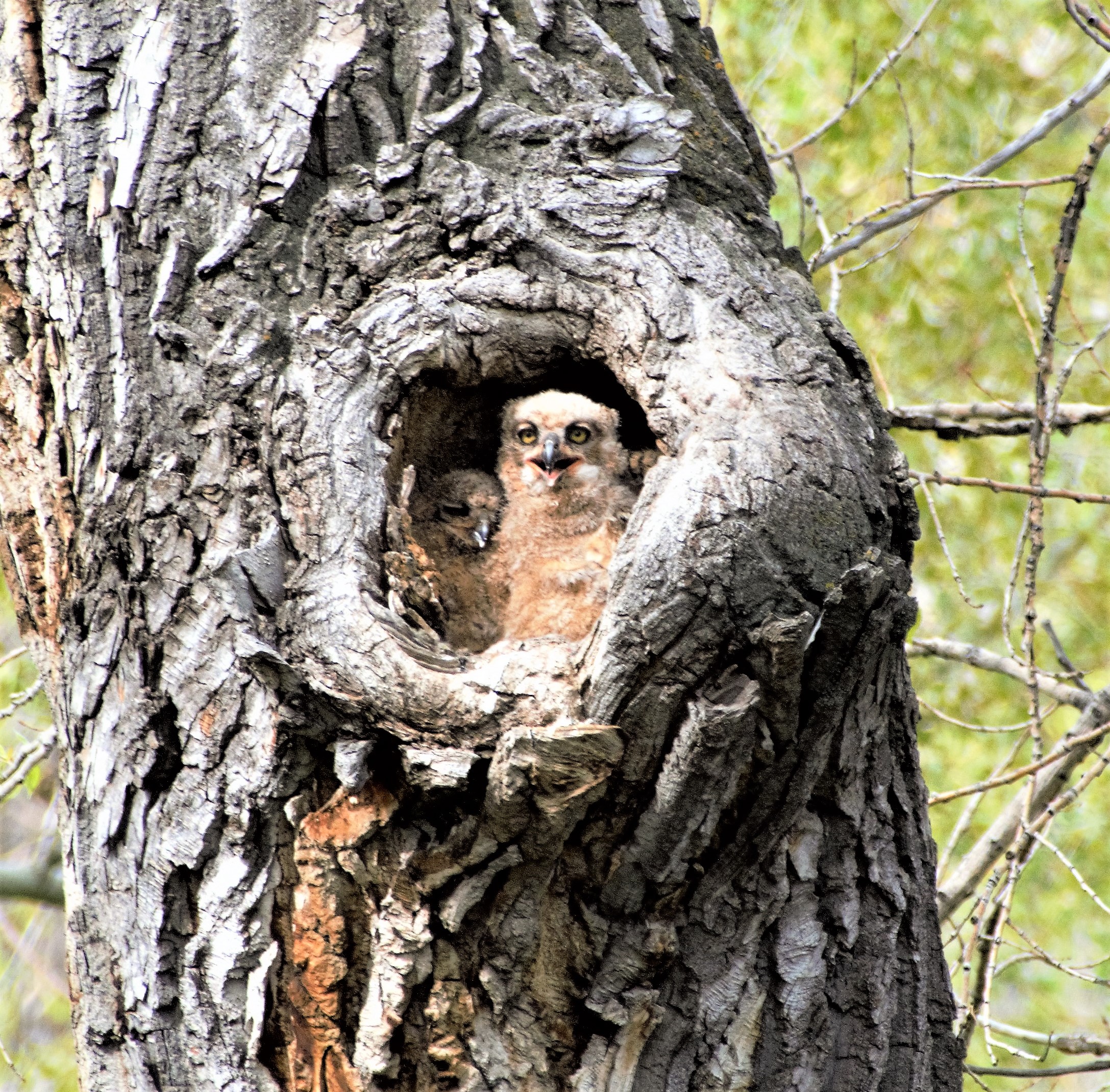
Baby Owls in Tree Nest
The Great Horned Owl is one of my favorite birds to see while on WaltAbout. They are nocturnal so I only see them from late January to early June when they mate and have their young. During that time frame they are very active throughout the day to have a successful breeding. This raptor has a thriving population and can be found from Uruguay to Alaska. Owls do not migrate, but stake out a territory for as long as it fits their needs. I have found these owls in open fields, meadows, streams and in my neighborhood.
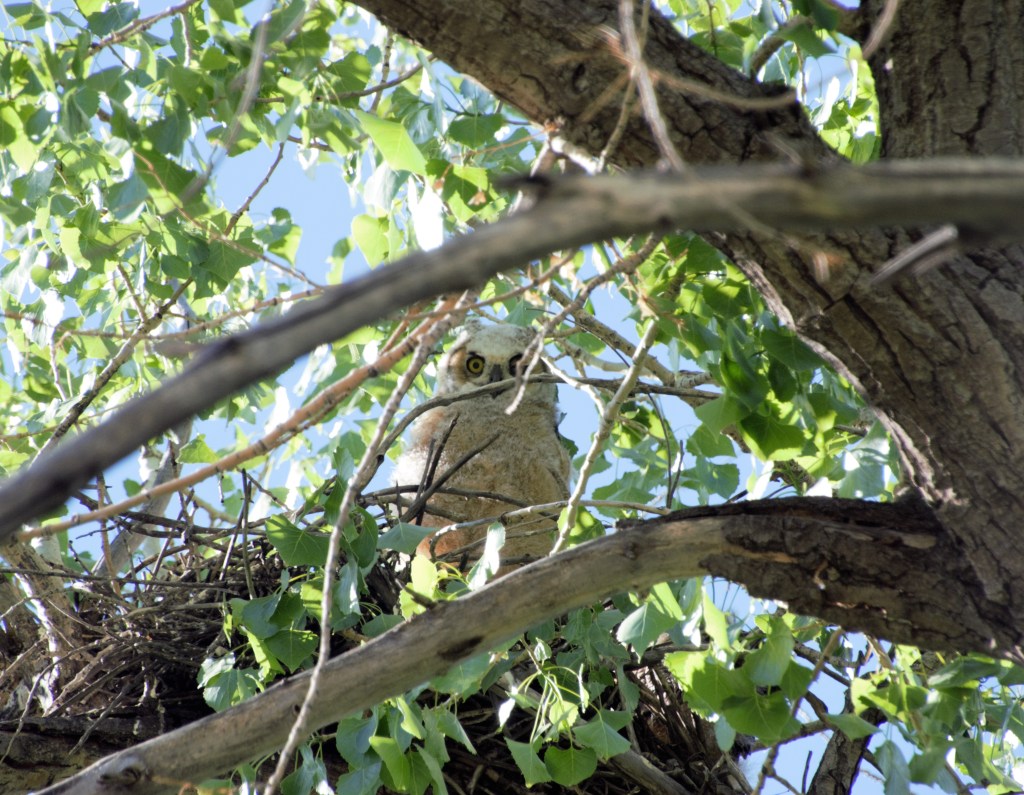
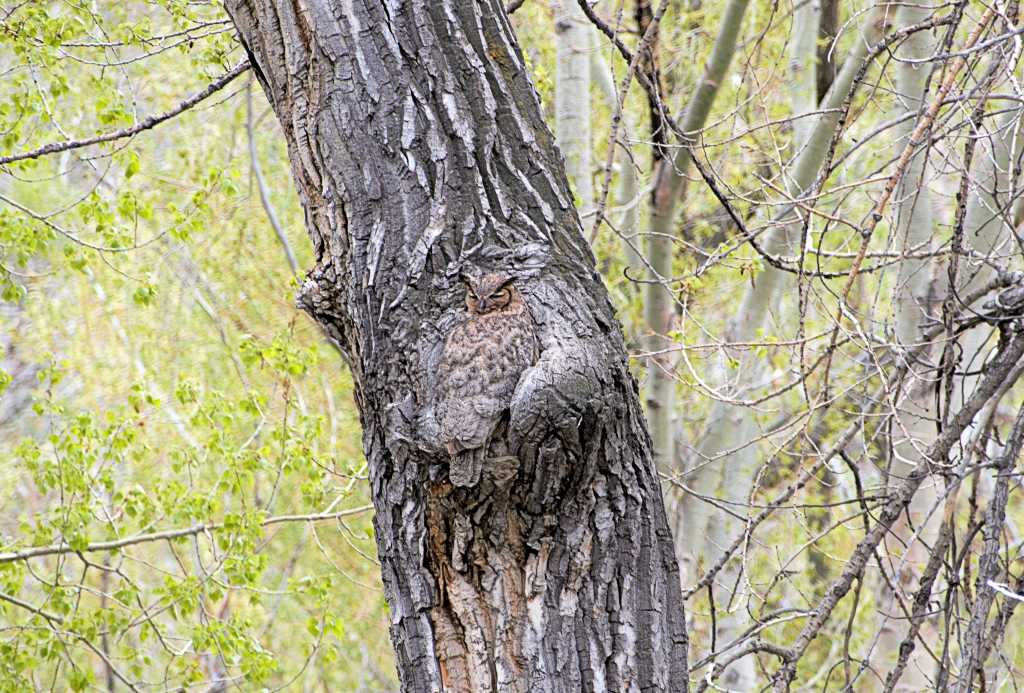
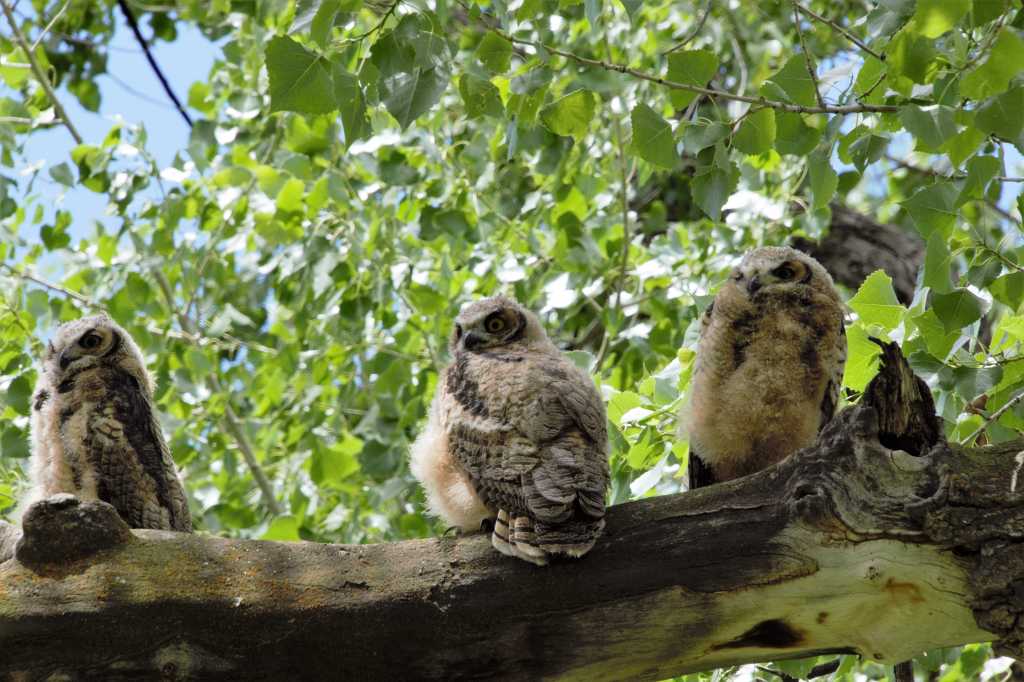
I have been very fortunate to find as many owl nests that I have. A big reason for this is that I get out in late fall and winter to visit sites from the previous year. There are a variety of reasons why a nest you have seen for the last few years is no longer there. Extreme weather and wind conditions can destroy tree nests very easily. Rotting trees and fires will destroy a variety of nests and of course human intervention can come into play.
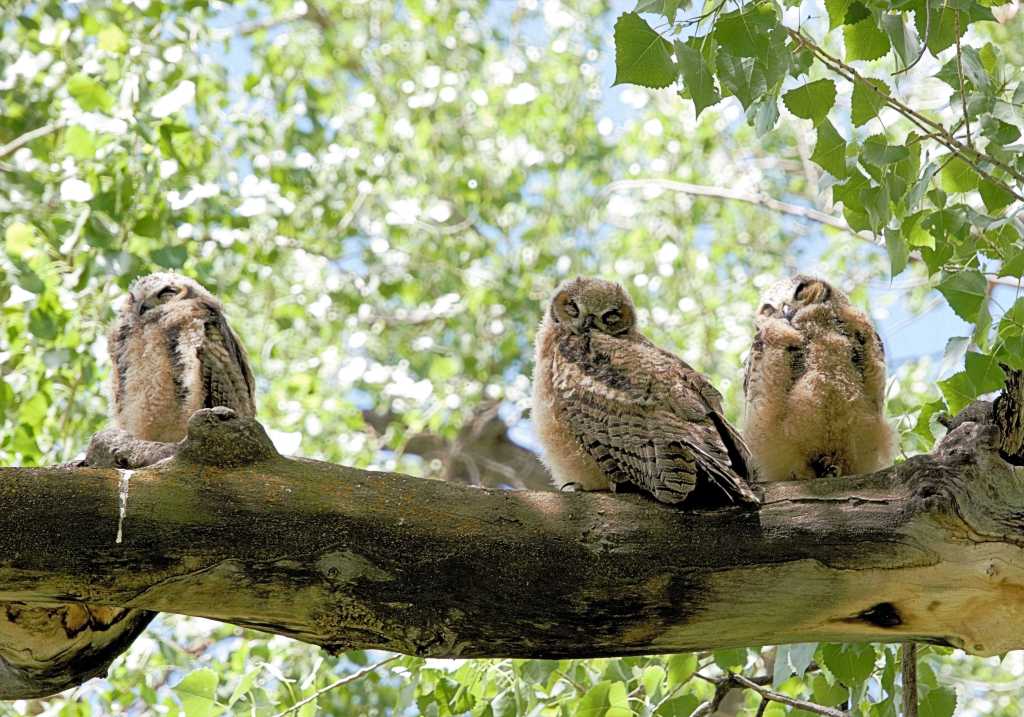
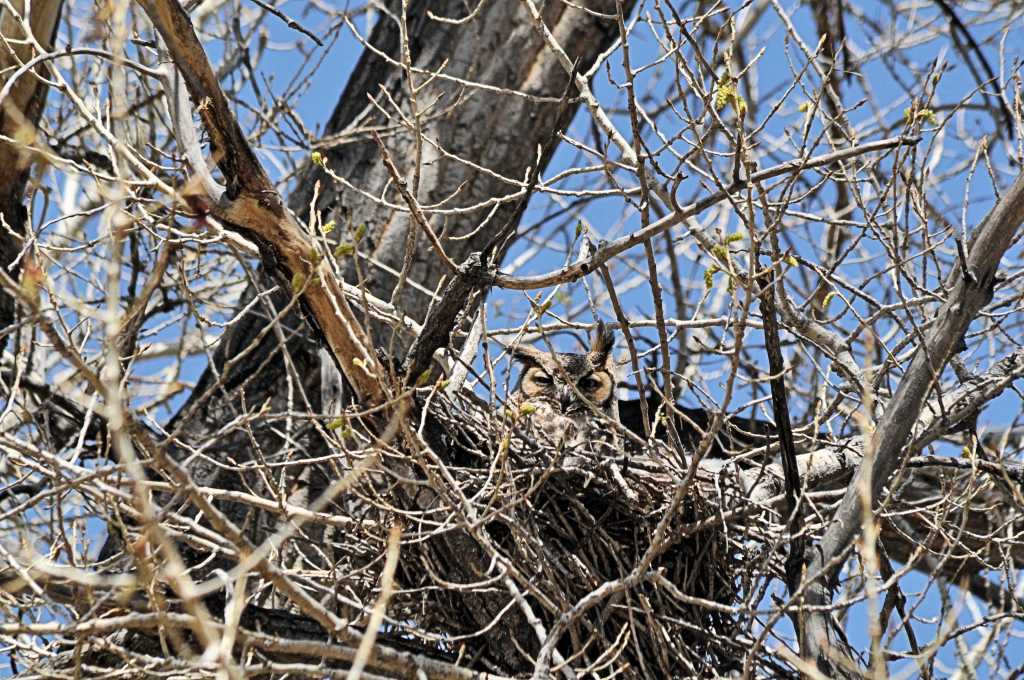
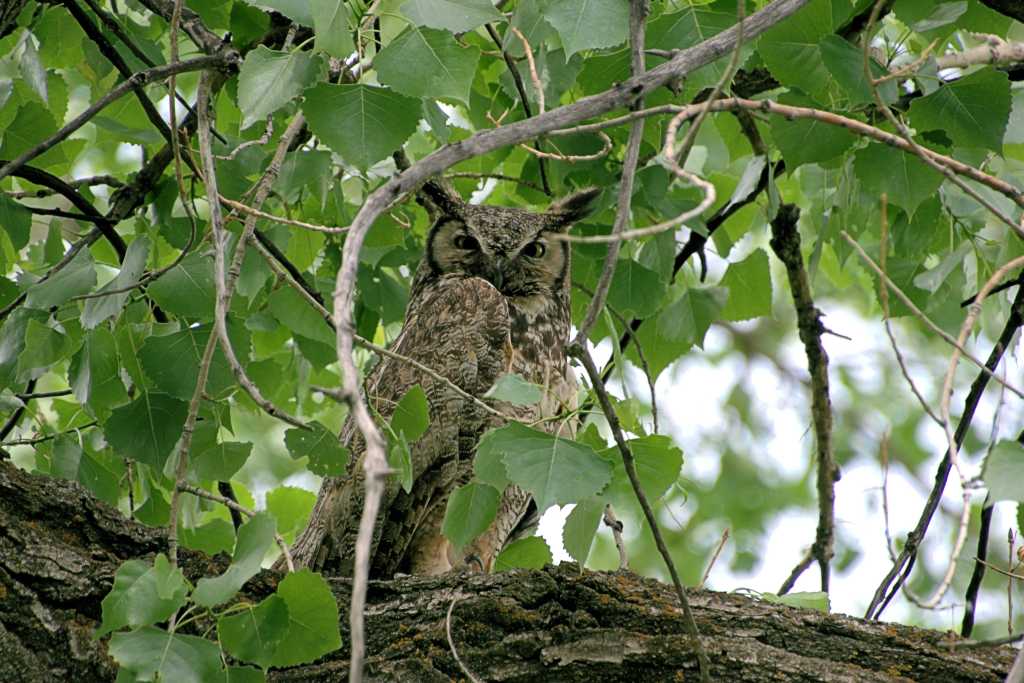
Great horned owls are the scoundrels of the avian world with a really bad attitude. This species does not build or maintain its nests. They steal nests from other birds once the nest they are in are no longer habitable and they do it right around breeding time. Great horned owls at times will line a nest with bark, foliage, or feathers but normally they do not perform any nest maintenance. I have found nests from about 15 to 70 feet off the ground and one that was in the trunk of a dead tree. Owls will also use nests that are carved out of cliffsides.
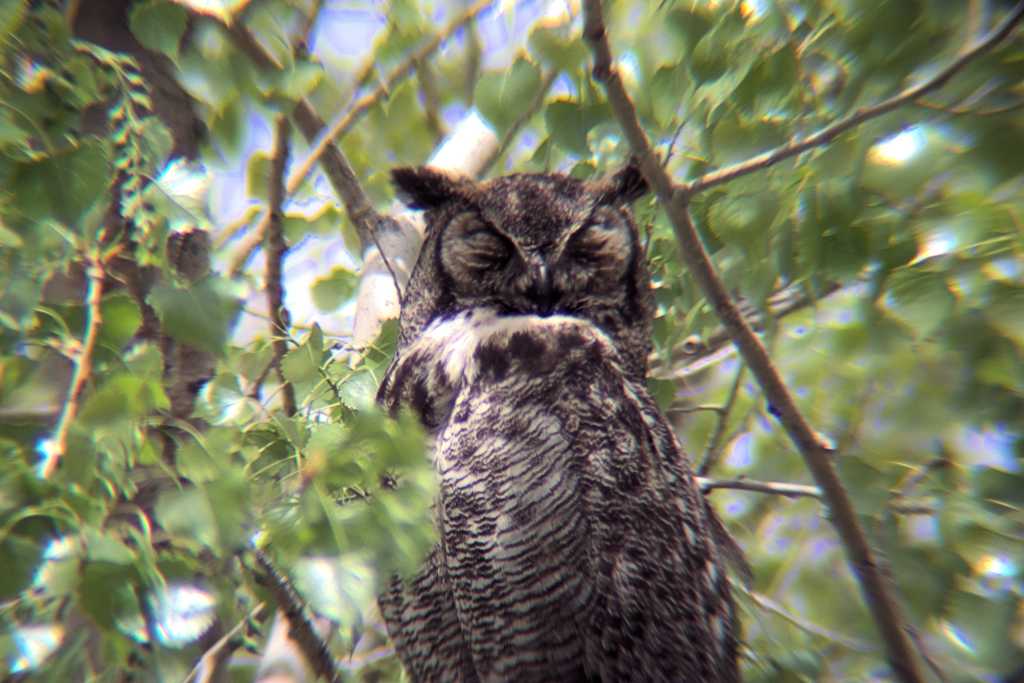
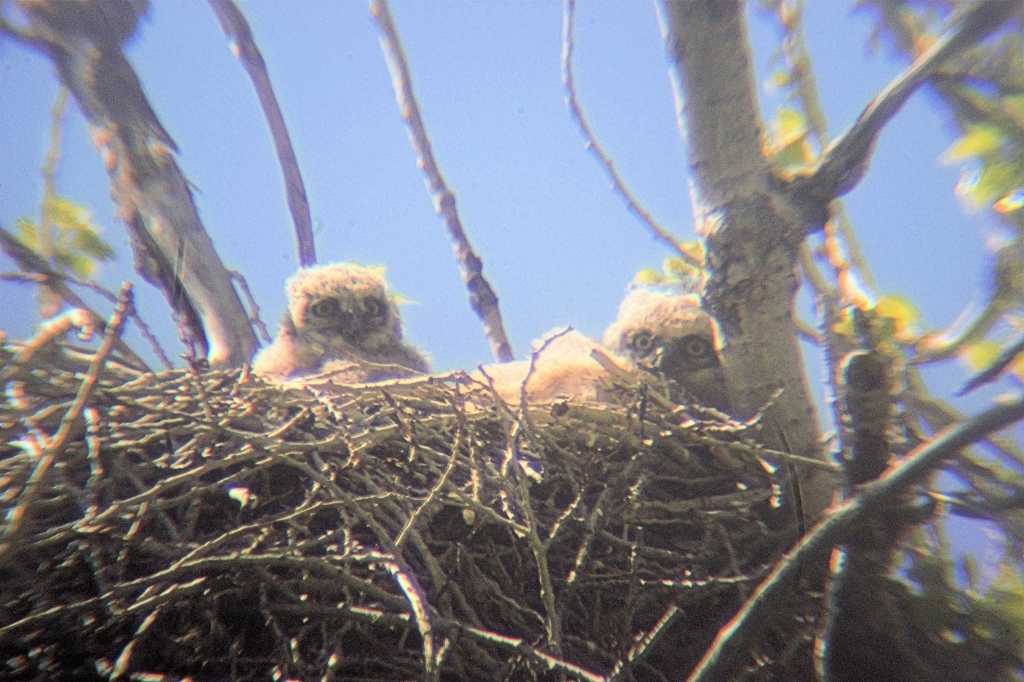
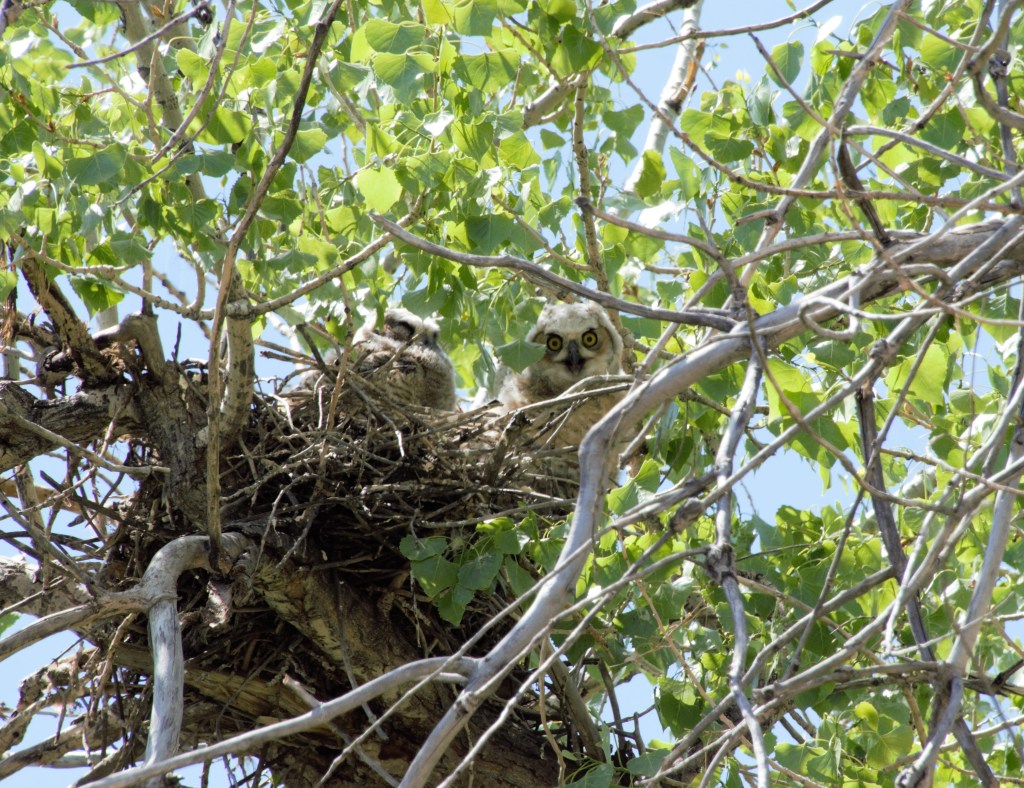
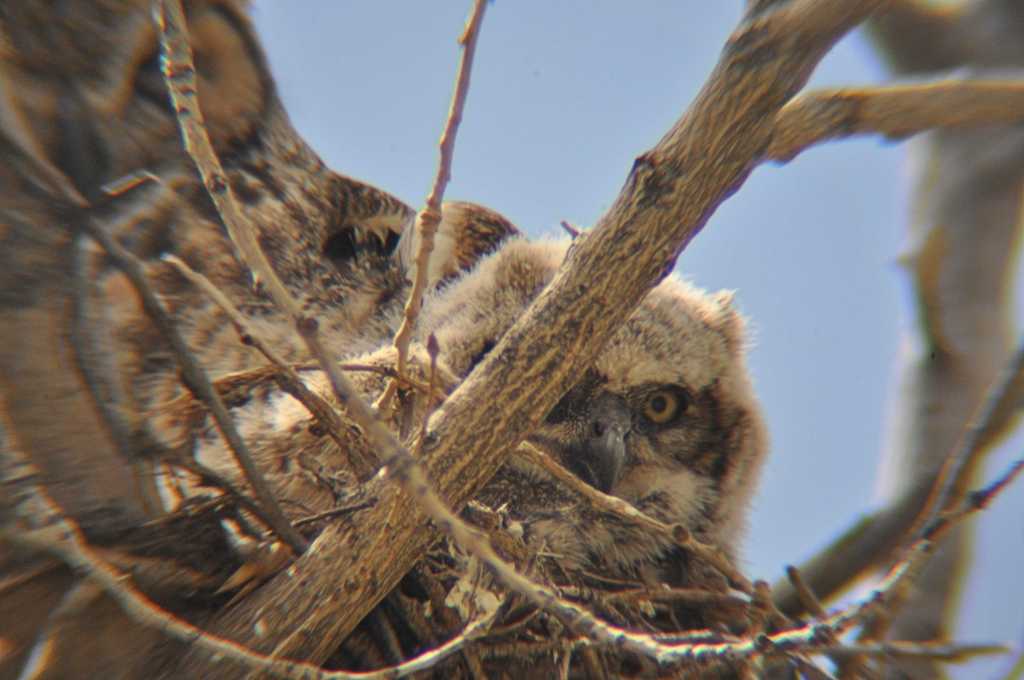
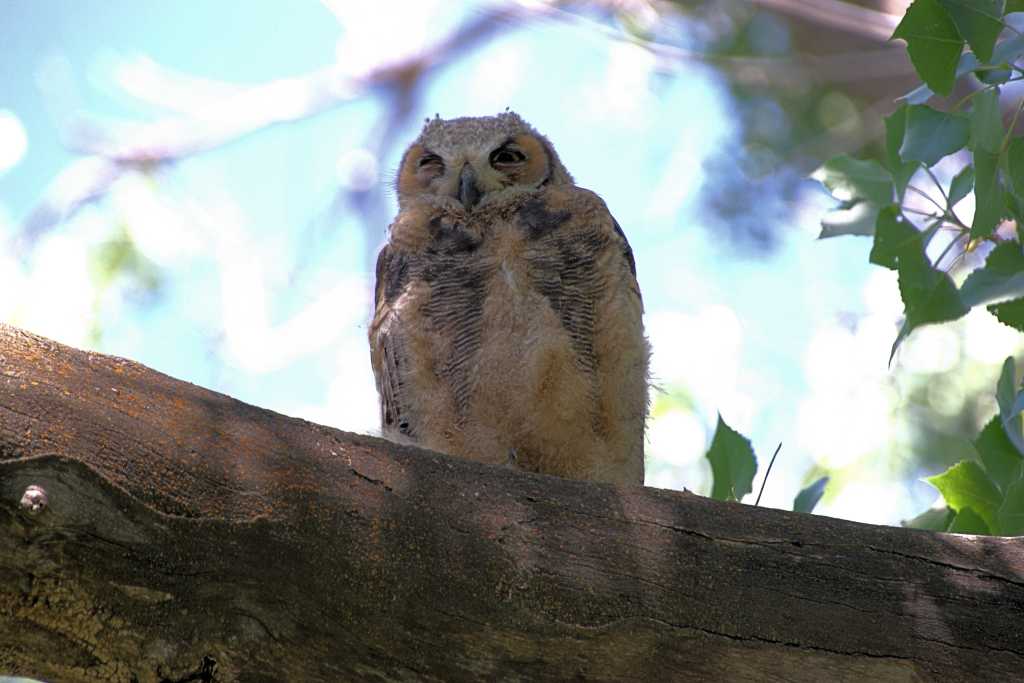
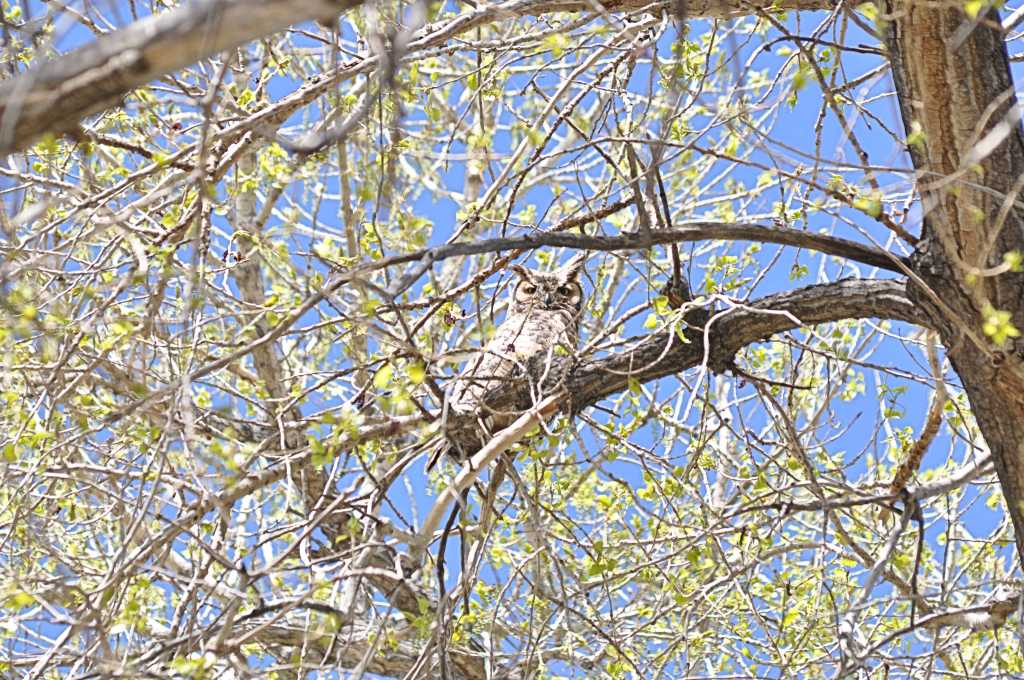
When you are looking for owls, look for whitewash which are owl excretions that are considered more like a urine than scat. You might also find pellets which are the indigestible matter (like bones) that owls will regurgitate in and around their nests. The long, earlike tufts of the owl has been a dead give away for me in finding them away from the nest. If they move them you can see that but if they don’t move the shape of the two tufts are almost identical and leaves on trees are often not. That bit of savvy comes in real handy as the tree canopies become thicker with leaves. Those big beautiful ears are why the Great Horned Owl got its name.
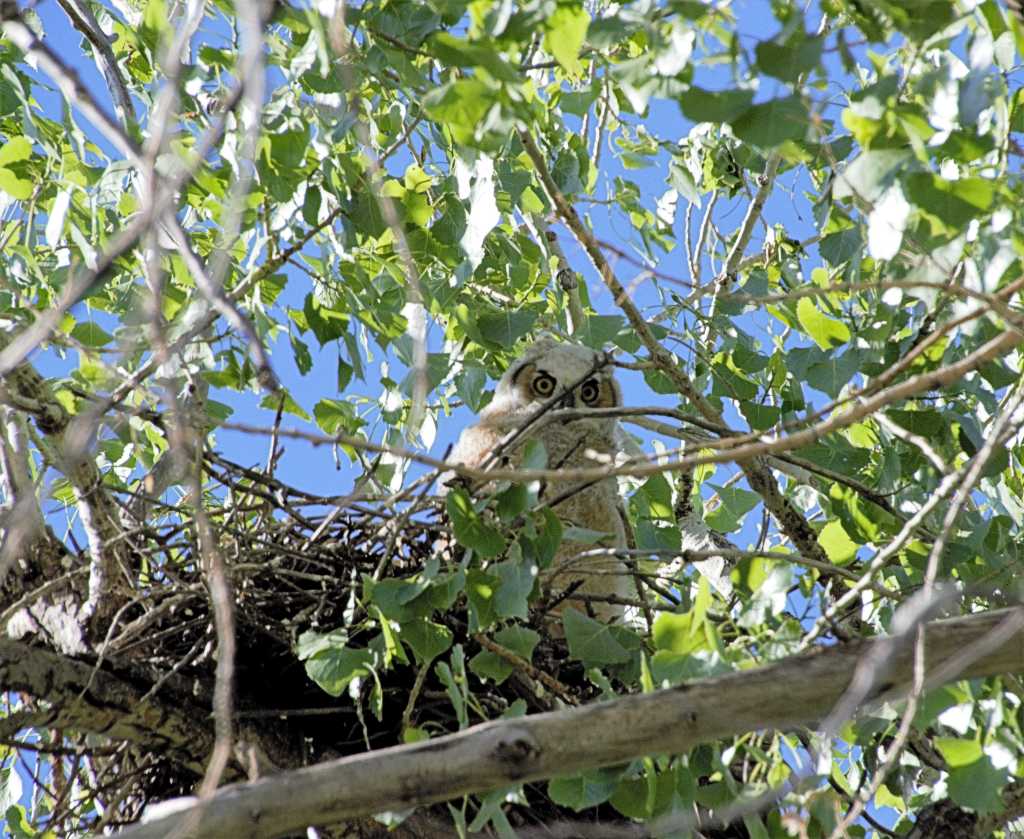
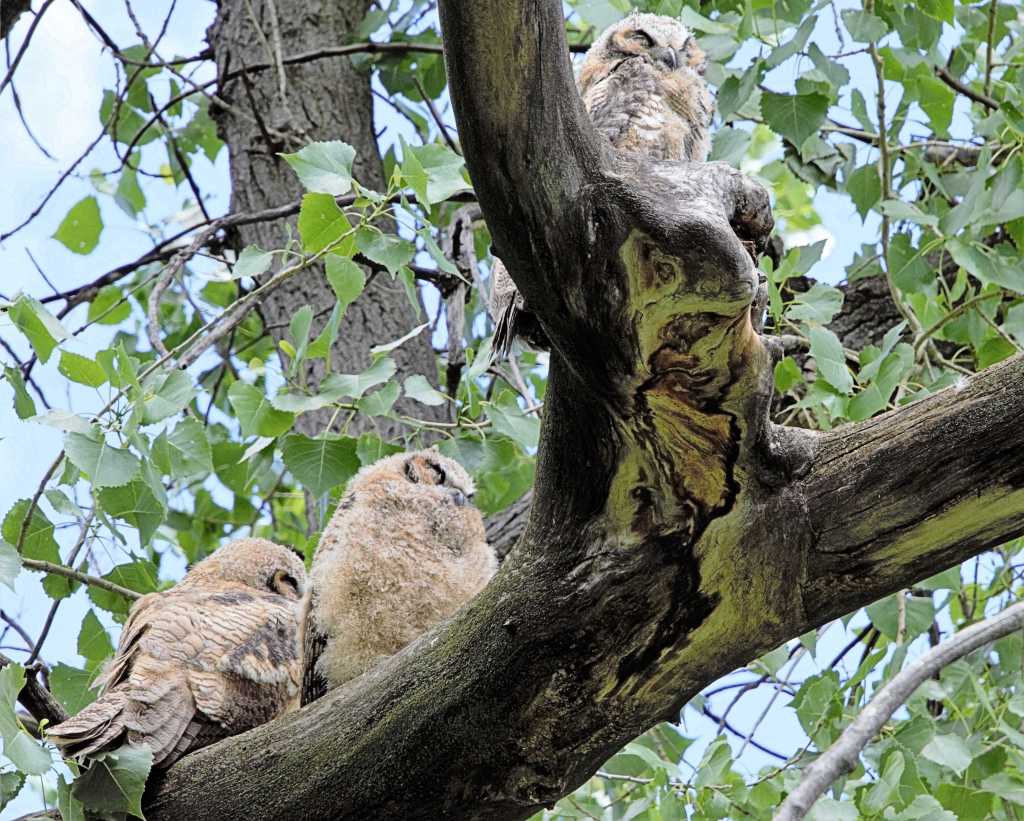
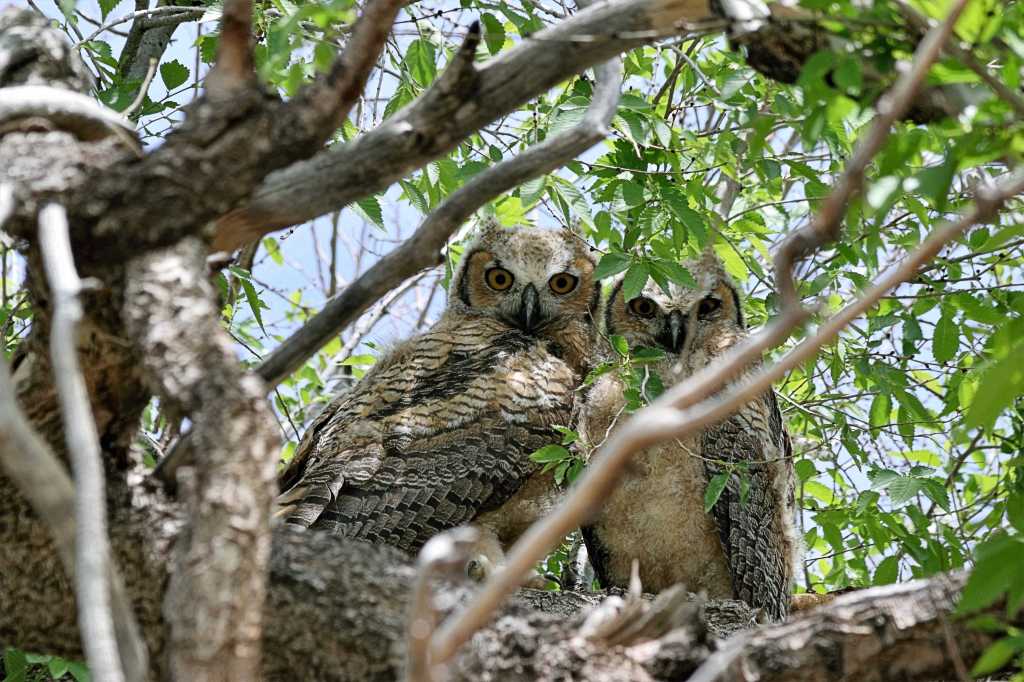
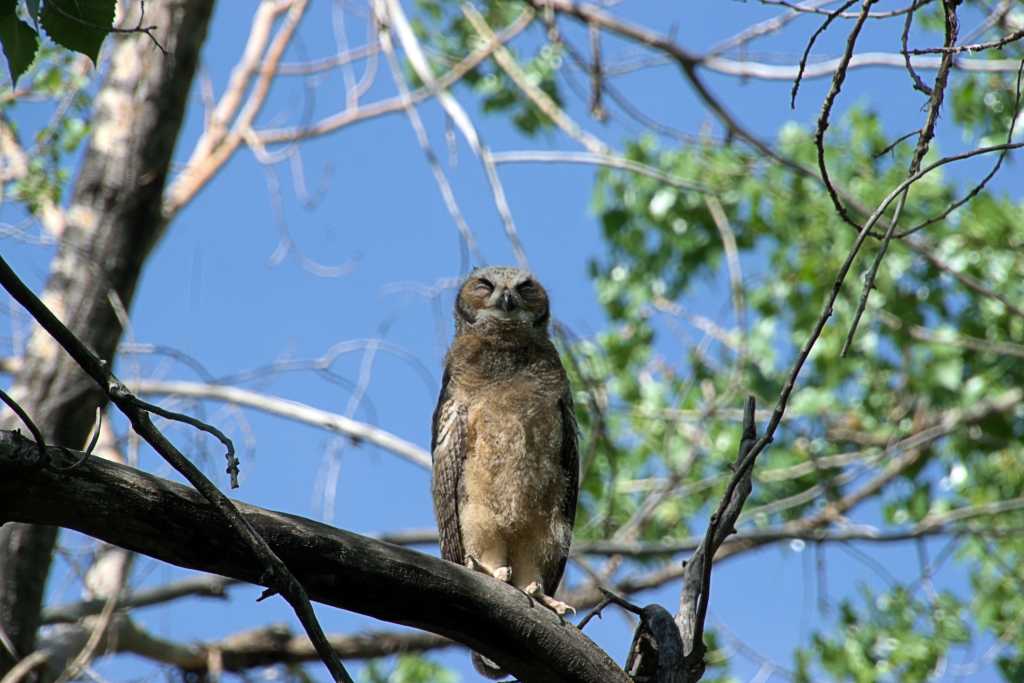
I have seen from two to five chicks in the nests that I have found. Like most raptors owls are parents that share some of the breeding activities like incubating and feeding. The females however spend more time providing care for the owlets. In about three months the young birds will be fully fledged and no longer be under the care of the parents who will mate for life.
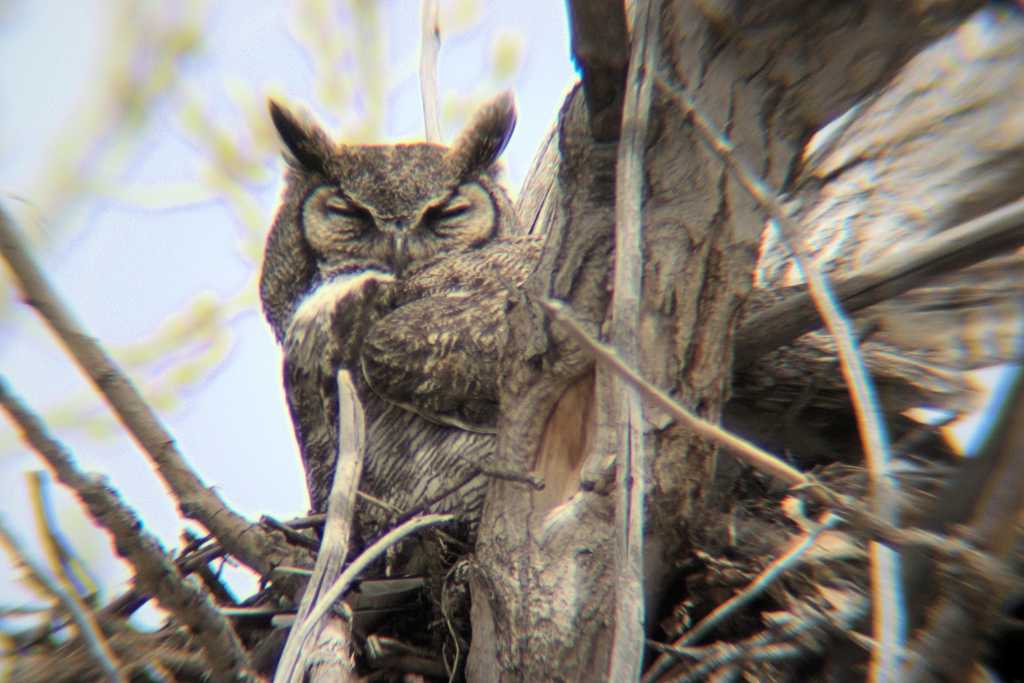

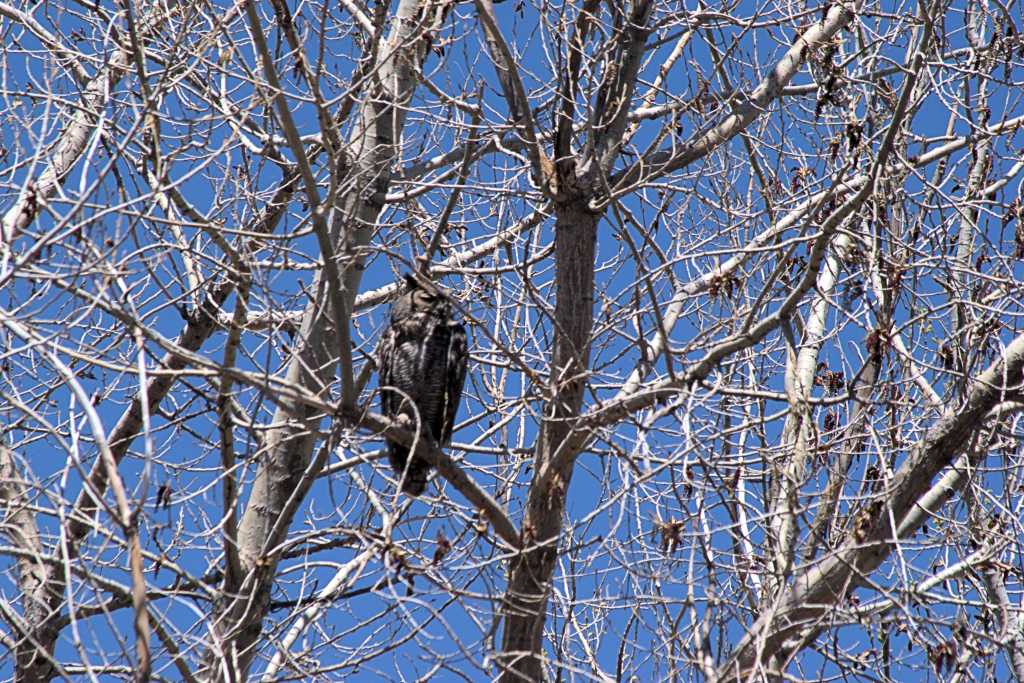
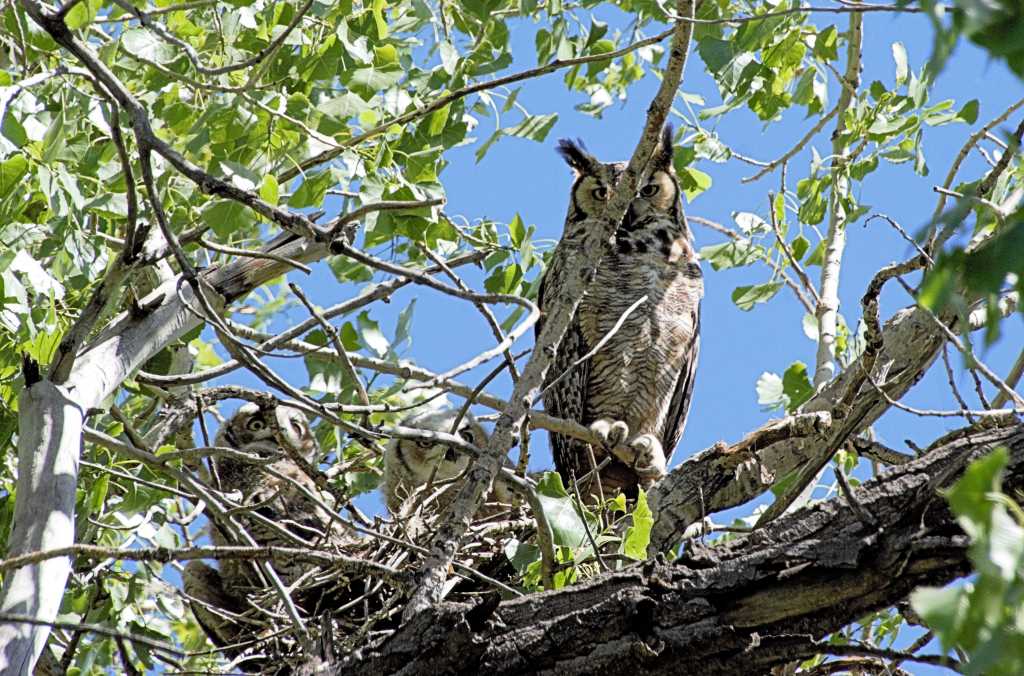
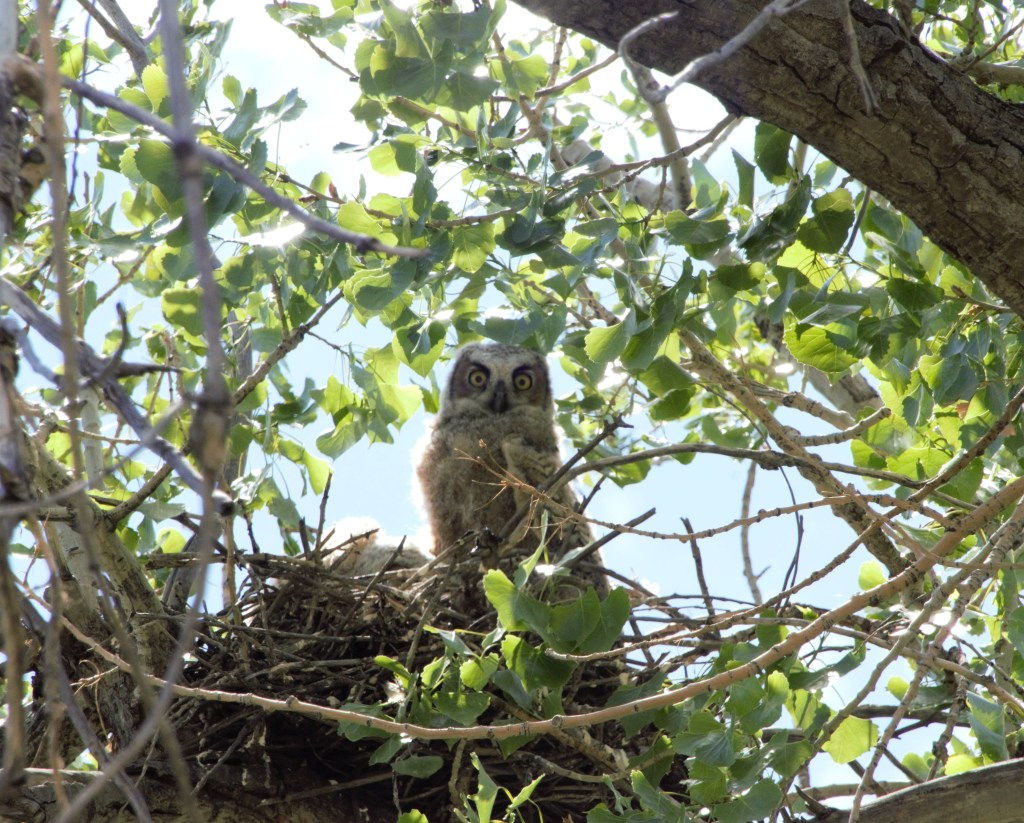
Great horned owls have a number of adaptations that mother nature has provided them with. The big eyes that are always are associated with owls provides them with extremely powerful night vision. They also posses a sophisticated wing system that makes them more stealthy in flight. Those two adaptations combined make them very lethal night hunters. Their ferocity might be their greatest asset, they are like Honey Badgers with feathers. They can bag prey that is larger than them. When feeding the chicks they seem to go on a preferred diet of snakes. They not only can hand out punishment but they also can take it. There are accounts of this bird taking several hits from Peregrine Falcons which can be in excess of 200 miles per hour and surviving.
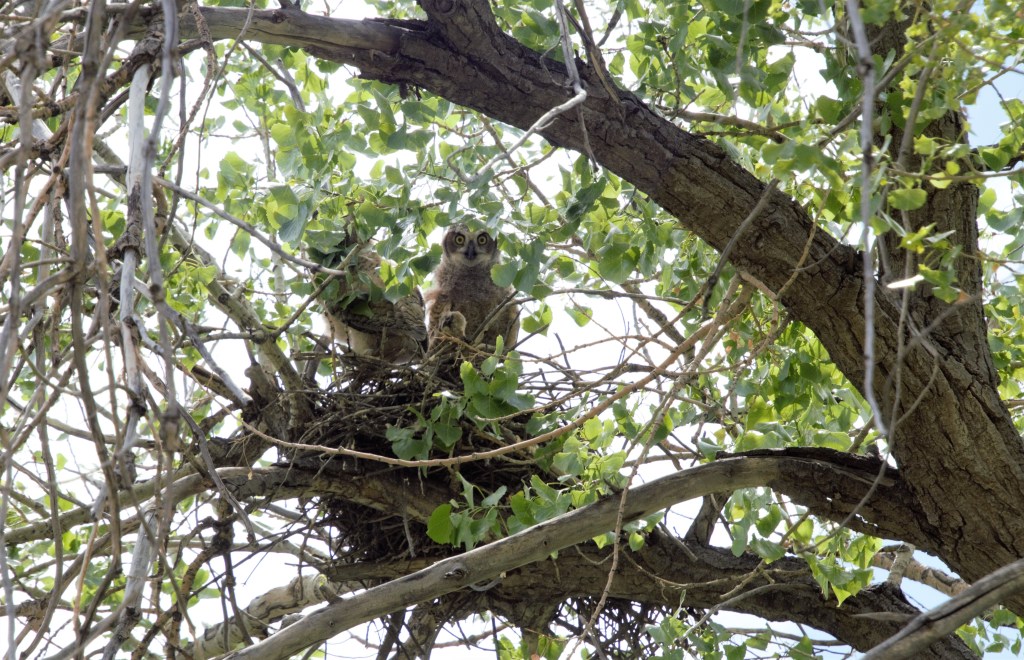
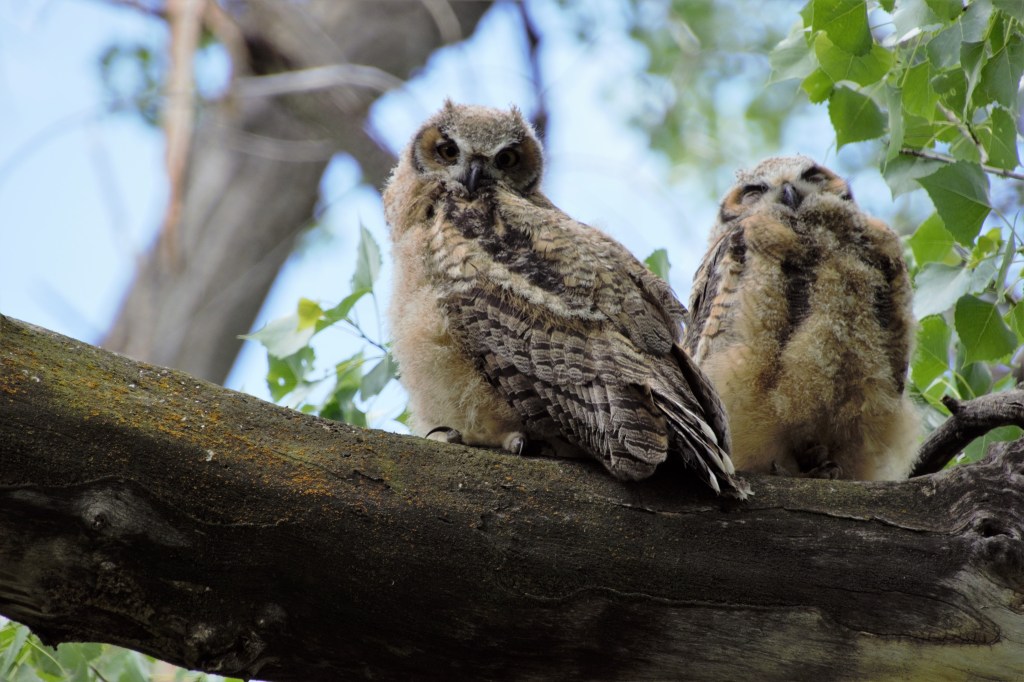
Owls like so many raptors have made a tremendous recovery from the DDT disaster and are not a threatened species. Owls are adorable to some and scorned by others. They have a history that dates back to the indigenous people of this region with man and continues with my WaltAbouts today.