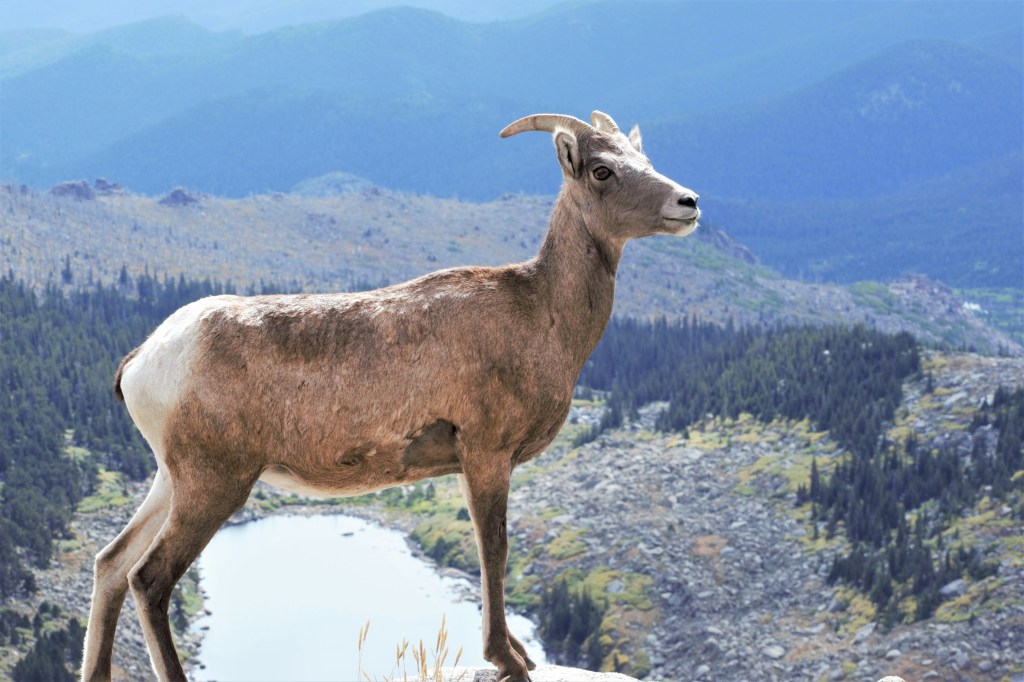
I have had many opportunities to see and photograph Bighorn Sheep while on WaltAbout at a number of locations. Bighorns have been around for a long time as they were a food source for the Nomads as they crossed from Siberia to North America and then the Native American tribes. It has been a rollercoaster existence for the bighorns as they thrived, then almost went extinct and then stabilized to become the herds they are today of about eighty thousand animals. Separation between domestic sheep and the bighorns is critical to the species. That is because the domestic sheep introduce novel diseases to the wild sheep who have no resistance to them. A large amount of the conservation funding has and will continue to be by hunters.
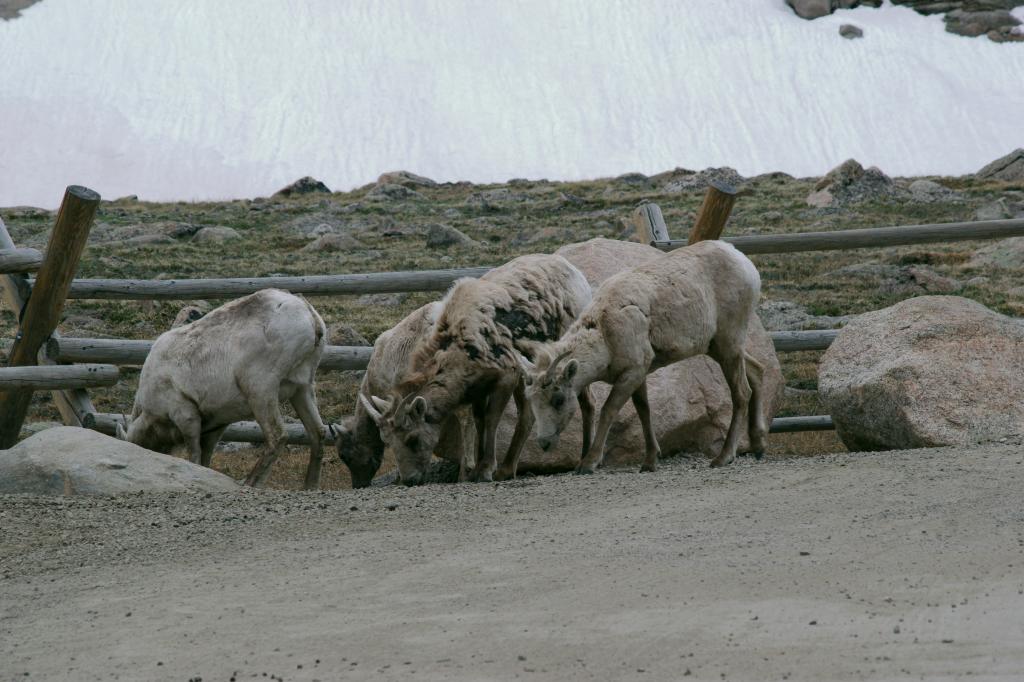
Sheep Looking For Salt 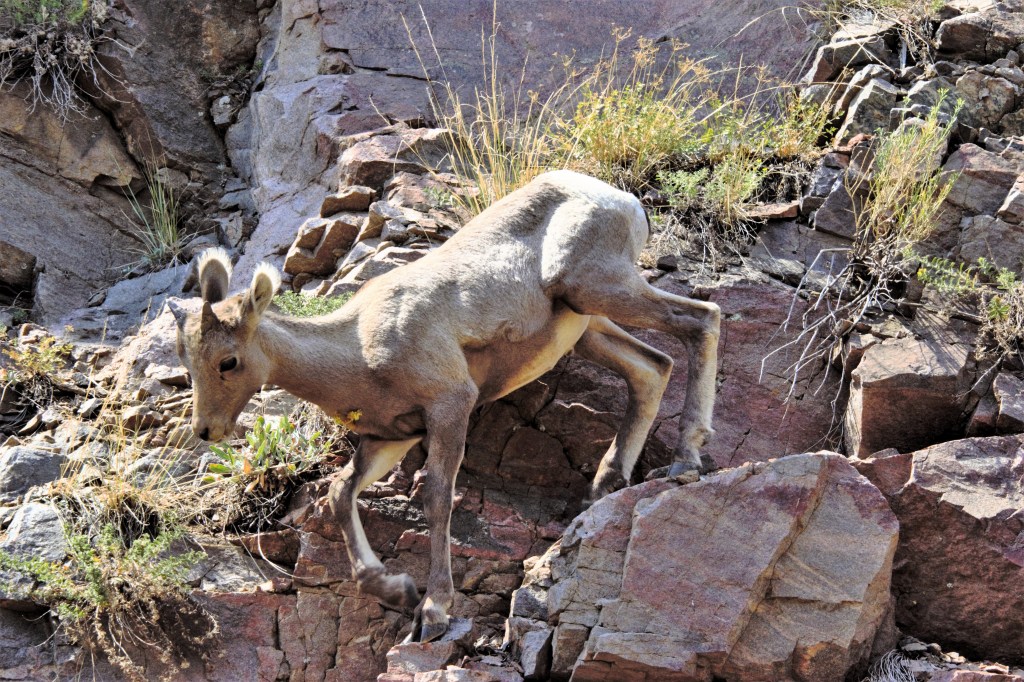
Lamb Scrambling on Rocks 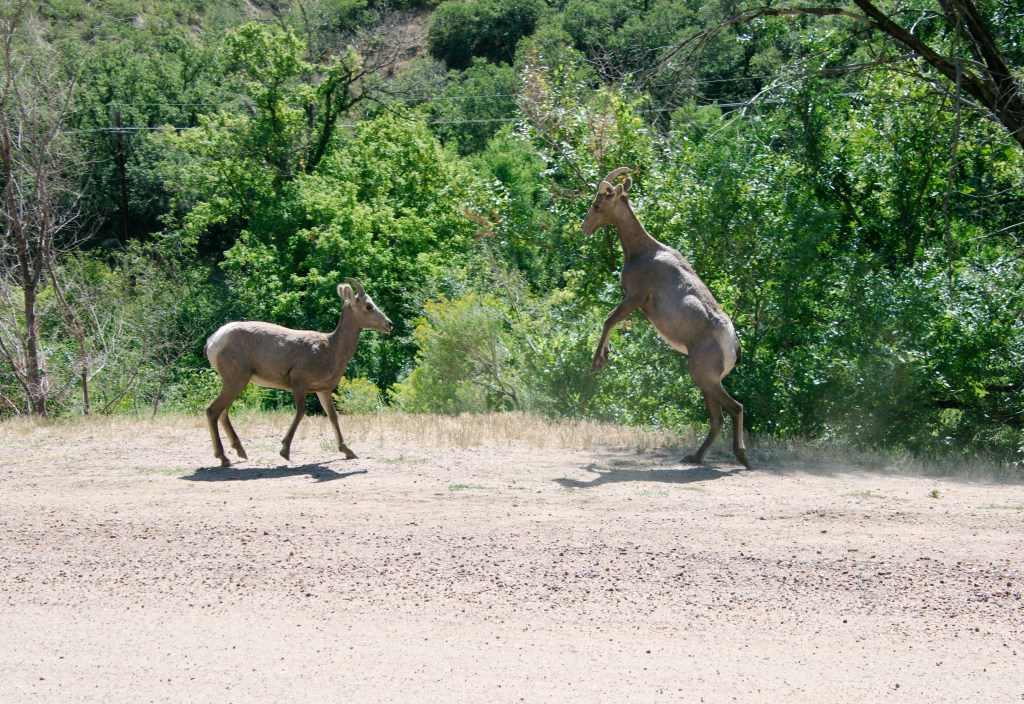
Big Horn On Hind Legs 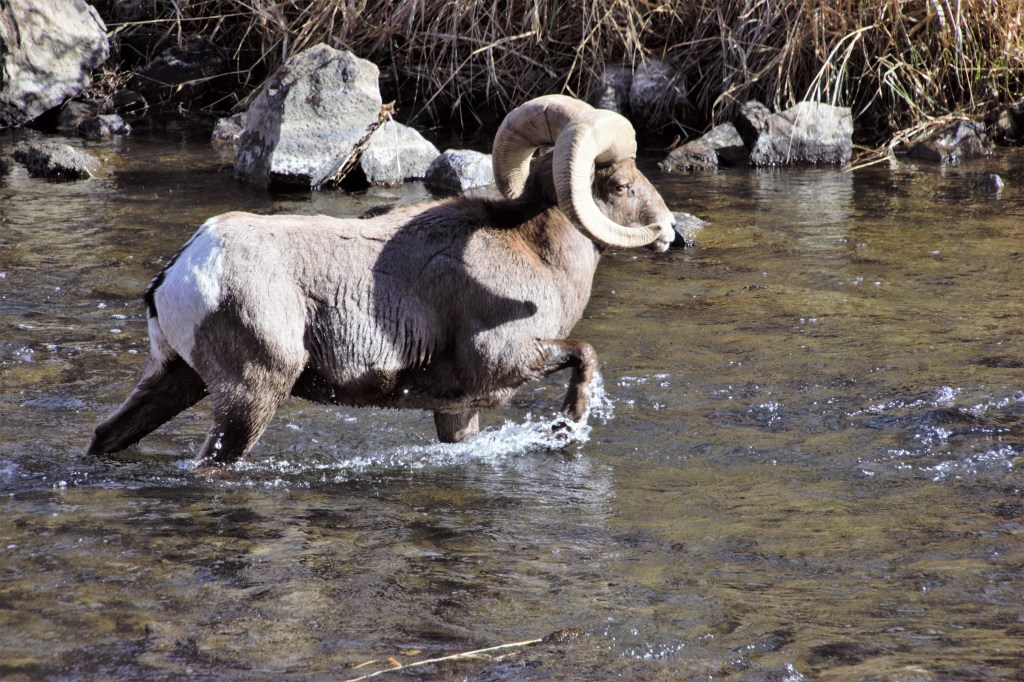
Ram Walking In Stream 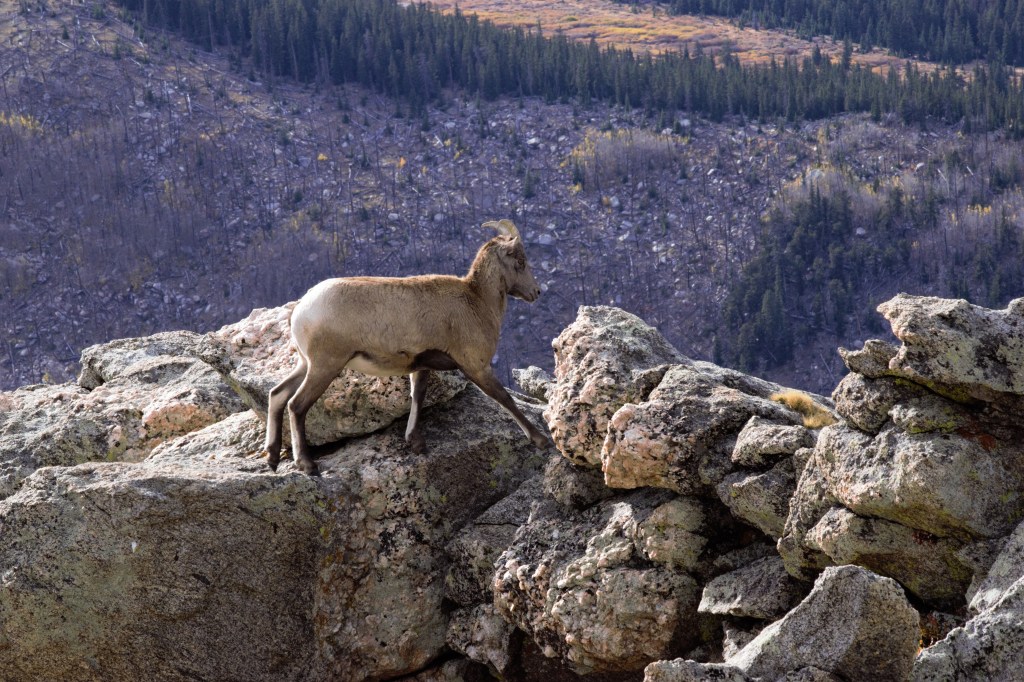
Sheep Running On Rocks 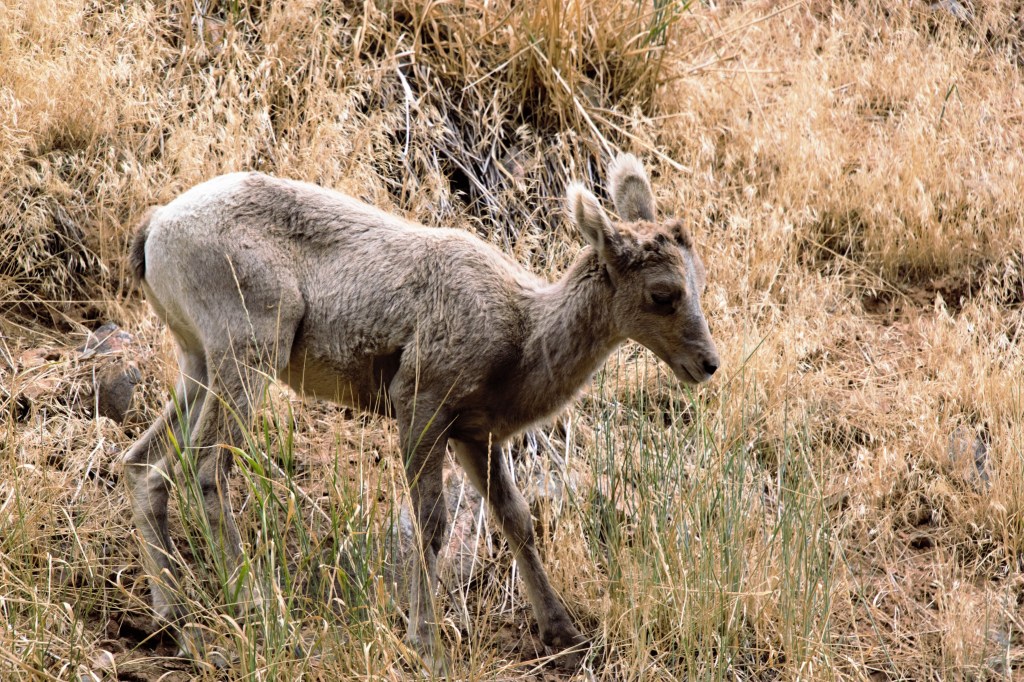
A Lamb Grazing
They often eat and run and being ruminants will digest when they feel they are in safer conditions. That four chamber stomach is not only digesting its food but is part of the defense mechanism. Nature really is a model of efficiency. As ruminants, grass-eating bighorn sheep have a complex four-part stomach that enables them to eat large portions rapidly before retreating to cliffs or ledges where they can thoroughly rechew and digest their food, safe from predators. Then bacteria takes over, breaking down plant fibers for digestion. The sheep also absorb moisture during this digestive process, enabling them to go for long periods without water. Salt intake was a big thing with the bighorns that I have seen especially so on Mount Evans were most of the time I saw them above the tree-line that had little vegetation.
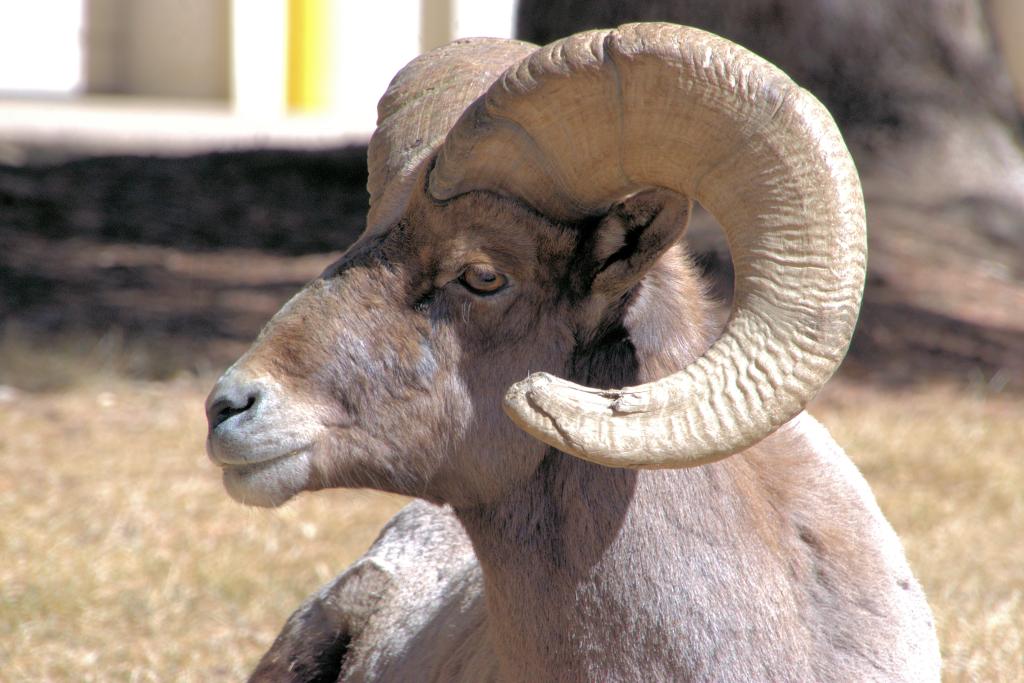
Ram With Medium Horns 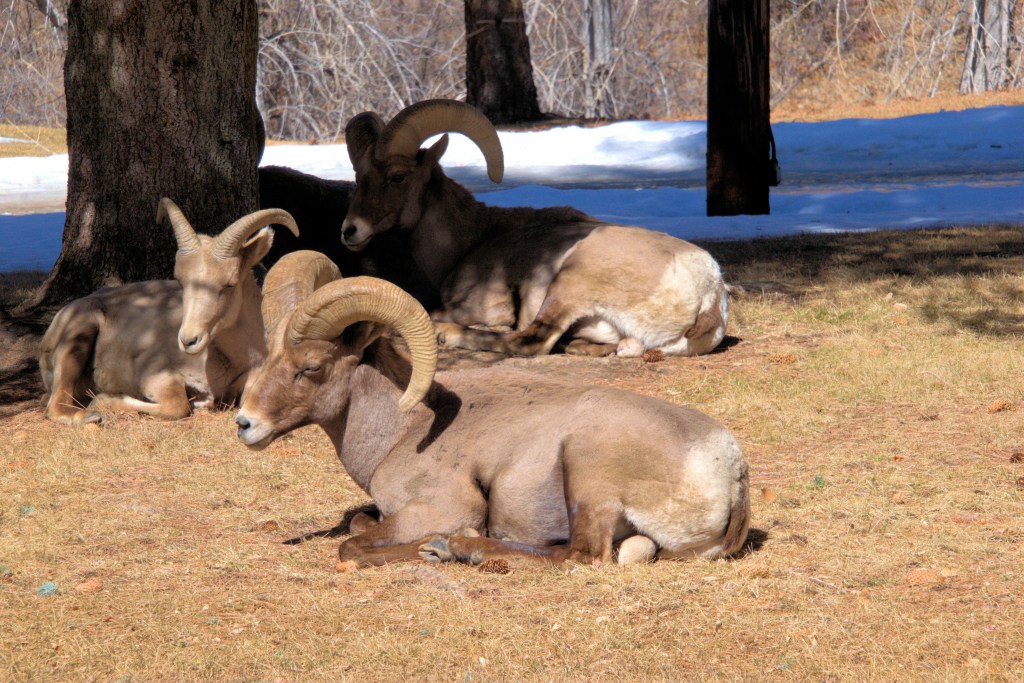
Three Rams Sunning On A Winter Day 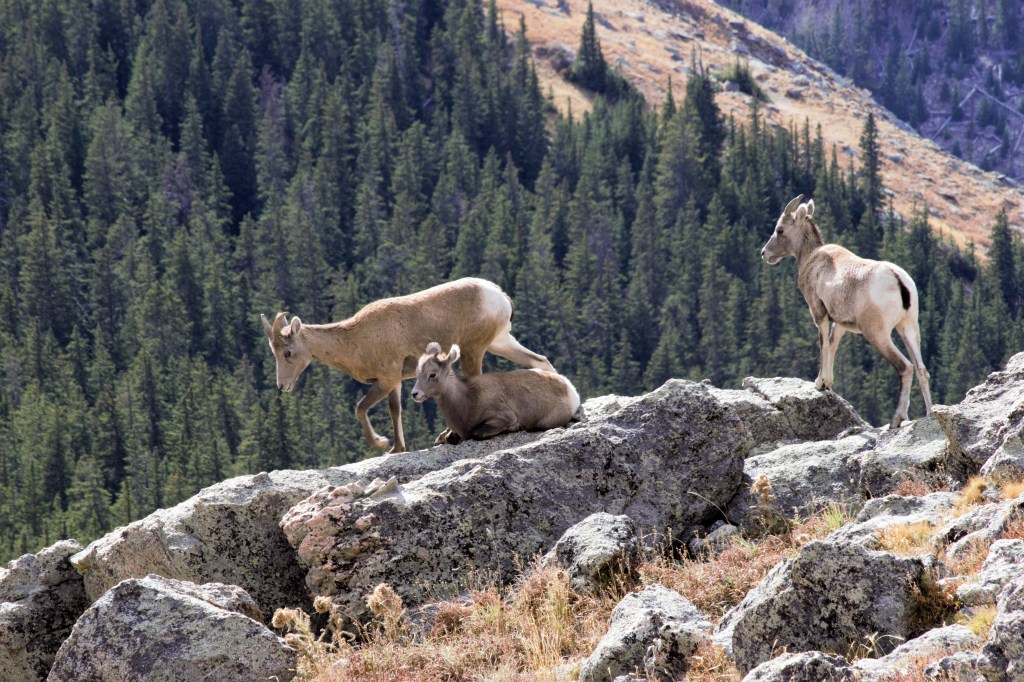
Two Ewes And A Lamb On Ledge 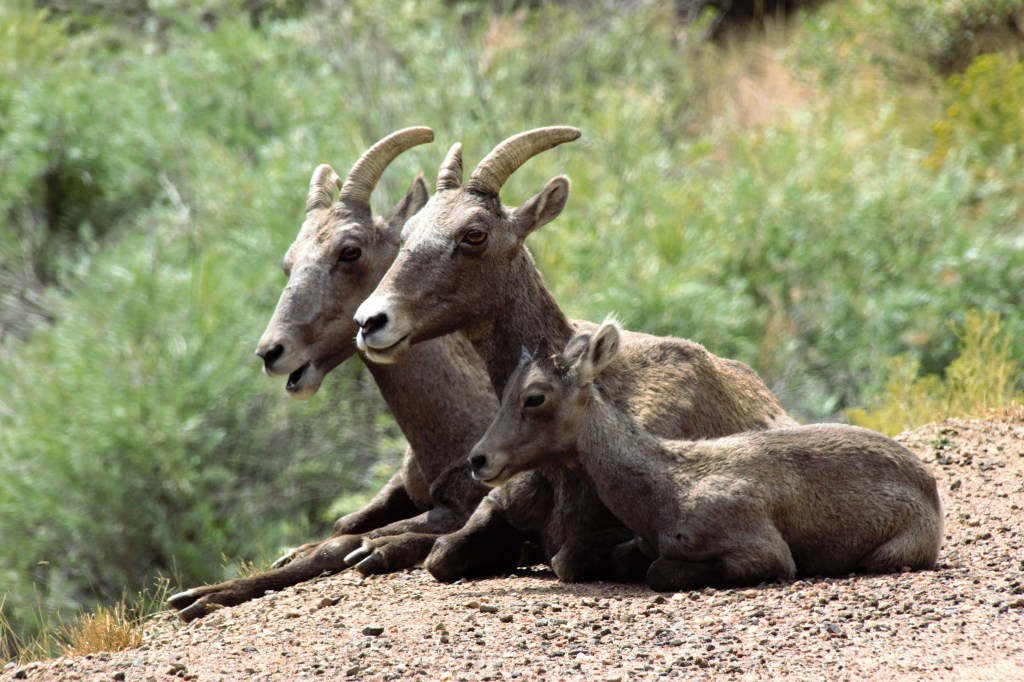
Two Ewes And A Lamb On Roadside
My WaltAbouts on Mount Evans from mid May to mid October and Waterton Canyon year round have given me my greatest opportunities to find and observe the bighorns. The Mount Evans sheep at 14,000 feet had much heavier coats that were not shed completely until late May or early June. While the Waterton Canyon sheep at an elevation of just under 6,000 feet were larger and bulkier animals as fur was replaced by fat. But predators are a much greater threat below the tree line. Nature makes adjustments for the environment that the wildlife lives in.
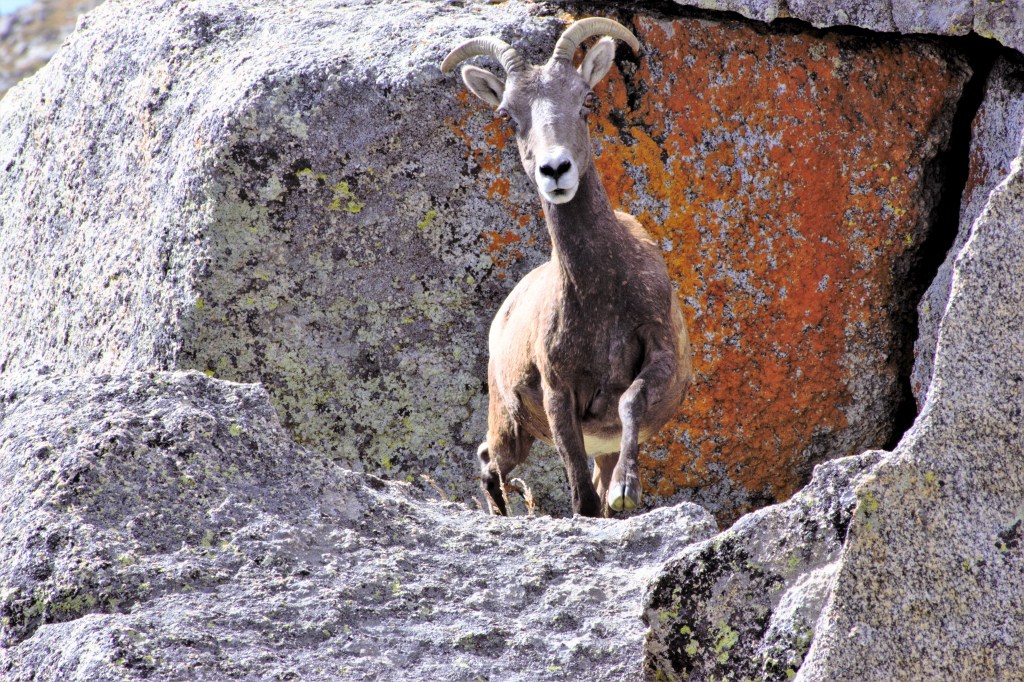
Ewe Looking For Moss 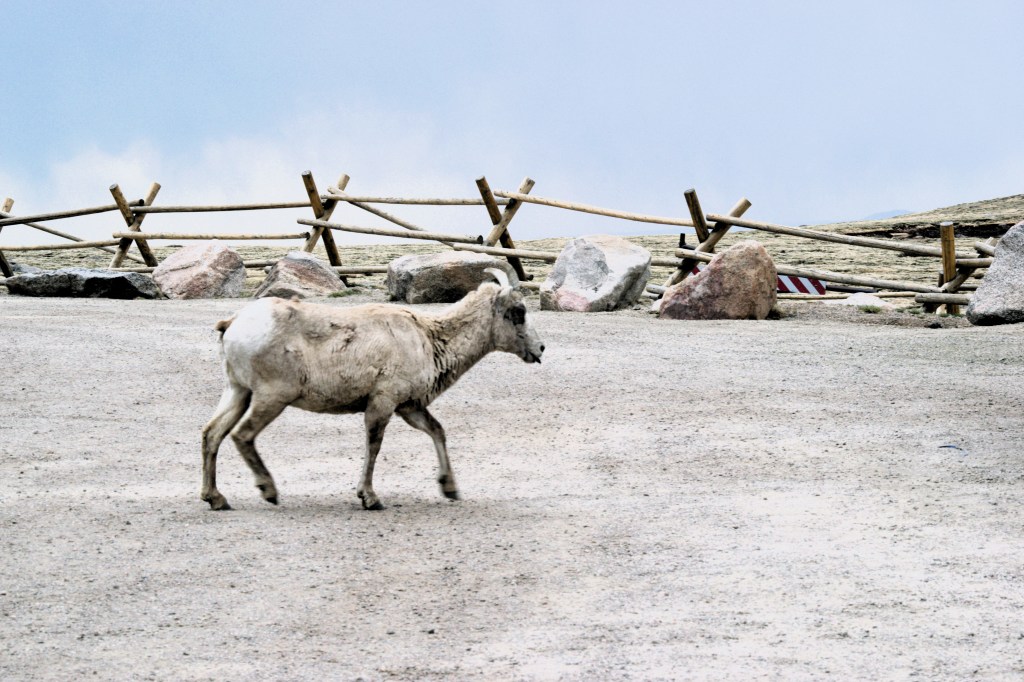
Ewe At Summit Lake 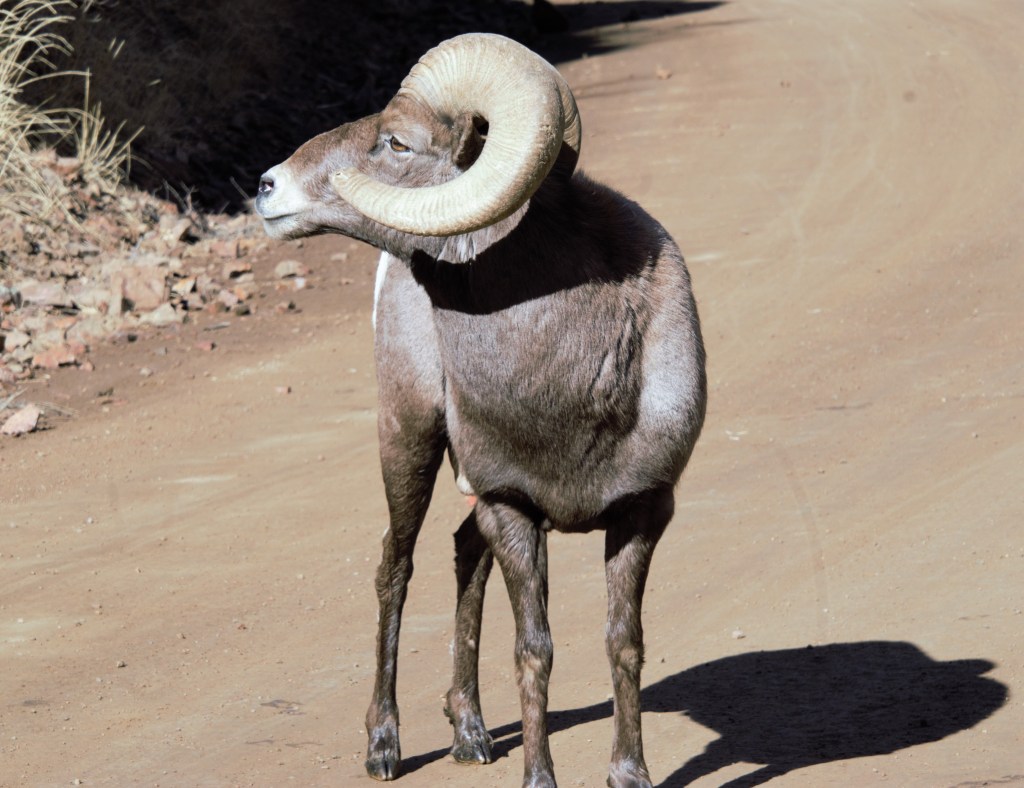
Ram Rack Profile 
Ram In Front Of Dam
If you are driving through Colorado on the I-70 keep a close lookout for bighorns especially the Georgetown exits. That area has one of the biggest herds in the state with over 200 head. If you make your way to the 19th century quaint mining town of Silverthorne you will also have a good chance of seeing bighorns. In all cases keep your head on a swivel, don’t walk directly below the sheep if they are on hillside above you and take extreme caution not to get in the middle of the herd. If you are not aware the sheep can be on top of you before you know it, as the sheep move on the hillsides they can kick up a lot rocks as they move along the trail and if you get into a crowded situation the sheep could become aggressive to protect their space.

Young Ewe And Ram 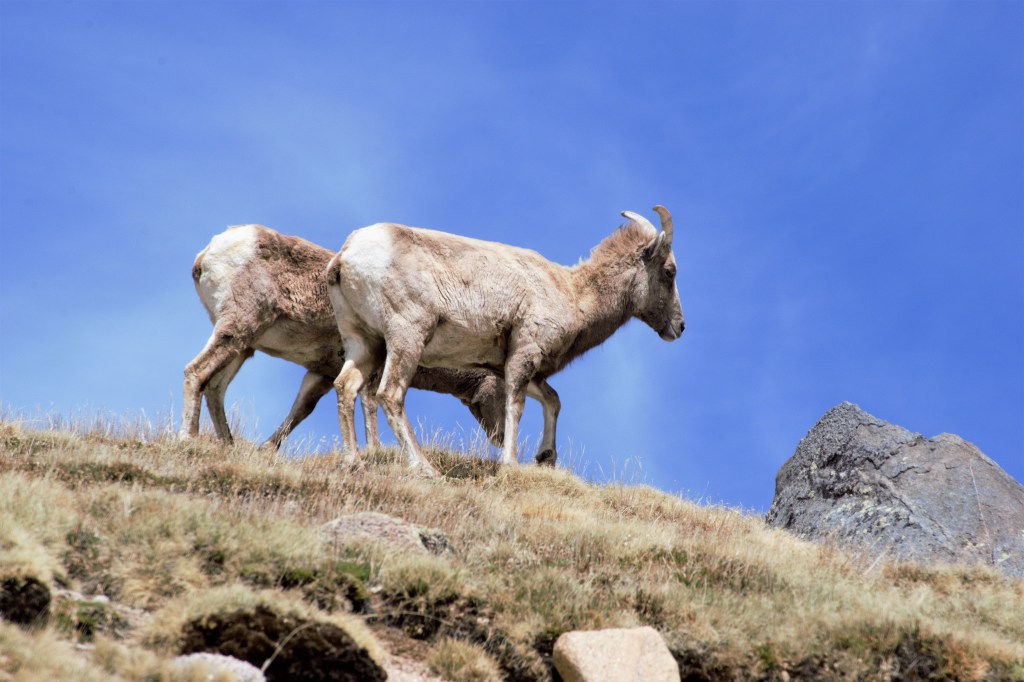
Two Sheep On Tundra 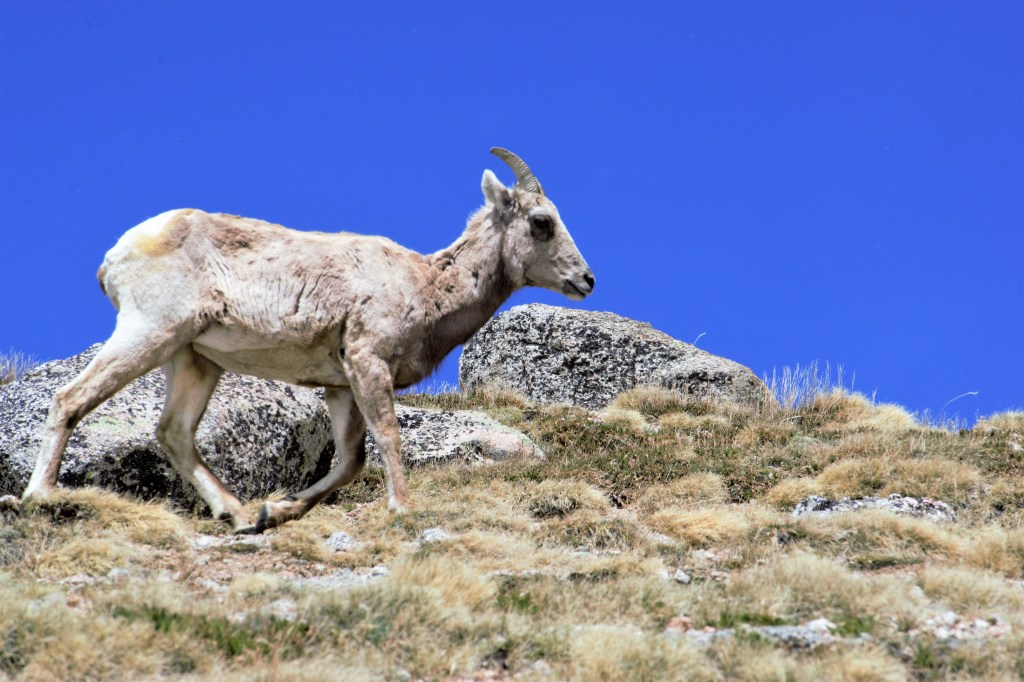
Ewe Running On Path 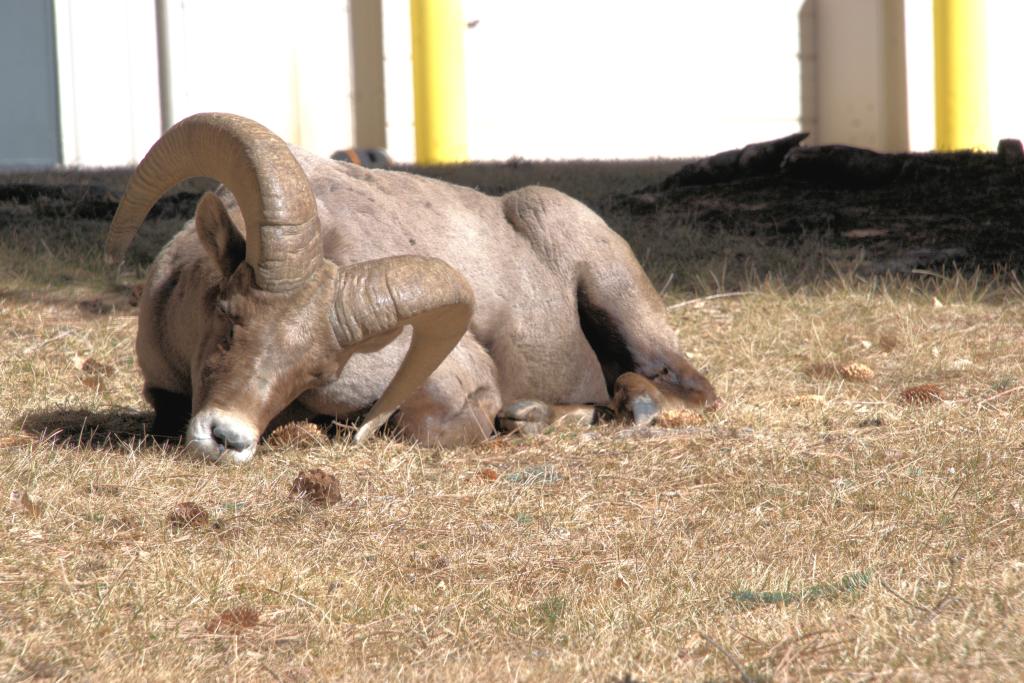
Sleeping Ram At Rangers Station 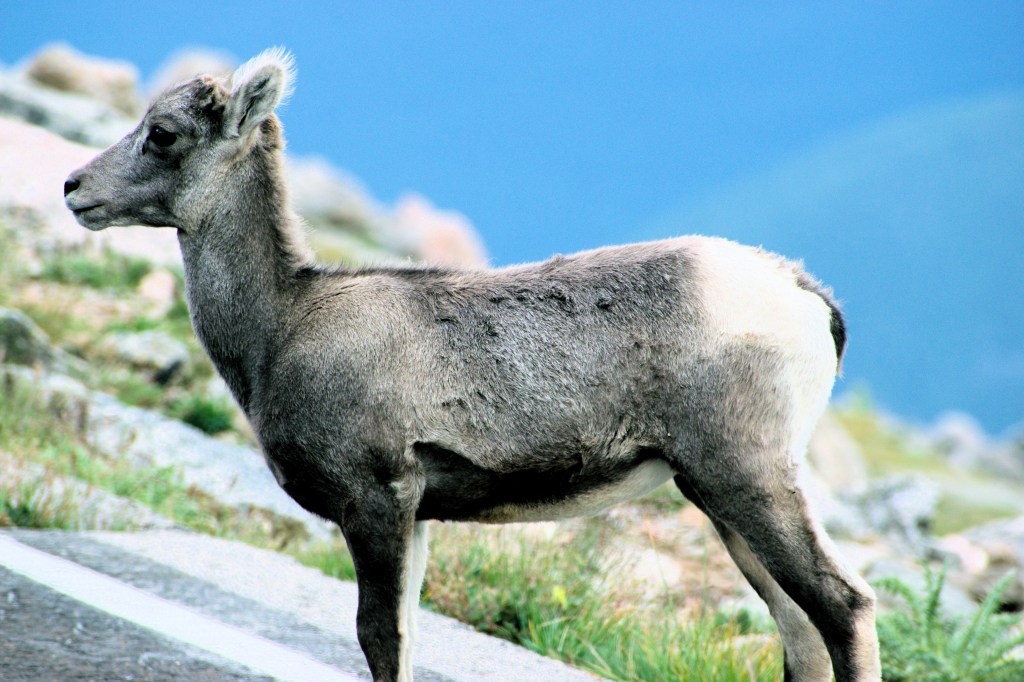
Young Ewe Standing In Road 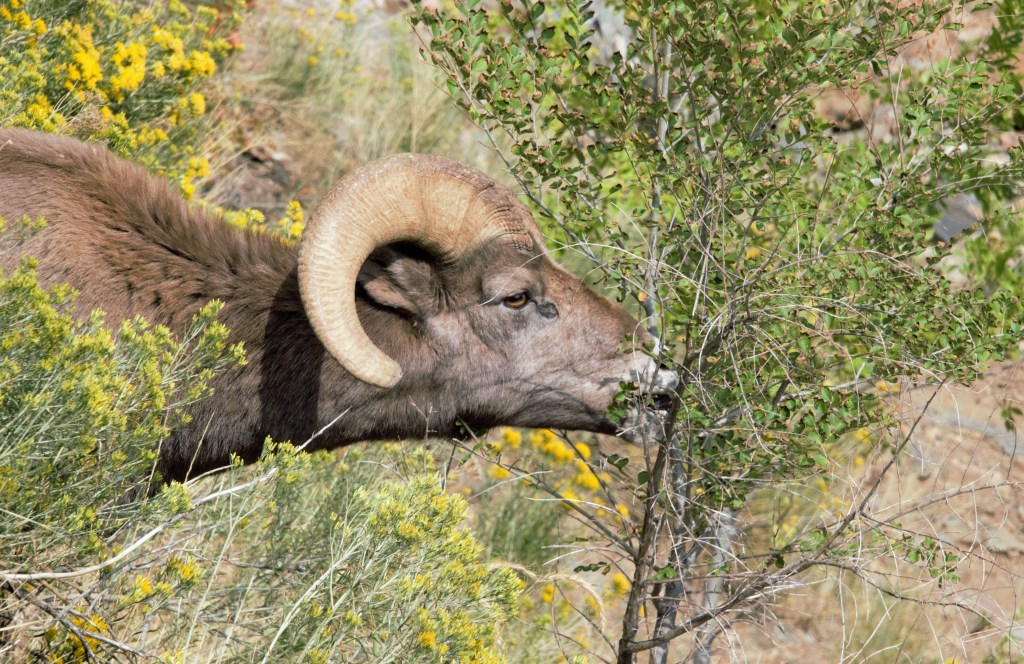
Ram Browsing
