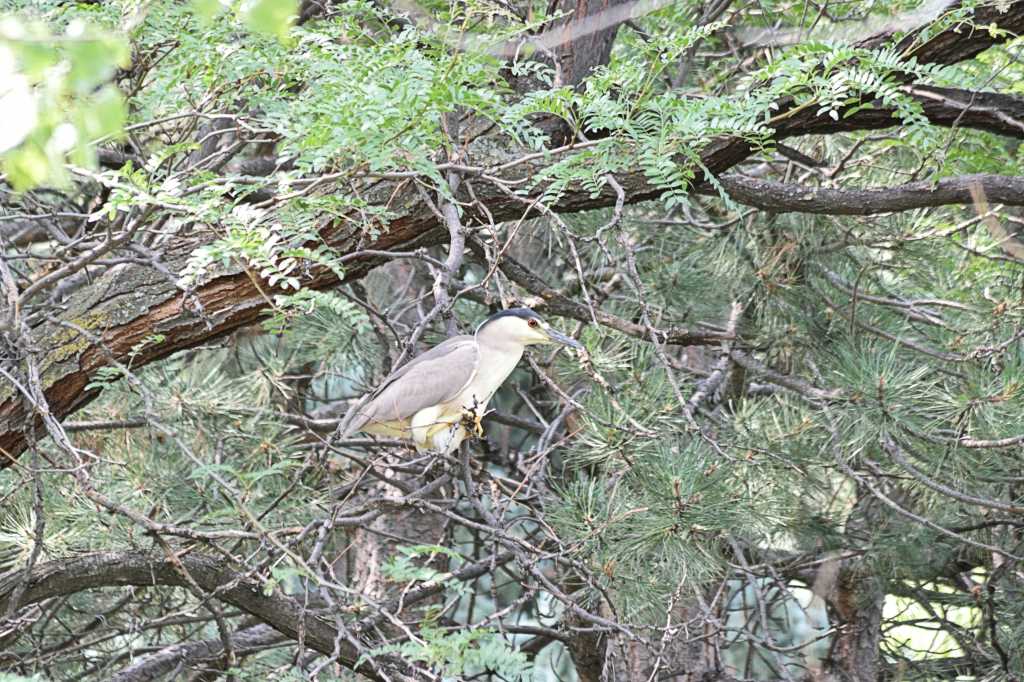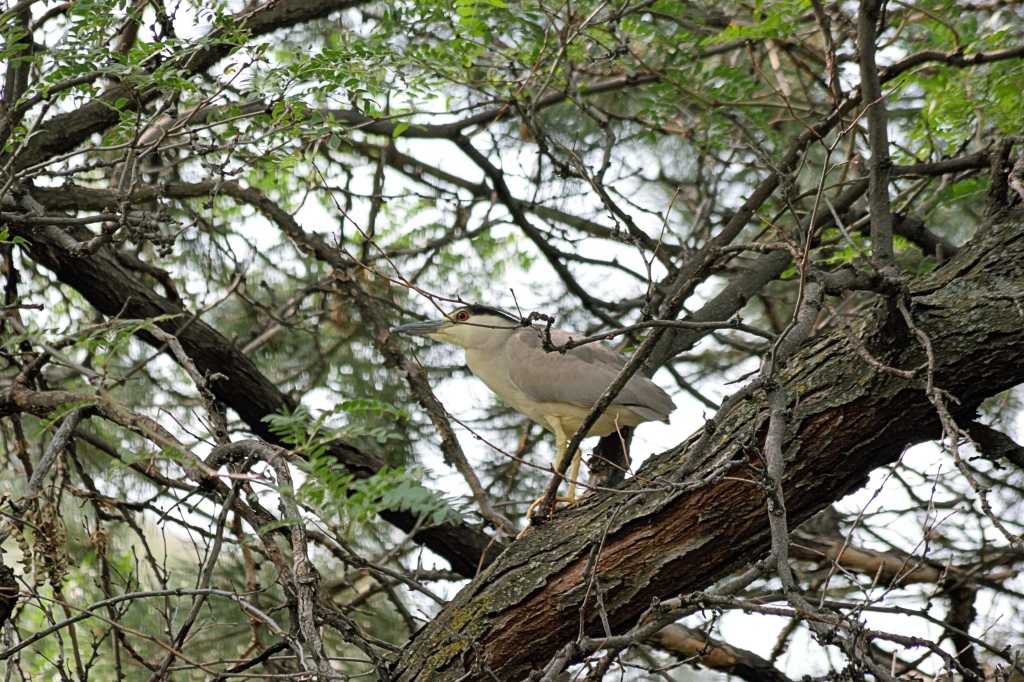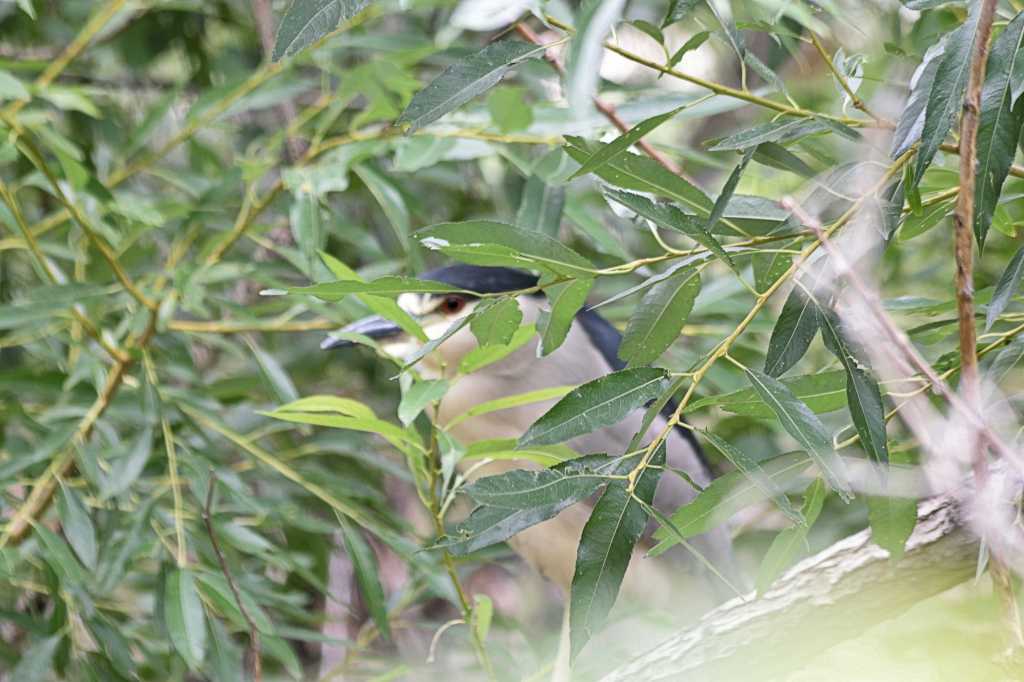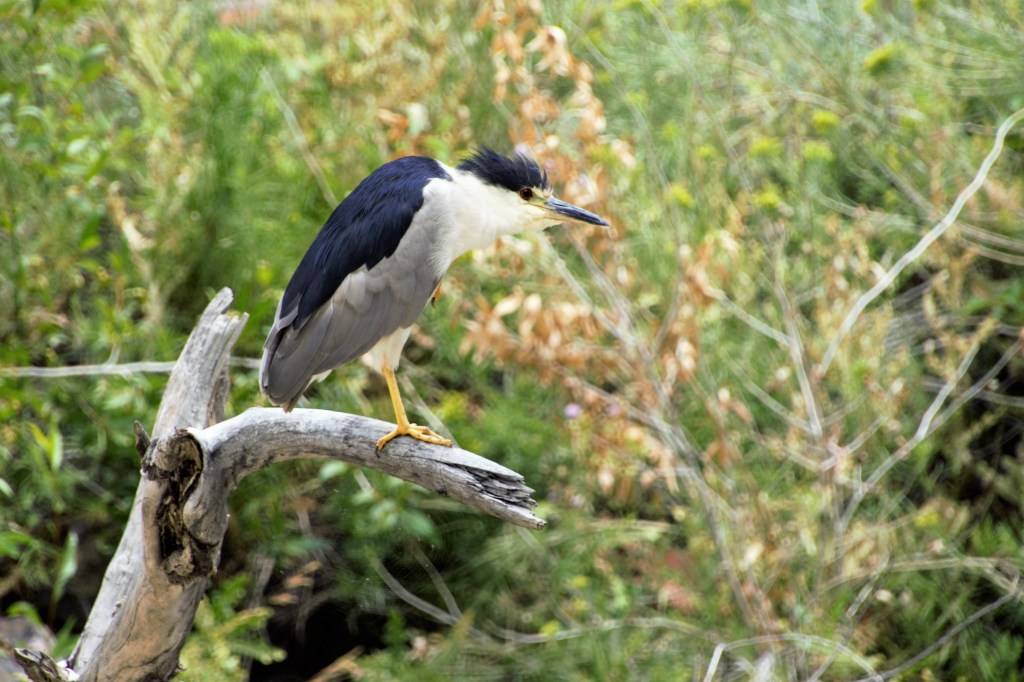
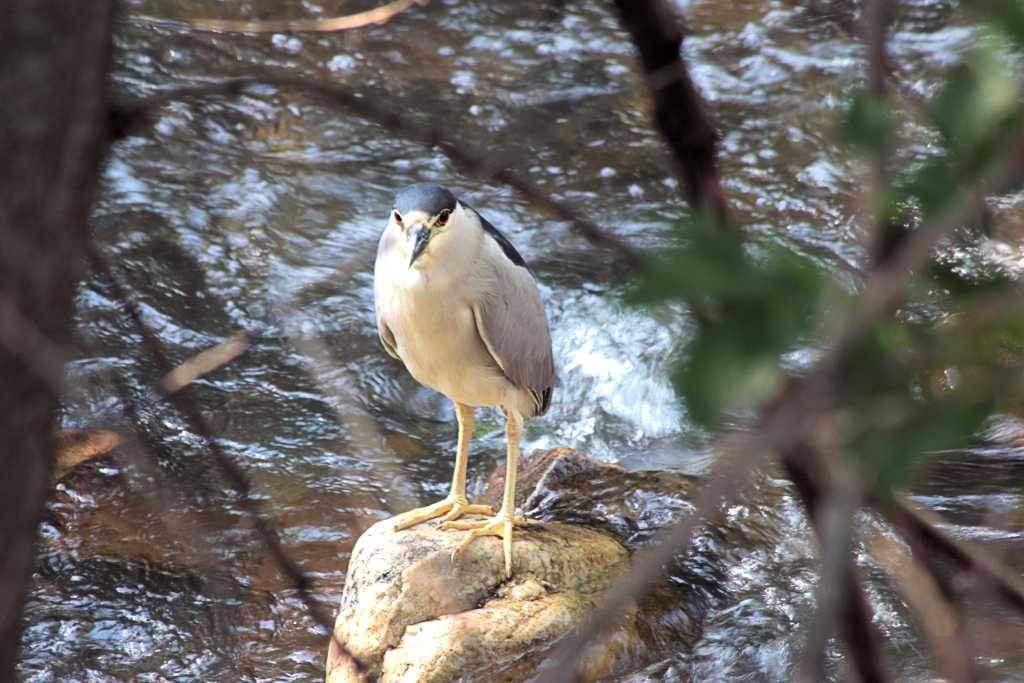
Night Herons are small to medium sized herons, who are close cousins to another member of the Ardeidae family the Great Blue Heron and they both are on my other birds list. I have seen the night heron on Bear Creek exclusively and was fortunate to find that locus as they are nocturnal birds. They hunt for prey in the evening and at night, in water, stream banks, and on land. I have had no experience with their nesting habits. Night Heron chicks have bills that are yellow and black that will turn all black when they are mature adults.

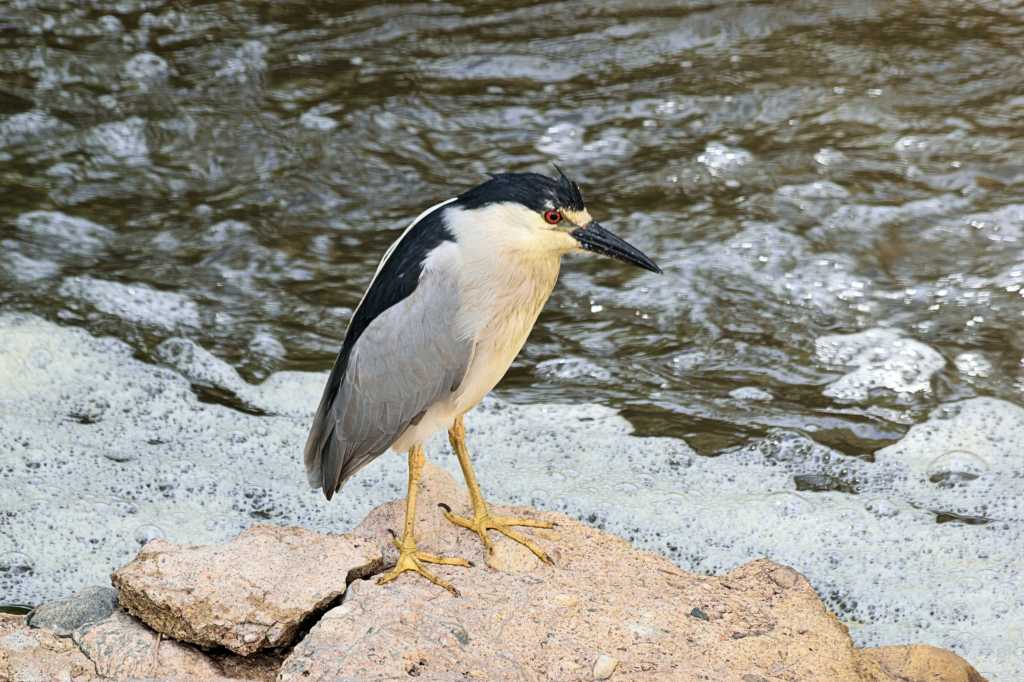
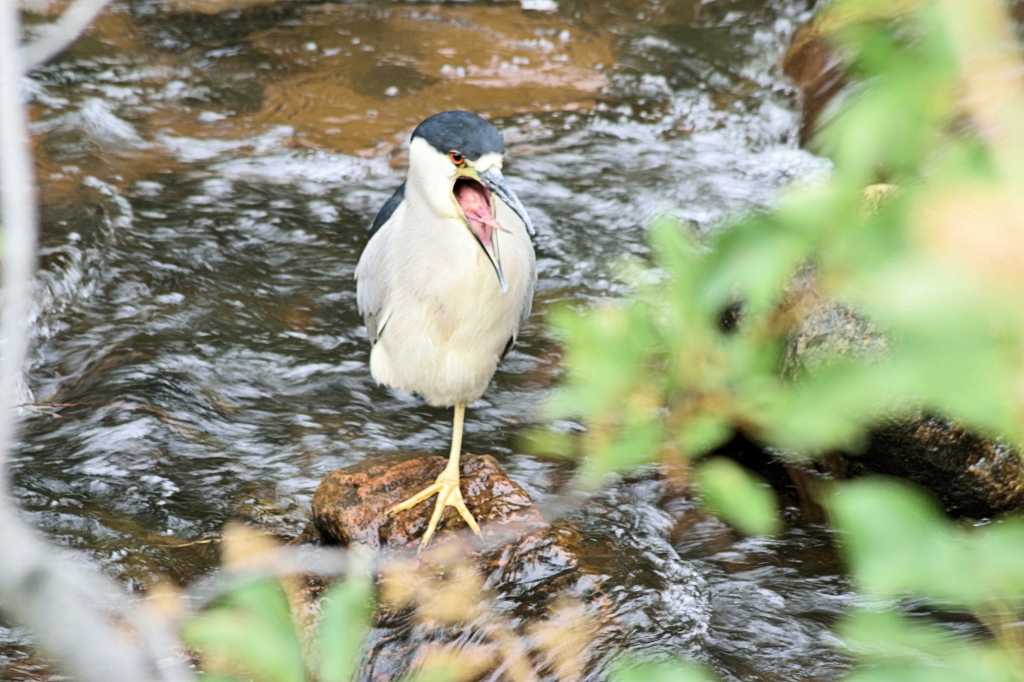
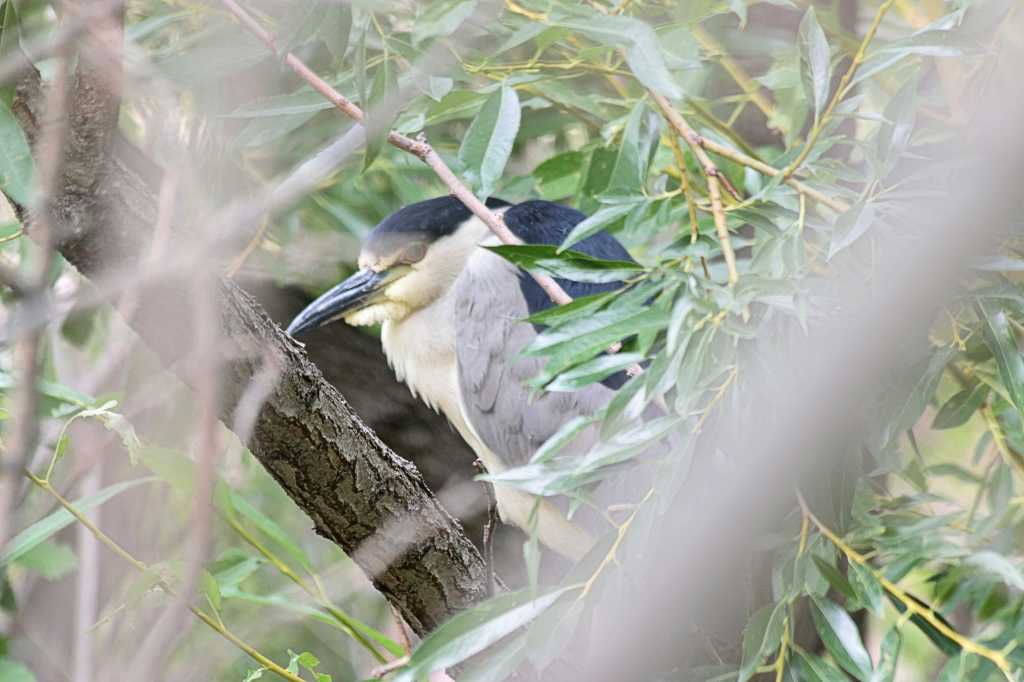
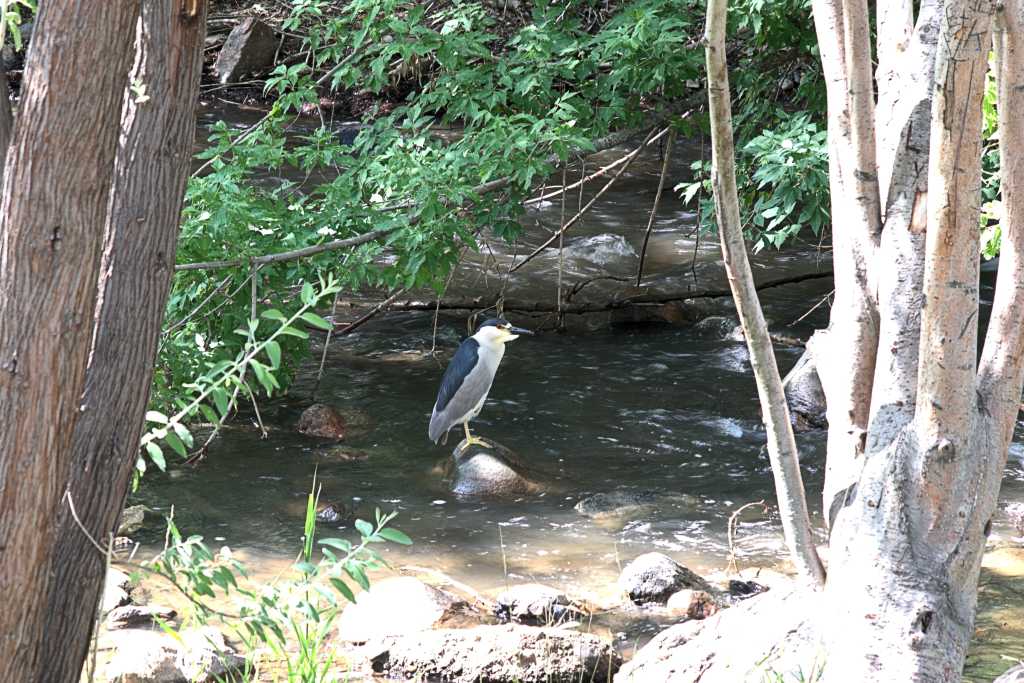
No matter what local route I take on the bike it will have sections that pass through Bear Creek and multiple bridges and over passes to cross on. The habitat along the creek is perfect for the Blue Night Heron. Running water that supplies most of their prey that also helps drop the temperature during the day along with a thick canopy for roosting in. Throw in a light breeze and conditions are perfect for this birds rest time.
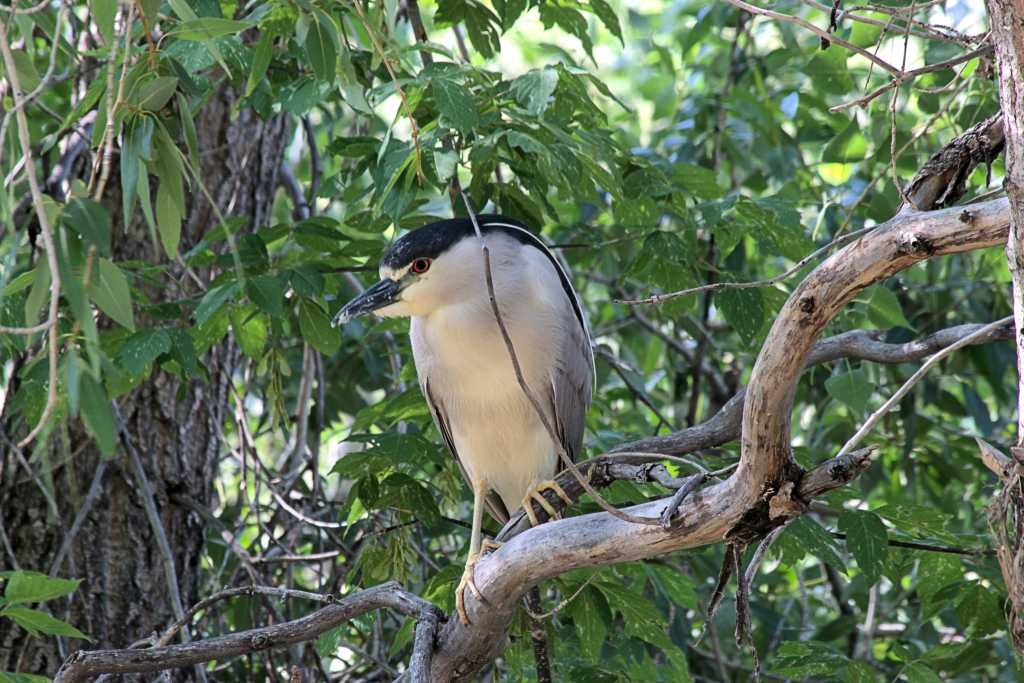
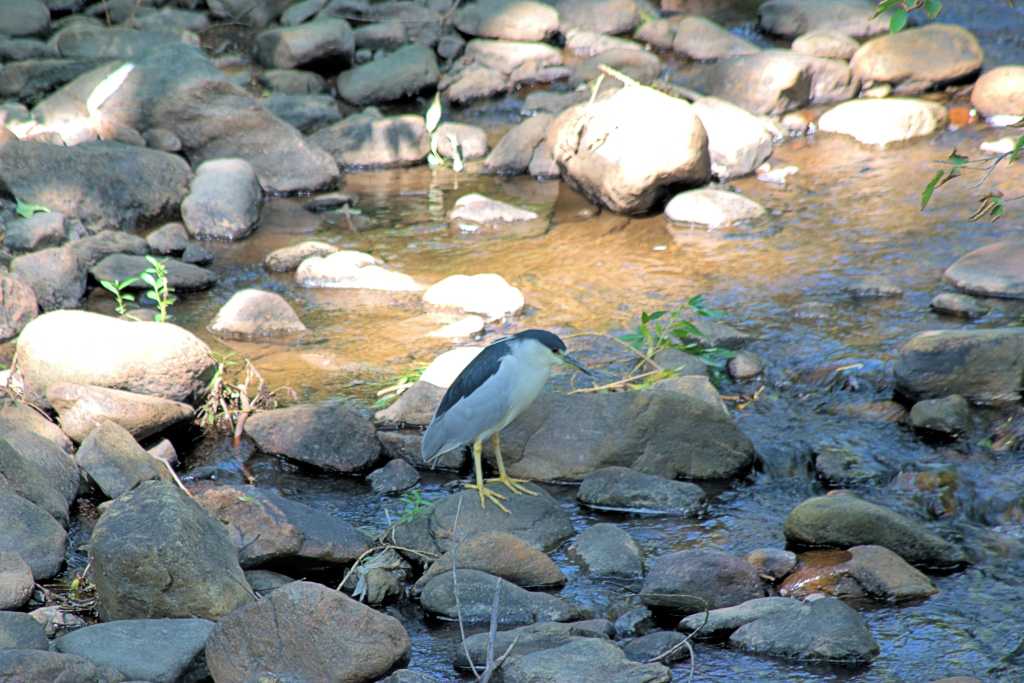
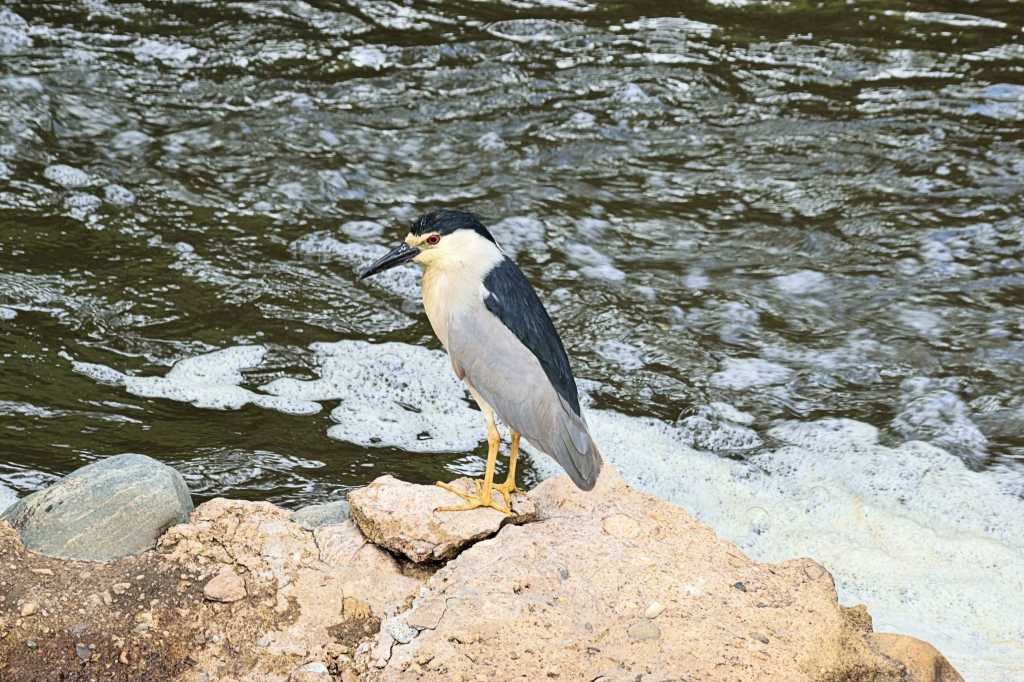
The Greeks had a hand in the naming the Night Heron who referred to it as a night raven. When they become animated they will also make clucking and crackling noises like a black raven. They are not screechers or chirpers. This pretty bird has a white fluffy underbody, blackish blue head and back with wings that are grey. They have the ability to push their head back into their body making them more efficient in flight.
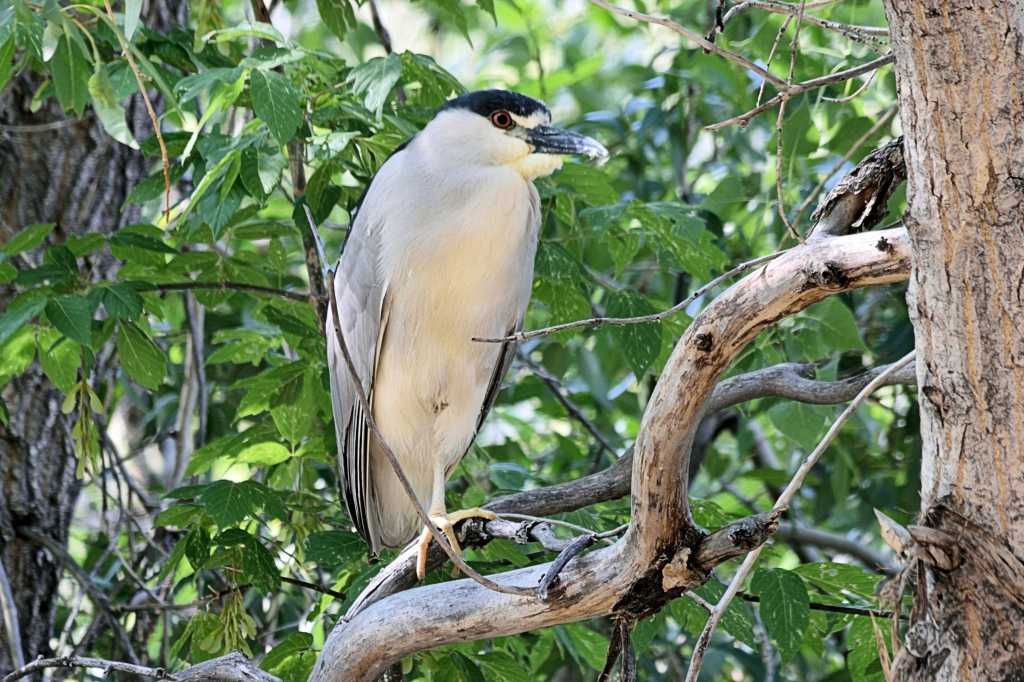
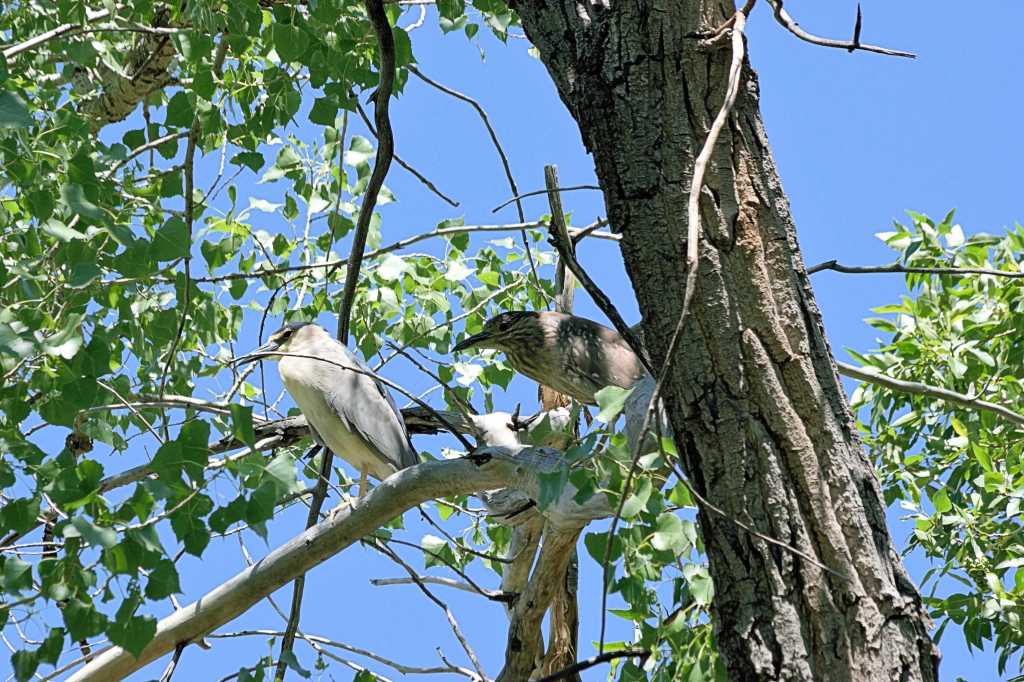
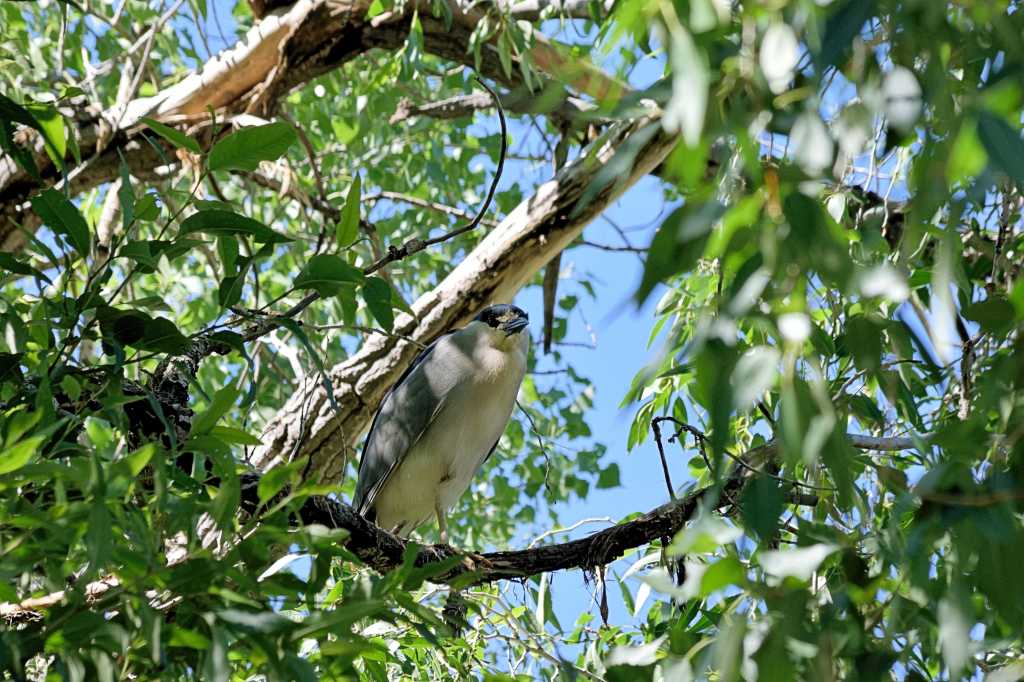
The Night Herons are lone hunters but do socialize at roosts and will nest in colonies. While they are at those venues they will make a lot more cracking noises and at times will scream. They are very stealthy as they hunt their prey on, in or near the water.
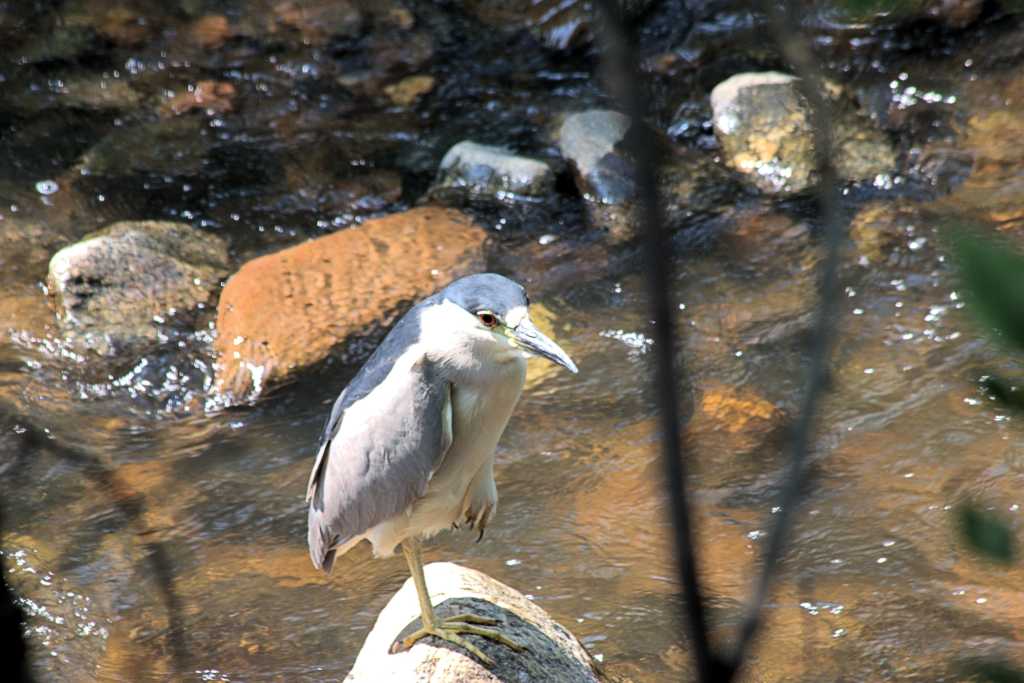
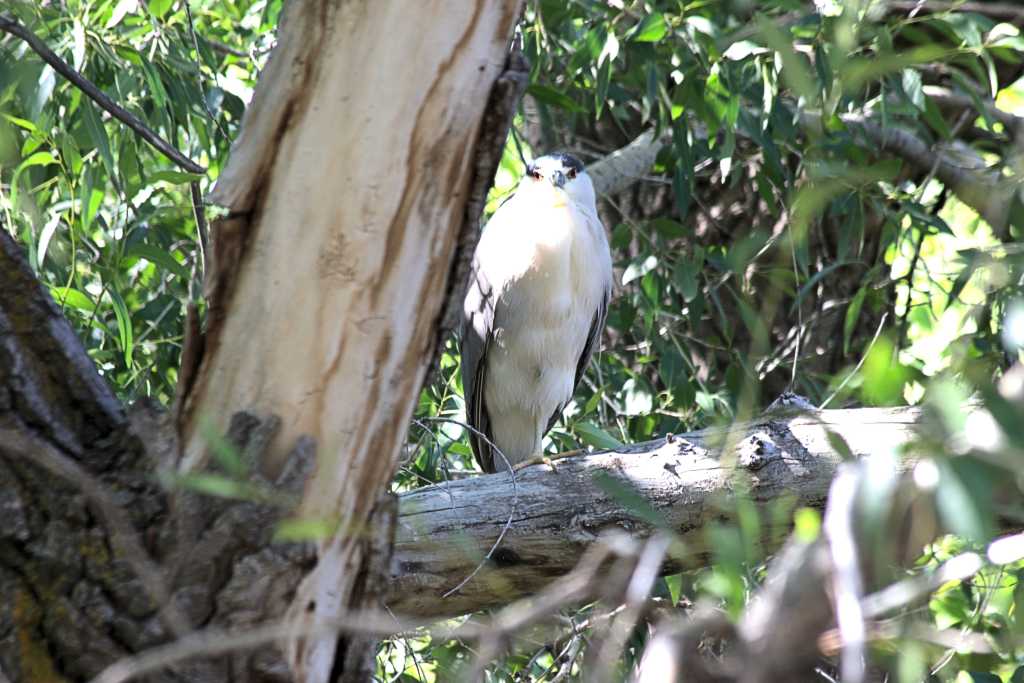
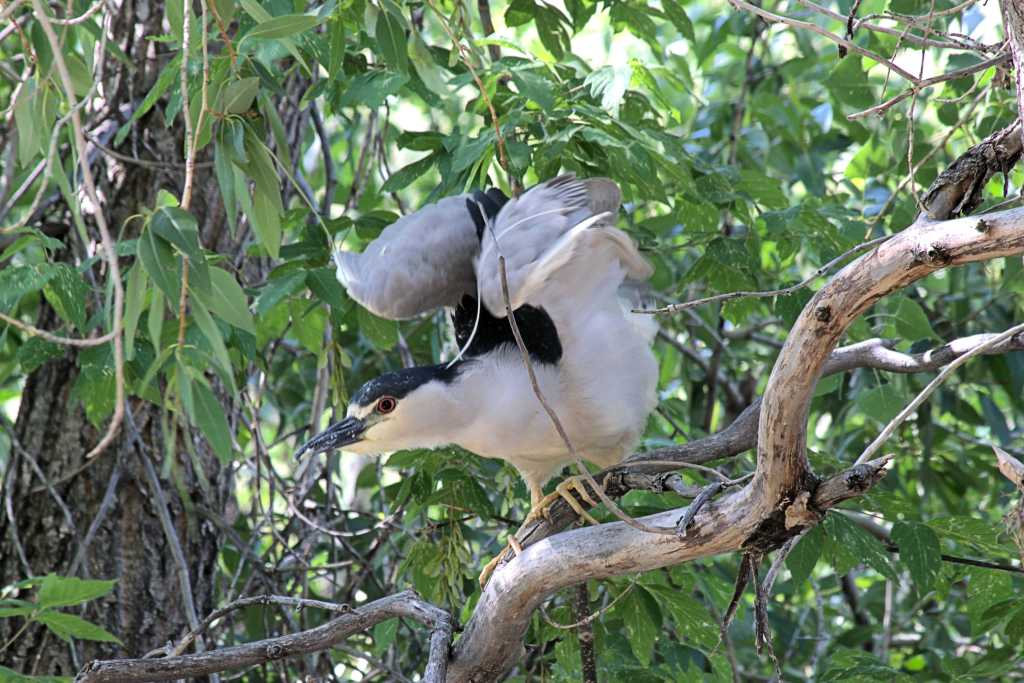
Once I have found the Night Herons I will see them fairly often for a few weeks and then disappear only to return in promptly and do the same thing. This cycle will continue as they follow their food sources. Eventually they will migrate to their wintering grounds and return in the next spring.
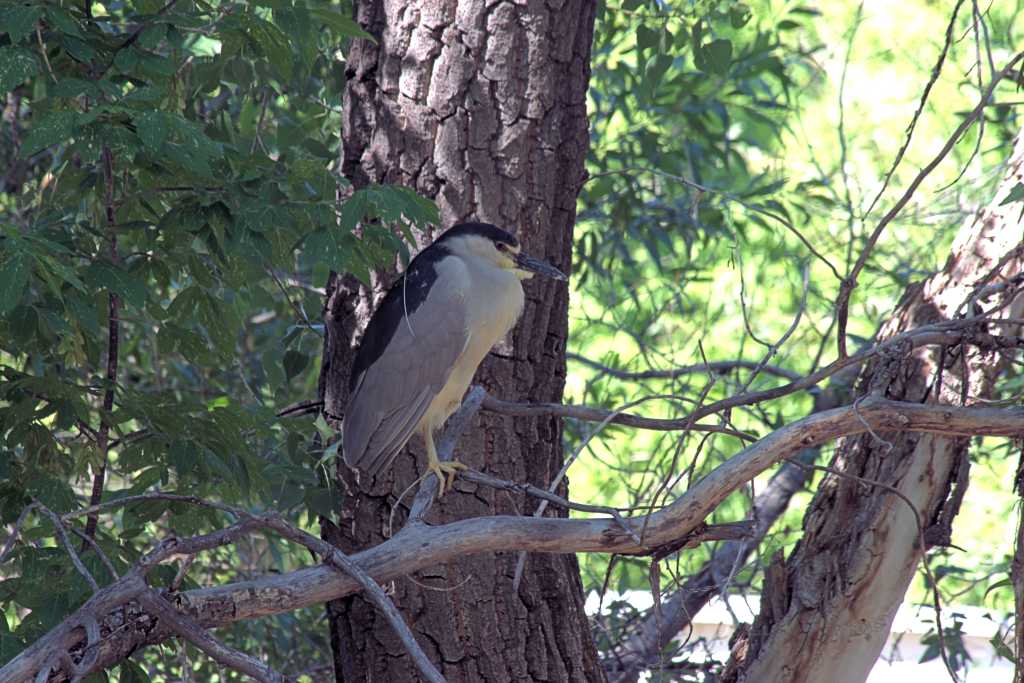
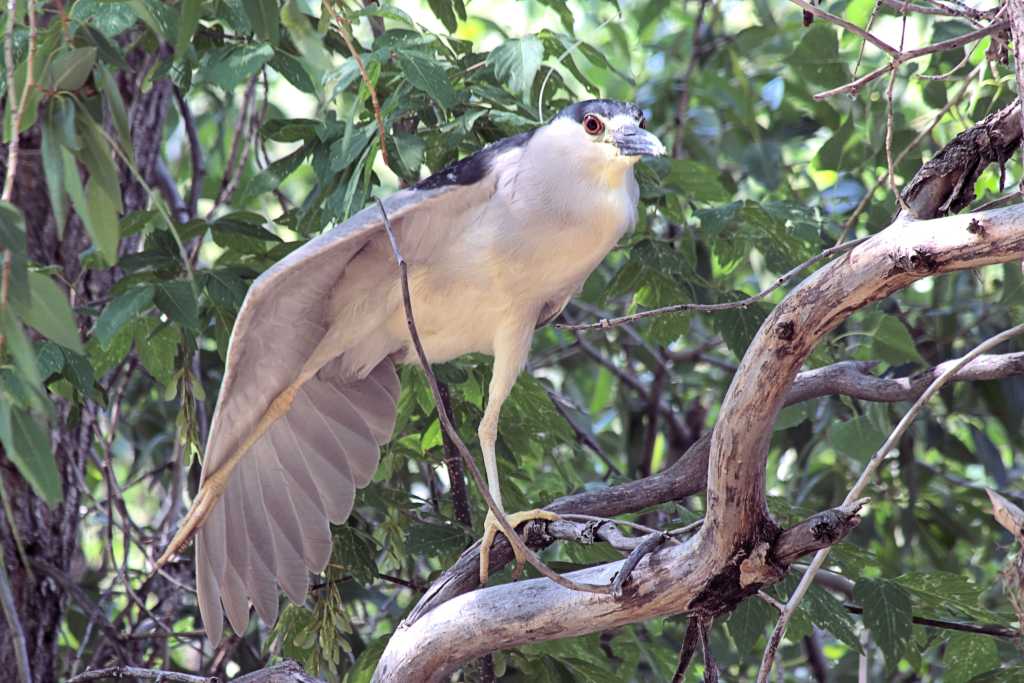
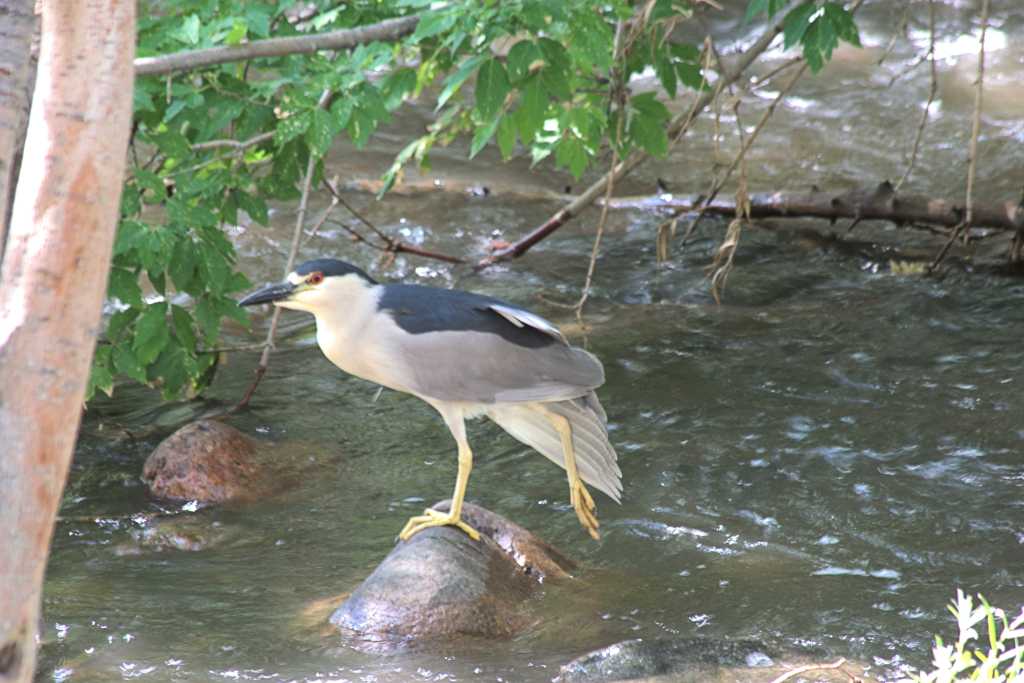
Night Herons are not the dive from high above and pounce on the prey like raptors are. These birds are true stalkers. They mainly eat fish but will also consume other marine wildlife they run across. At dusk and for the rest of the night they will silently make their way along the creek. They have an advantage over other heron species because of the size of their eyes.
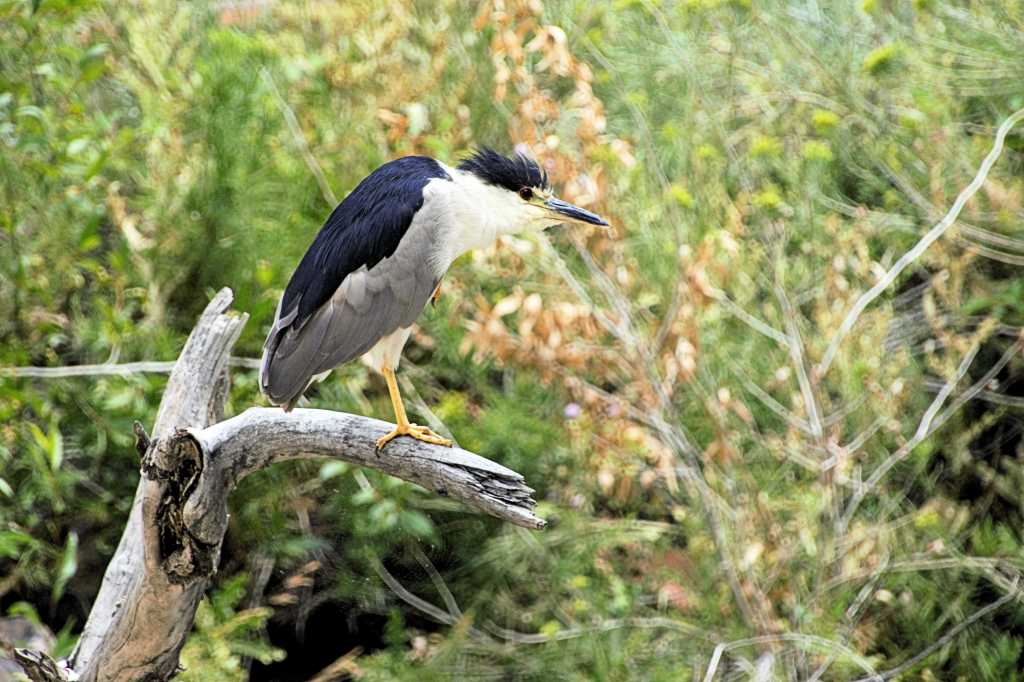
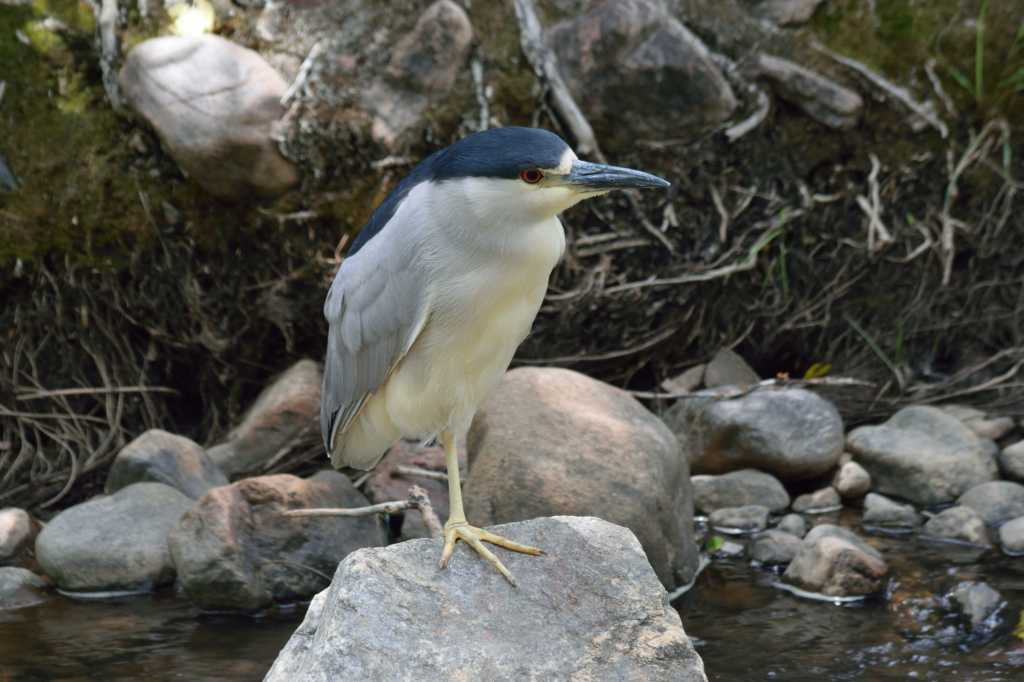
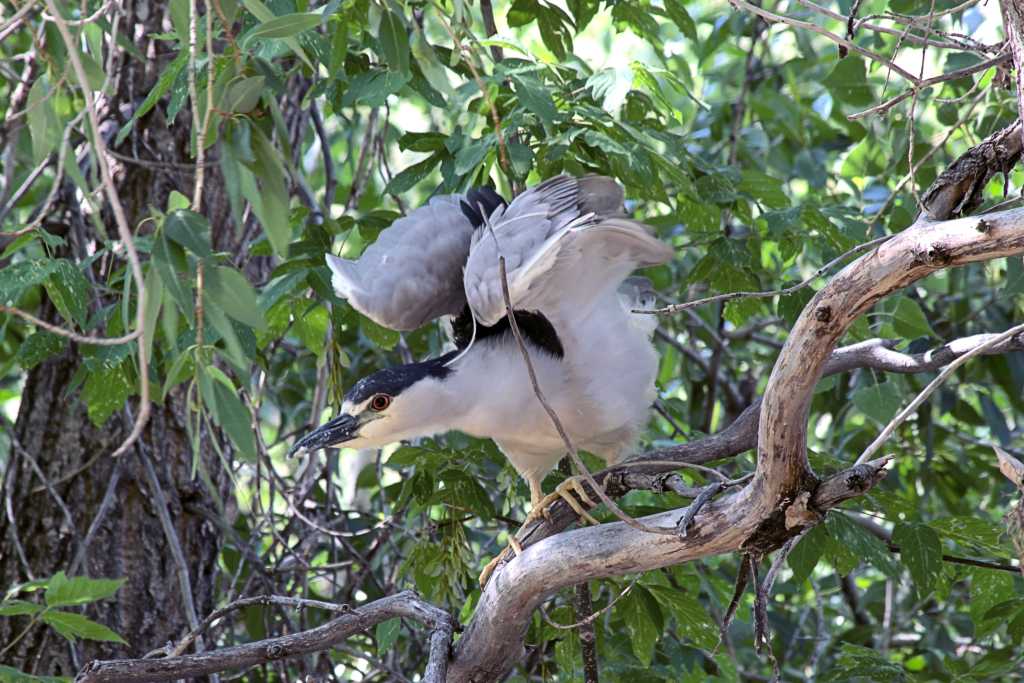
I have seen the Night Herons strictly during the day as that is when I am on WaltAbout. I have seen them roosting and hunting at about a fifty-fifty ratio. These birds are well known for being nocturnal so being able to see them as many times as I have over the years is very humbling to me. Many people never get the opportunity to see them once. My predictability factor with the Night Herons is very favorable. I have been biking, hiking and fishing around them and I don’t recall to ever have flushed them.