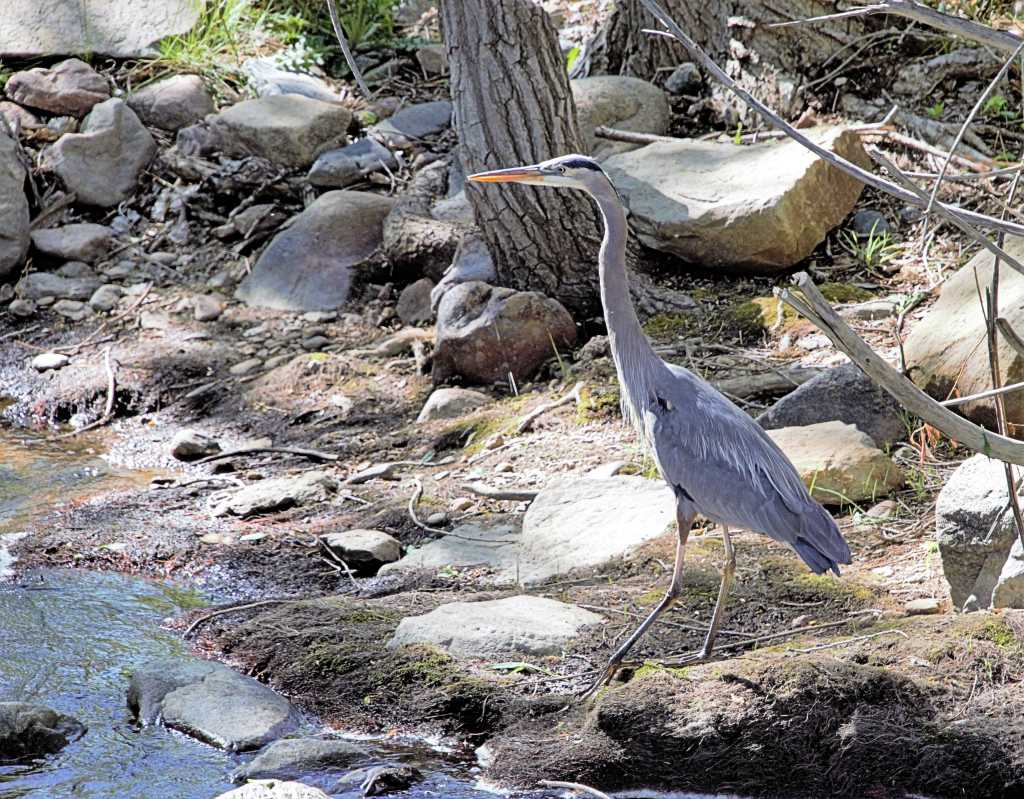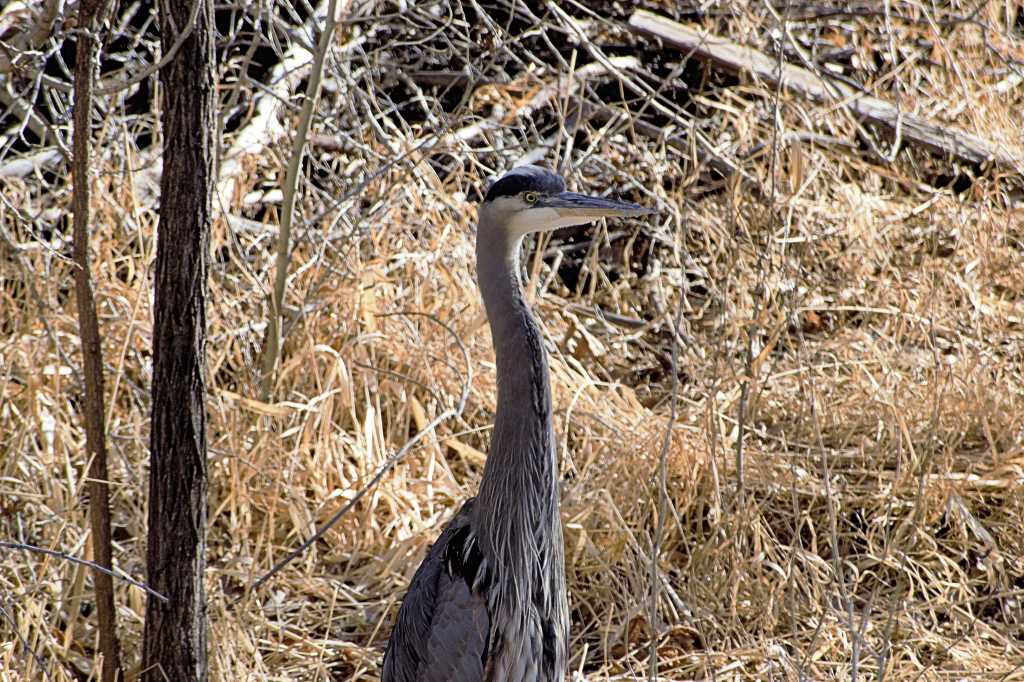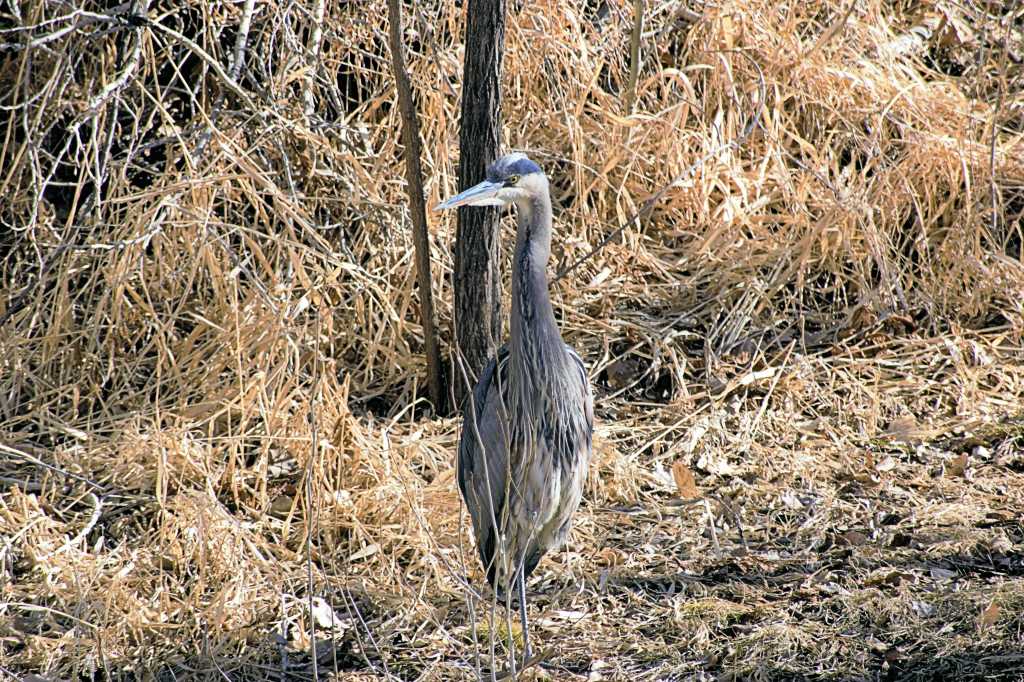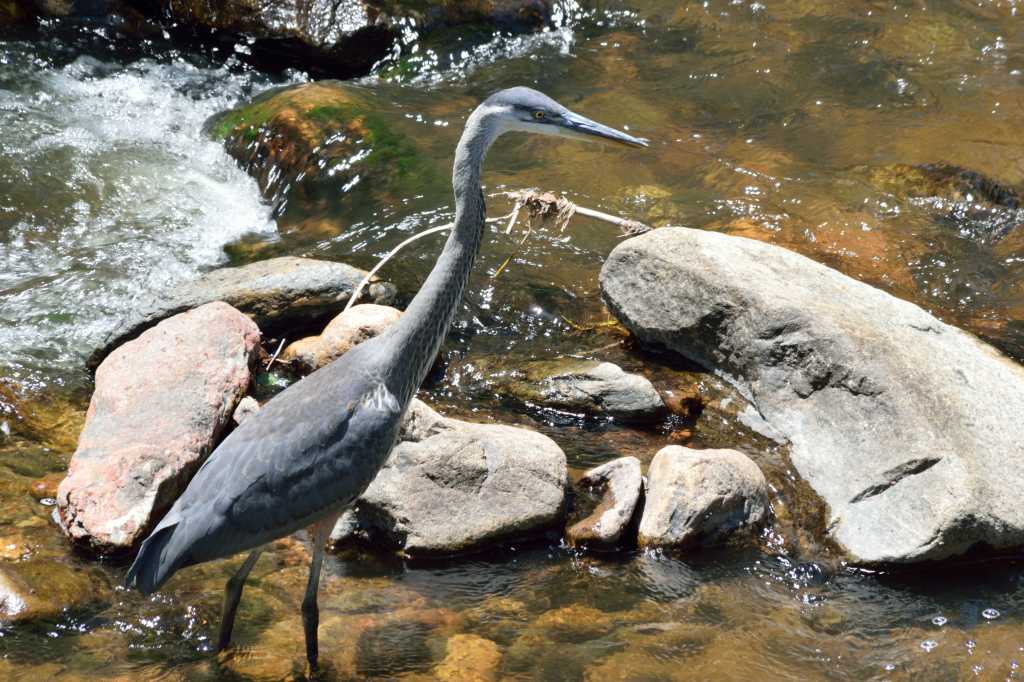
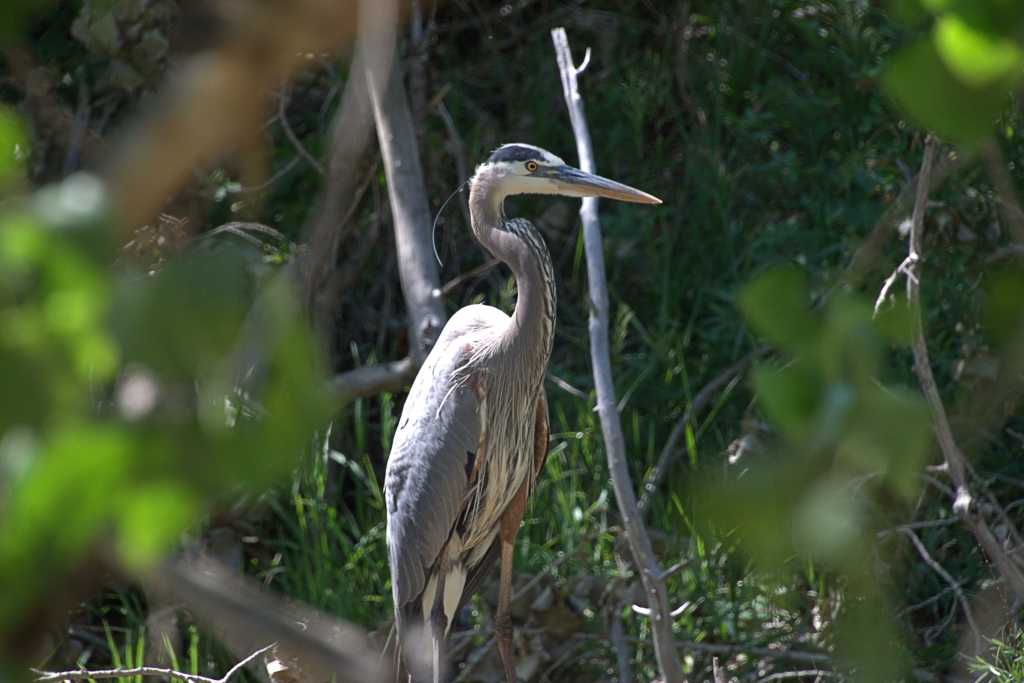
When I first moved to Colorado I had no idea that there were Great Blue Herons in the state. I had seen them on the east, west and gulf coasts but never really too far inland. My local loops while on WaltAbout have put me right on these birds many times. The great blue heron is the largest heron that is native to North America, can be over four feet tall and weighs around six pounds. I have found these birds on creeks, lakes, reservoirs and marshland.
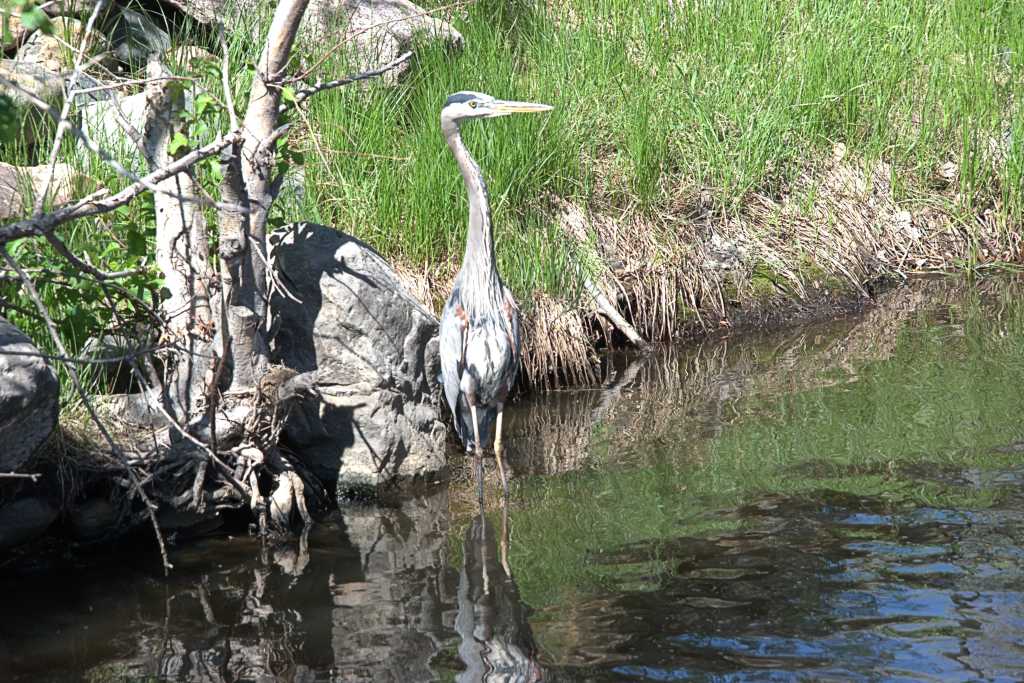
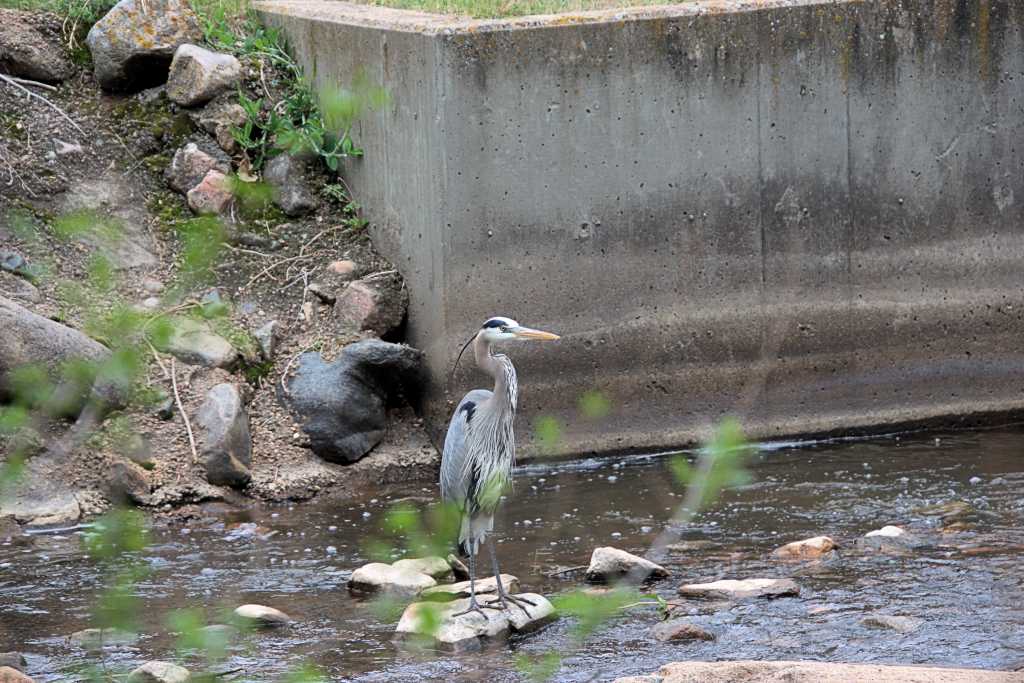
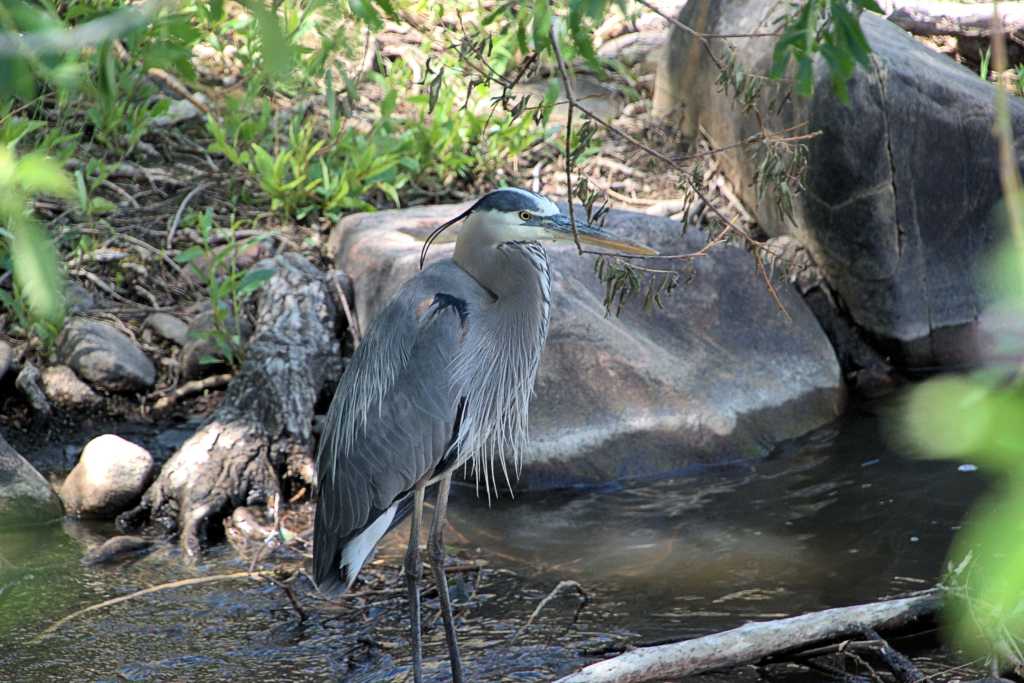
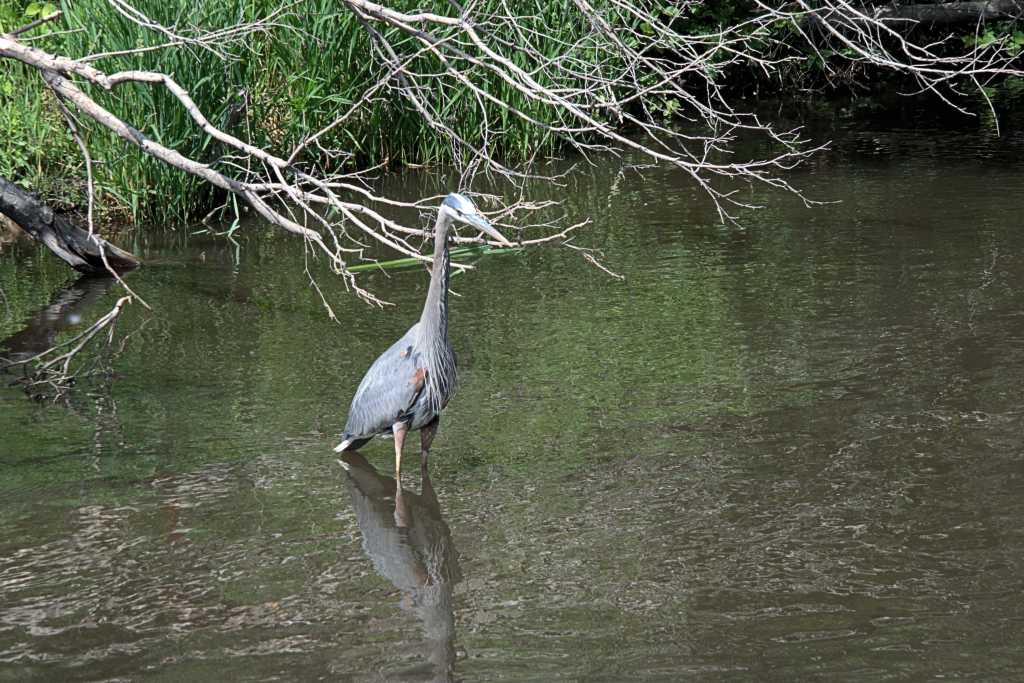
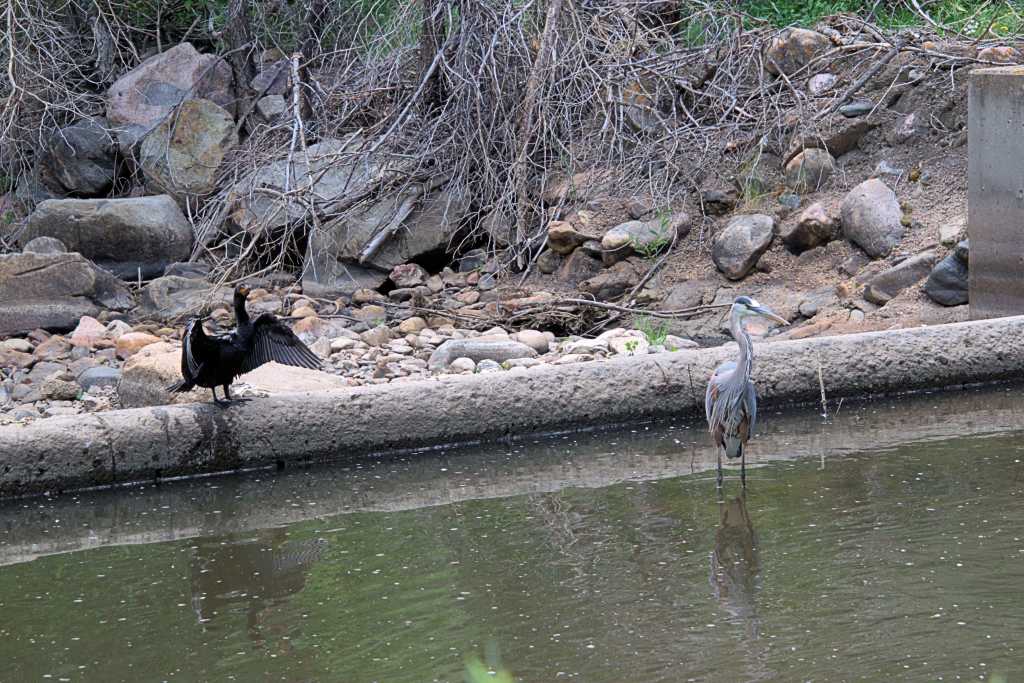
I have seen the Great Blue Heron year-round and that also has been a surprise for me. This species is migratory. Some will become permanent residents of the state although they might do a more local migration. The preferred food of this avian is fish and they need to find open water so they can catch them. Great Blue Herons can hunt day and night as mother nature has adapted their eyes to improve their night vision.
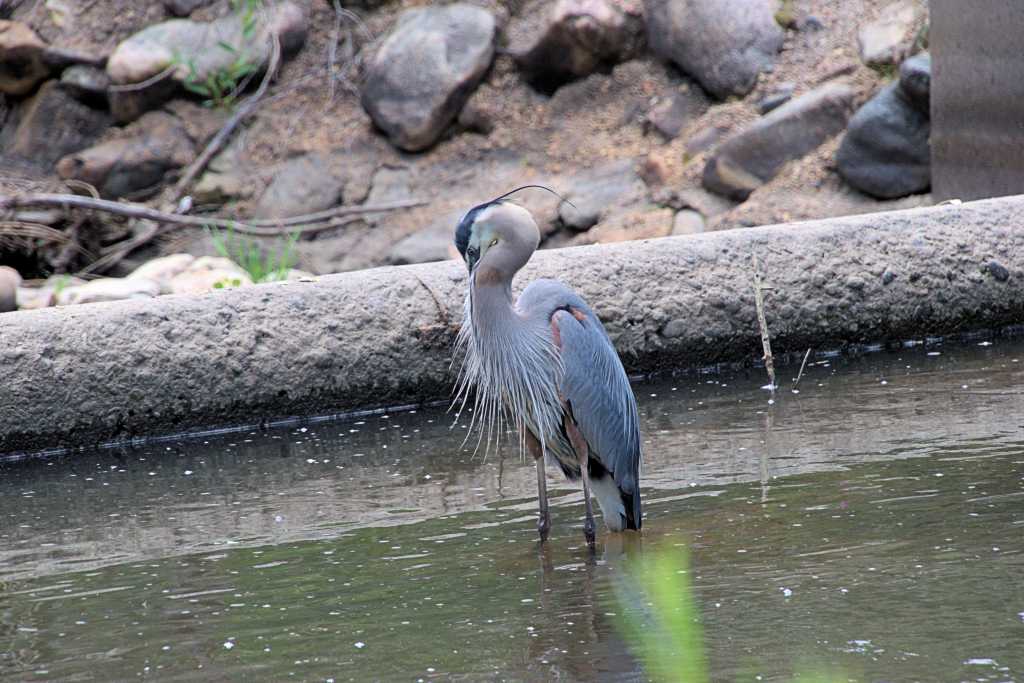
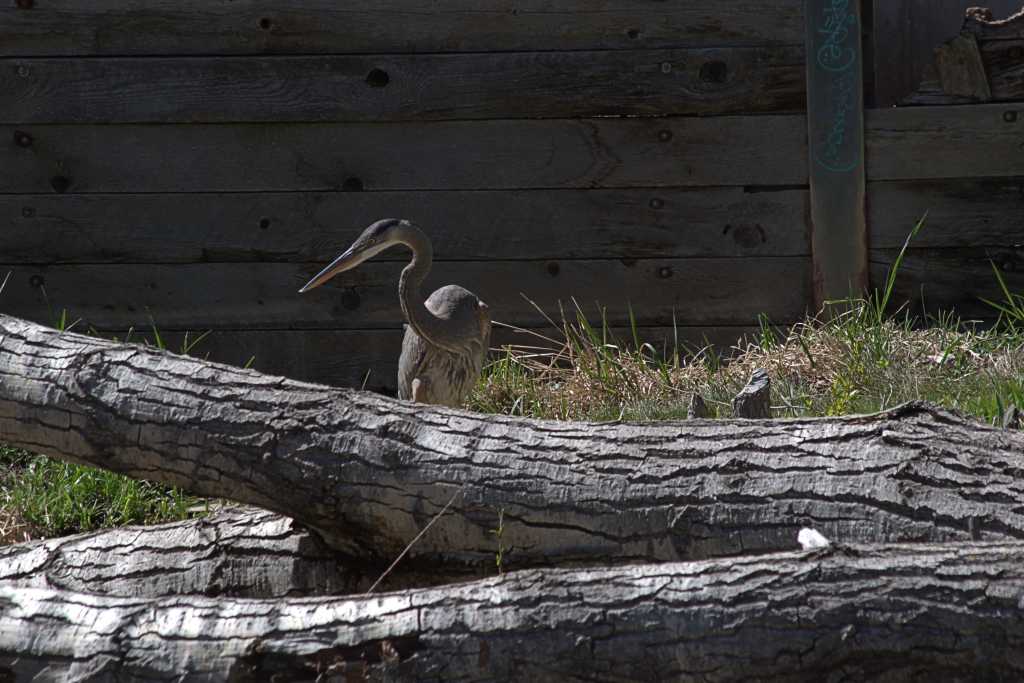

Like their cousins the Night Blue Heron these are really beautiful birds to find. The Great Blue is a much more active bird than it’s cousin however during the day. I have never seen a Great Blue roosting during the day. They were either hunting, preening or flying. Preening is very important for these birds. They need to keep their feathers from getting oily and have specialized chest feathers that grow and fray often to produce their own talcum powder. They can get slimy from eating fish and just from the habitat they are in.
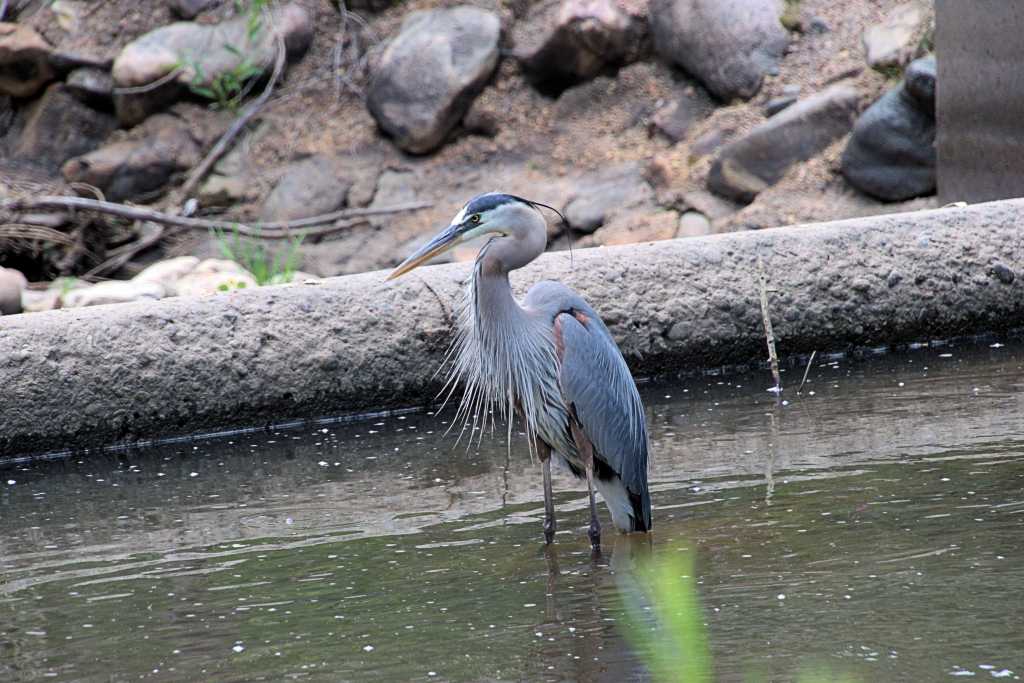
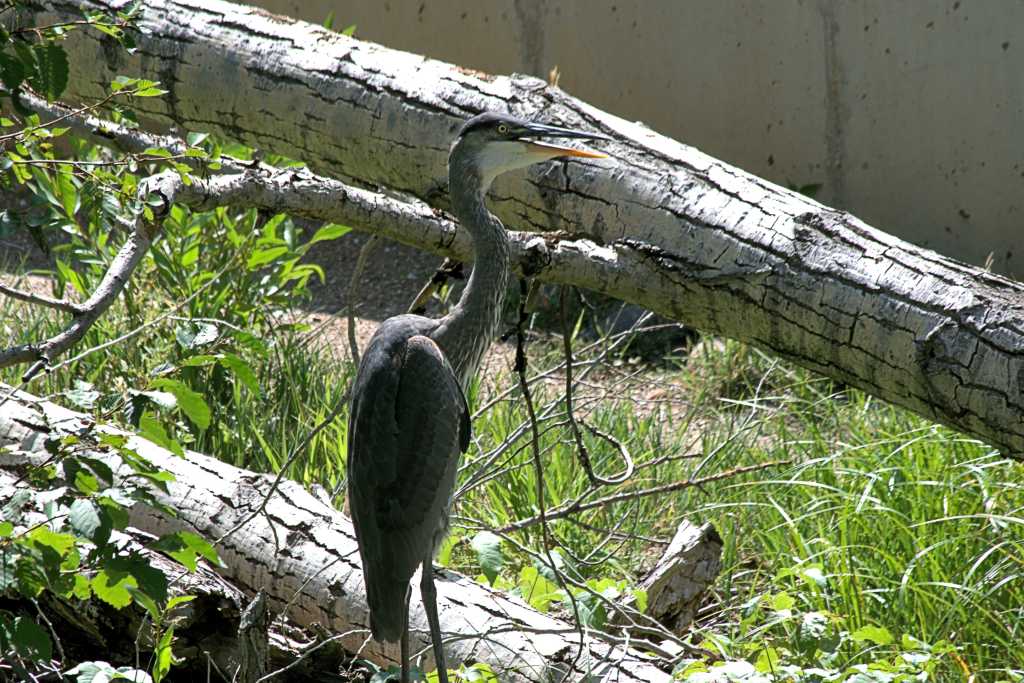
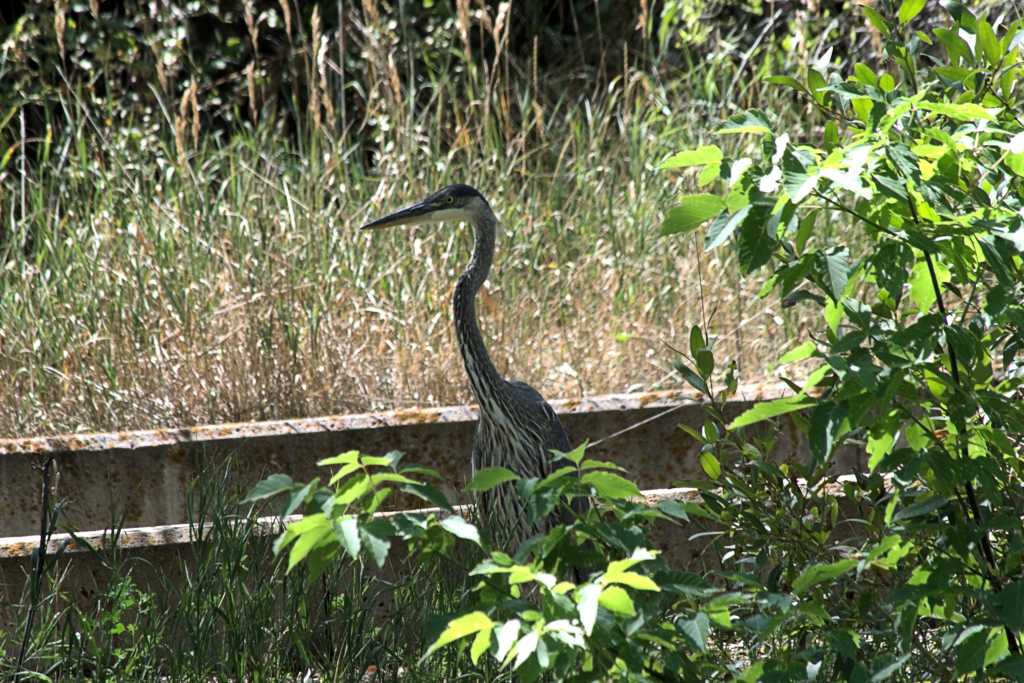
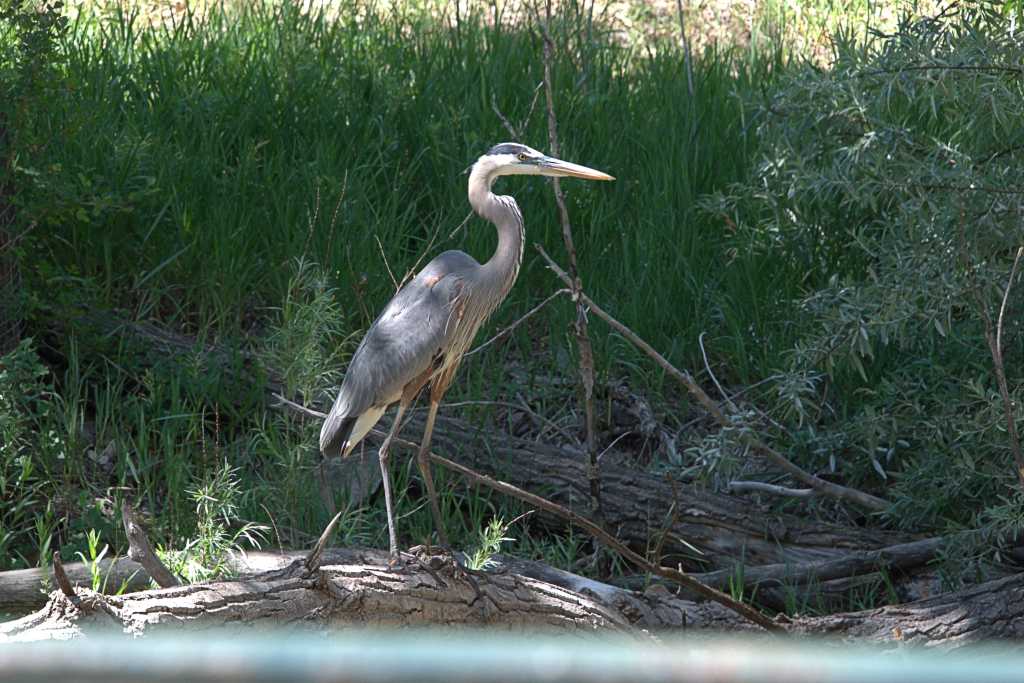
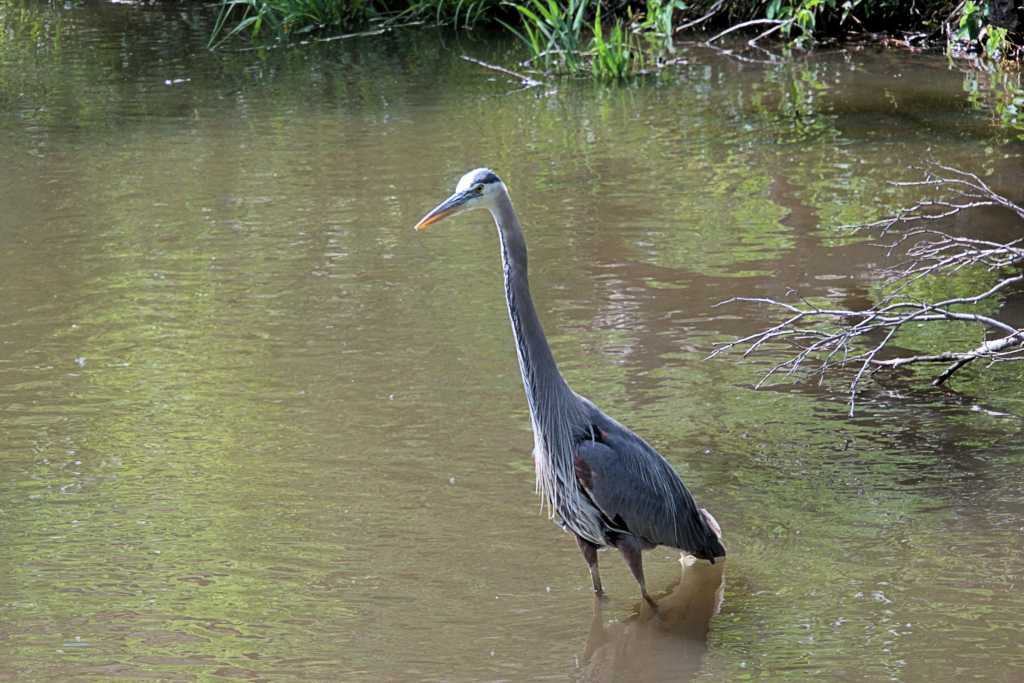
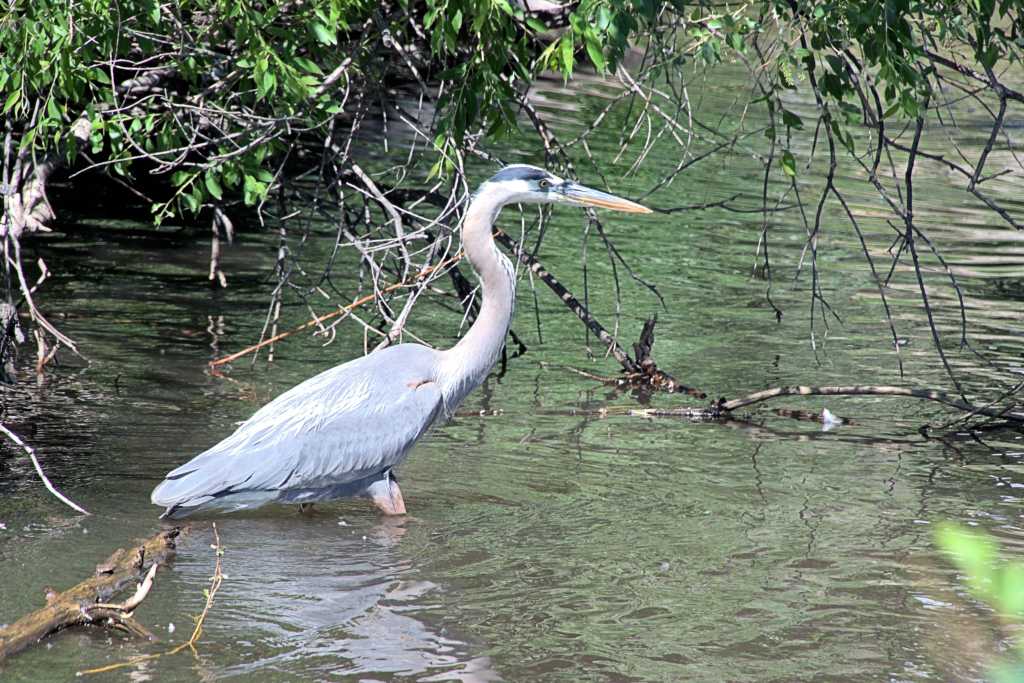
Great Blue Herons are meticulous and patient hunters. They stalk their prey like a silent Ninja Warrior then strike accurately and hard. I have seen them stand motionless at both the water and on the marsh lands for very long periods of time while hunting. This bird will hide behind foliage or in the shadows waiting for a meal of opportunity. With a specially shaped neck vertebrae, Great Blue Herons can strike prey at a distance. They eat fish, amphibians and rodents found along the shoreline or in the marshes.
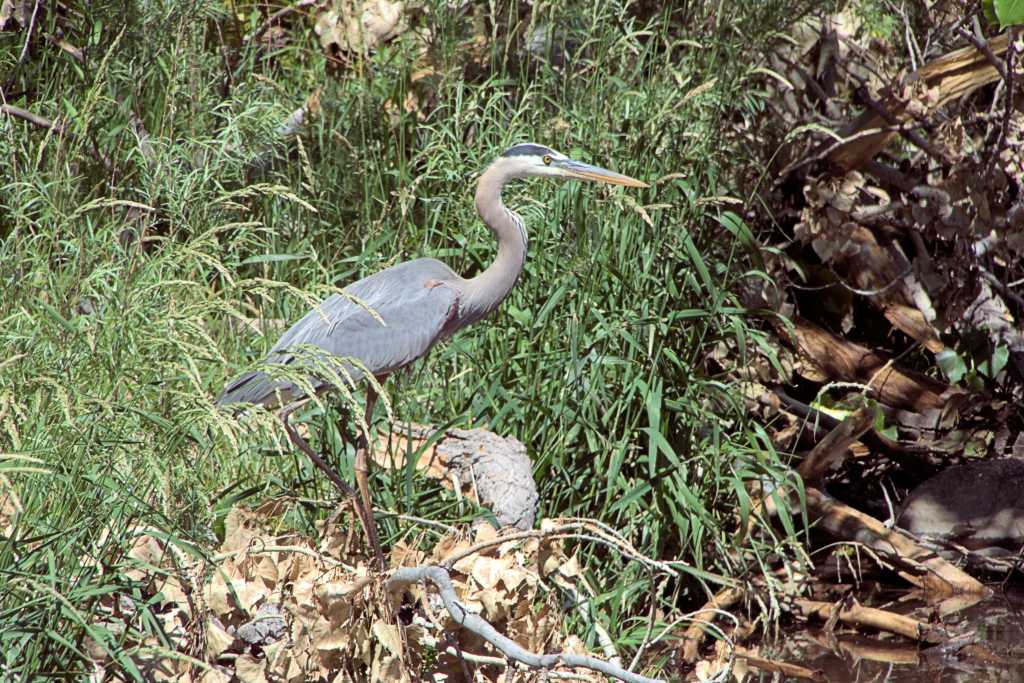
Great Blue Herons can easily come into conflict with humans. Many a bird has been hooked on a fisherman’s rod. An even bigger battle is with the fish hatcheries. Herons are protected by federal migratory bird laws that have evolved since 1918 to today. Many states like Colorado also have their own regulations on wildlife. The hatcheries have to comply with the regulations, which includes not harming the birds while still being able to produce their stock fish. They also can be a problem feeding on the fish while they are being stocked.
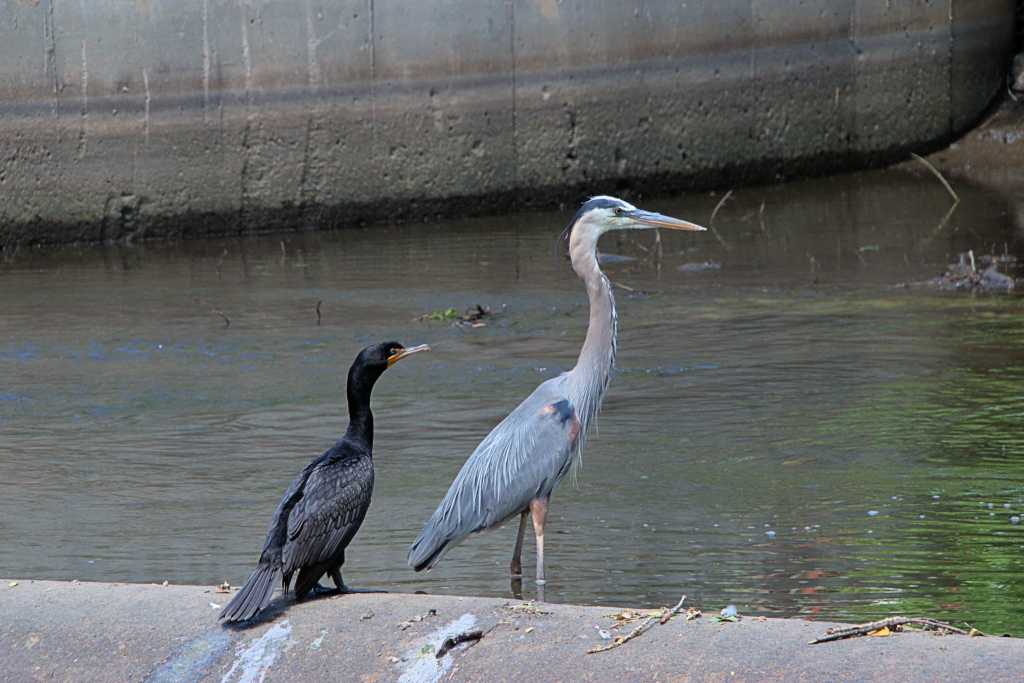
A heronry is what a colony of heron nests are sometimes called and can have more than one species of heron. They build their nest as high up a tree as they can with twigs and other vegetation and at times on platforms. Cormorants will also join a colony at times. Since I stay pretty much on the well beaten path I have not seen a heronry as they are tucked away in more secluded areas. These birds are very sensitive to human intervention and will often abandon their rookeries if disturbed.
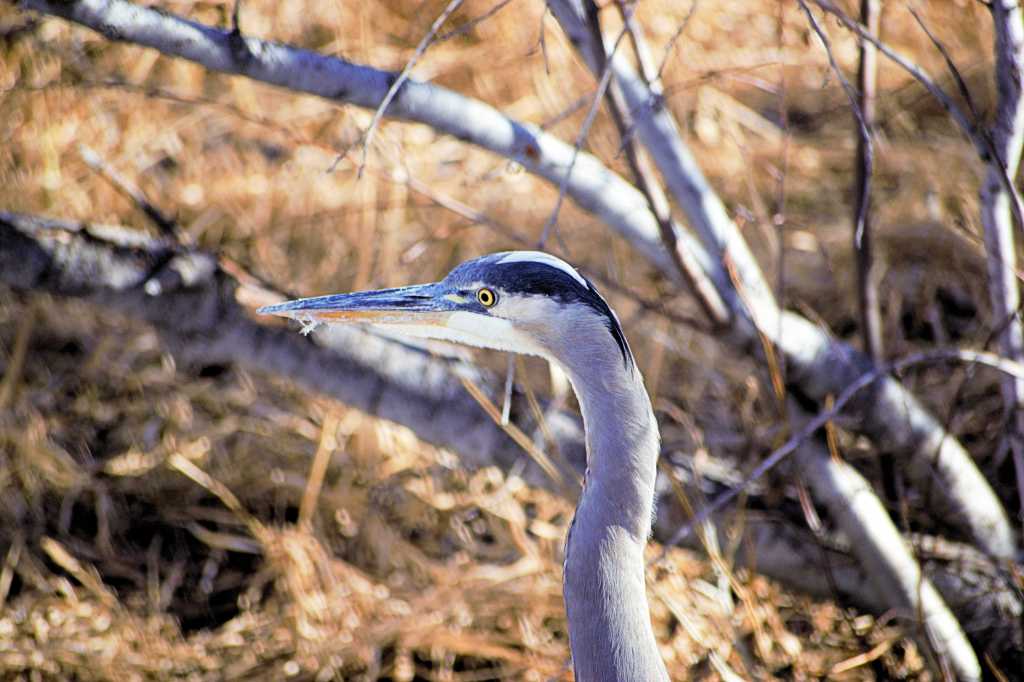
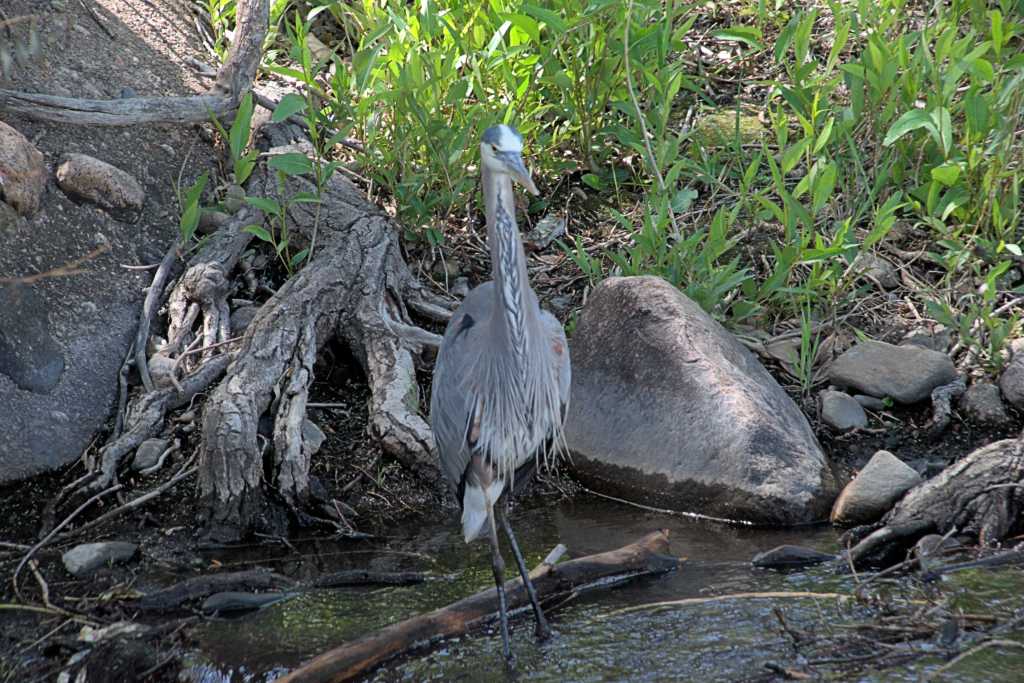
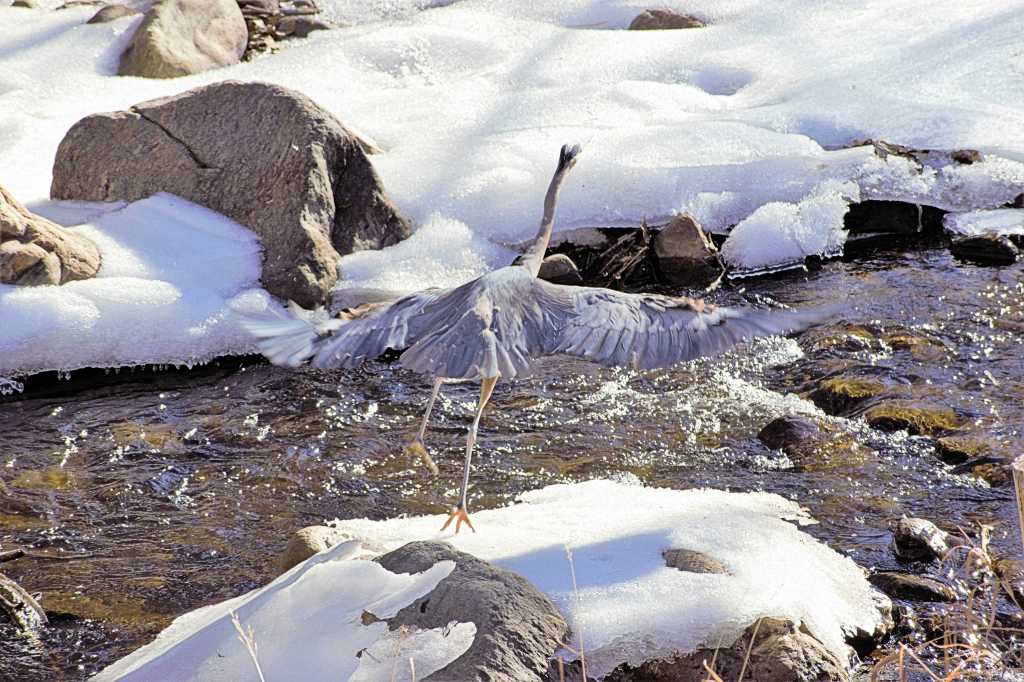
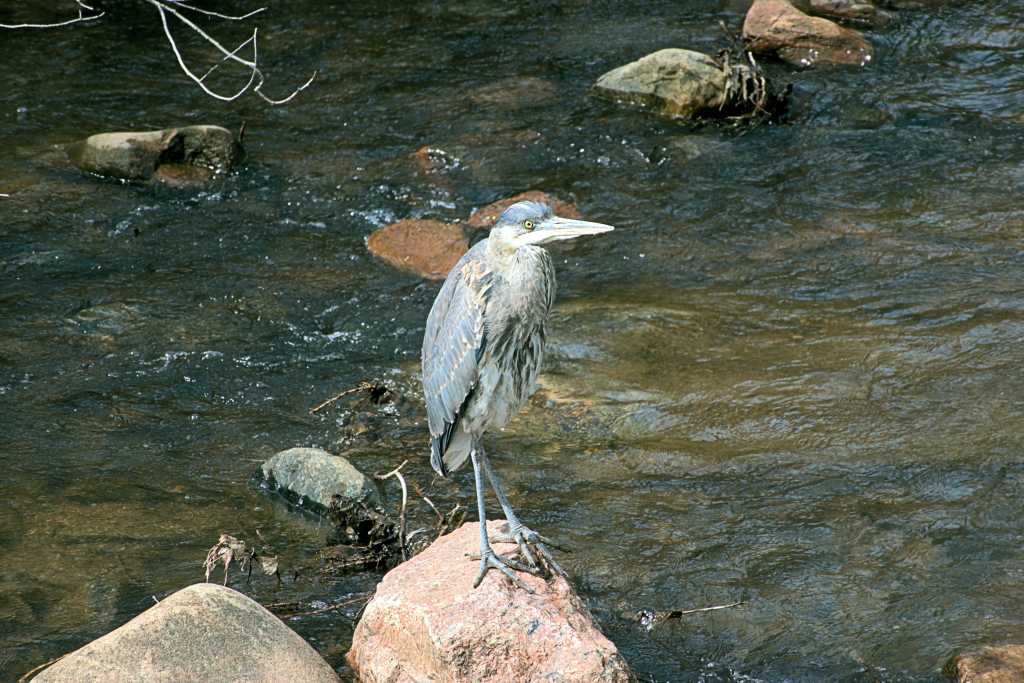
Great Blue Herons are blue-gray and have a wide black stripe over the eye. Their long stringy front feathers distinguish them from other heron species like the Night Blue. Although I see these birds year round they are not as predictable as other species. They do follow their food supply and when the creeks and streams dry up they will stalk the reservoirs more often. The population is very heathy and consistent here.